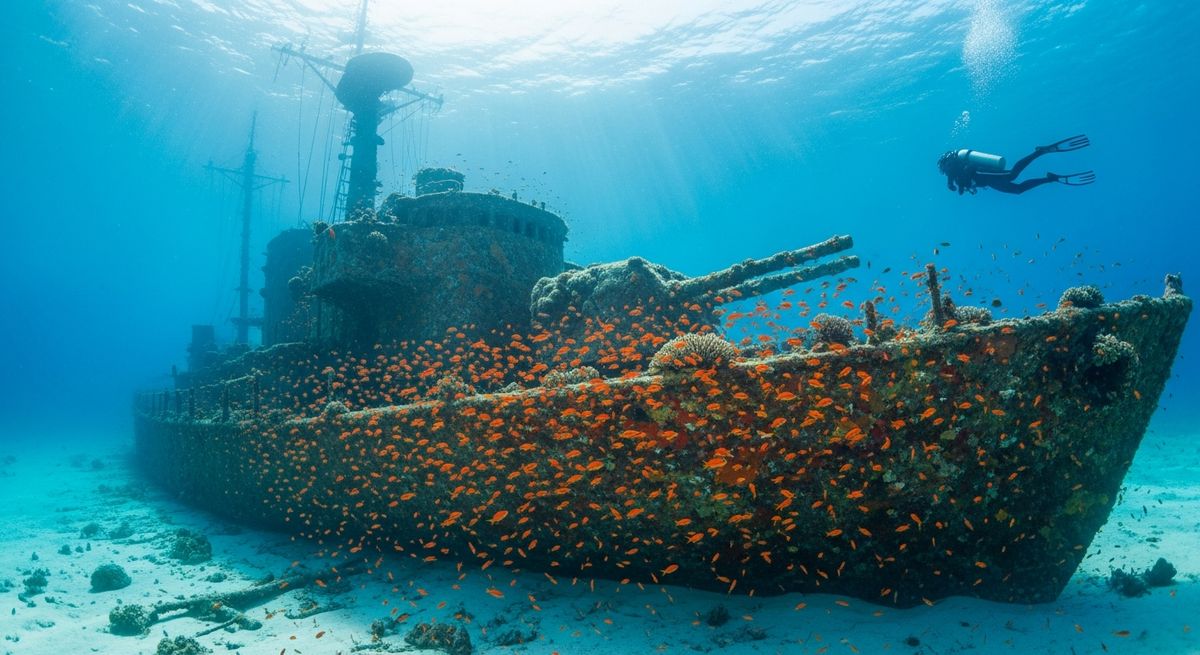
DROMARA
Protected Area
Long Berry Coast
Why dive here
With 140+ marine species recorded in the area - including blue whales, dolphins, dwarf minke whales, humpback whales and ocean sunfish (mola mola) - DROMARA offers some of Scapa Flow, Orkney's richest wreck diving. Water ranges 8-14°C, warmest July, August, September.
Forget depth, Dromara is all about atmosphere and history, right on the waterline. We love a good shallow dive, and this wreck, broken on the shore, delivers a truly unique experience. It’s barely submerged, sometimes even exposed at low tide, making it perfect for snorkelers or new divers wanting to get up close to a piece of Scapa Flow’s story without the pressure of depth. You’ll spend your time peering into the triple expansion engine, its gears and pistons still surprisingly intact. The single boiler is a major feature too, a rusty monolith in the shallows. The stern section is the most interesting part, with the propeller shaft leading back towards the propeller itself, often draped in kelp. Crabs scuttle in the shadows, and small blennies dart between the rivet holes. Our favourite time to visit is on a calm, bright day; the sunlight filtering through the ripples really brings the metalwork to life, making the rust glow a deep orange. Just be mindful of the currents, even in the shallows they can be surprisingly persistent. It’s not about seeing huge sharks here, it’s about touching history, feeling the cold steel, and imagining the final moments of that journey from Londonderry.
Typical DROMARA Dive Profile
Illustrative profile based on site depth and type. Actual dive profiles vary - always follow your dive computer and training.
Safety Notes
Wreck site - avoid penetration without wreck diving certification. Watch for sharp metal and entanglement hazards.
Cold water this month (avg 13°C). Drysuit or thick wetsuit (7mm+) recommended.
Reviews for DROMARA
Conditions
Ocean conditions, forecast and tides for DROMARA
DROMARA Ocean Conditions
Monthly averages for DROMARA, sourced from Open-Meteo marine data - nearest station: Open-Meteo marine grid (58.64, -3.16) (8km away)
October Averages
Sea Temperature
13°C
55°F · Range: 11.4–13.8°C
Air Temperature
10°C
50°F
Wind Speed
9.26 m/s
18.0 knots
Atmospheric Pressure
1005.3 hPa
Based on 4 years of monitoring data · Data sources: Open-Meteo marine data
Plan & book
Ways to dive Scapa Flow, Orkney, from day trips to liveaboards.
Day trips & courses
via GetYourGuideGuided dives, courses and snorkel trips with instant booking.
Find dive trips in Scapa Flow, OrkneyPlaces to stay
via Booking.comHotels and dive resorts near Scapa Flow, Orkney.
Search stays in Scapa Flow, OrkneyDive insurance
Most travel insurance excludes or limits scuba. Check what you need before you go.
Dive insurance explainedPartner links: we may earn a commission if you book, at no extra cost to you. How we make money
Where to Stay near DROMARA
Prices from Booking.com. We may earn a commission at no extra cost to you.