FREESIA
Protected Area
Eynhallow
Why dive here
With 140+ marine species recorded in the area - including blue whales, dolphins, dwarf minke whales, humpback whales and ocean sunfish (mola mola) - FREESIA offers some of Scapa Flow, Orkney's richest wreck diving. Water ranges 8-14°C, warmest July, August, September.
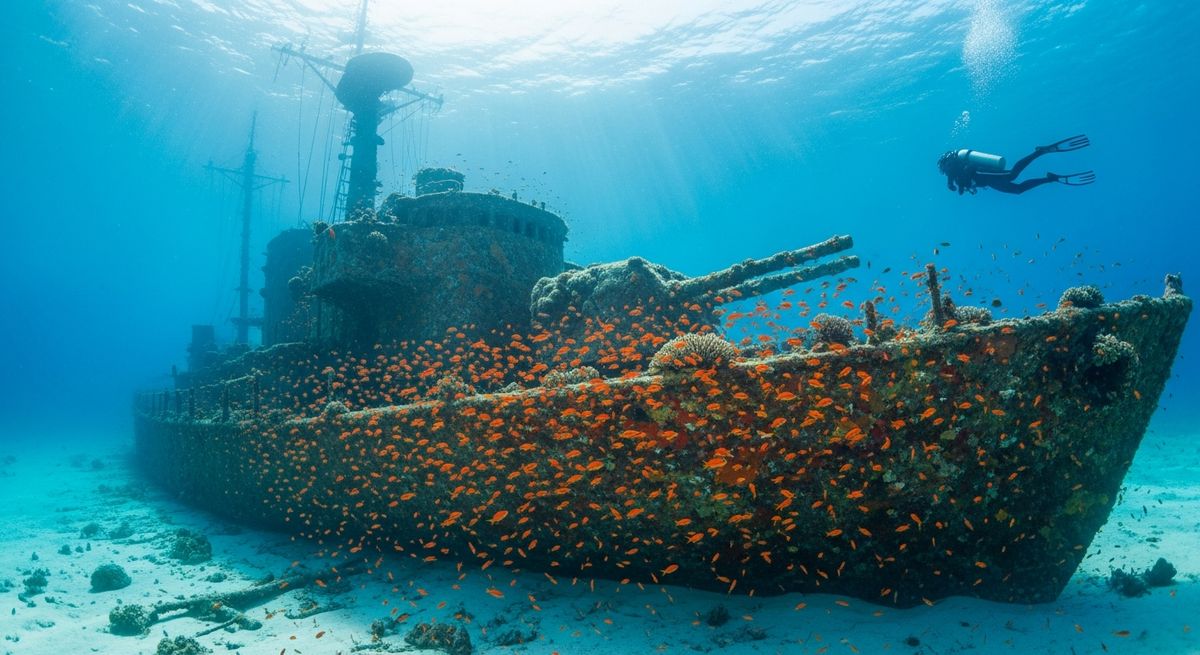
Freesia offers something a little different from Scapa Flow’s grand fleet wrecks. This isn't a scuttled behemoth, but a tough little trawler that sank in a storm in 1919. At 37 metres, she sits upright on the seabed, remarkably intact, with a character all her own. We love finning along her deck, peering into the collapsed wheelhouse, and exploring the holds. The stern, in particular, is a highlight, with the trawl gear still visible and a huge propeller waiting to be admired. It’s an atmospheric dive, with that classic Scapa gloom, but the wreck itself is often swathed in light from above, making for some dramatic photo opportunities. For marine life, we often find conger eels tucked into every nook and cranny, along with the usual crabs and lobsters. The engine room is accessible for those with the right training, but even from the outside, the triple-expansion engine is impressive. It’s a site that rewards multiple visits, each time revealing another detail. We’d suggest diving Freesia on a slack tide to really take your time exploring.
Typical FREESIA Dive Profile
Illustrative profile based on site depth and type. Actual dive profiles vary - always follow your dive computer and training.
Safety Notes
Deep dive (37m) - monitor air consumption closely. Advanced certification recommended.
Wreck site - avoid penetration without wreck diving certification. Watch for sharp metal and entanglement hazards.
Cold water this month (avg 13°C). Drysuit or thick wetsuit (7mm+) recommended.
Always perform a 3-minute safety stop at 5m before surfacing.
Nearest Dive Centres to FREESIA
Dive shops near FREESIA
View all dive centres in Scapa Flow, OrkneyReviews for FREESIA
Conditions
Ocean conditions, forecast and tides for FREESIA
FREESIA Ocean Conditions
Monthly averages for FREESIA, sourced from Open-Meteo marine data - nearest station: Open-Meteo marine grid (58.64, -3.16) (8km away)
October Averages
Sea Temperature
13°C
55°F · Range: 11.4–13.8°C
Air Temperature
10°C
50°F
Wind Speed
9.26 m/s
18.0 knots
Atmospheric Pressure
1005.3 hPa
Based on 4 years of monitoring data · Data sources: Open-Meteo marine data
Plan & book
Ways to dive Scapa Flow, Orkney, from day trips to liveaboards.
Day trips & courses
via GetYourGuideGuided dives, courses and snorkel trips with instant booking.
Find dive trips in Scapa Flow, OrkneyPlaces to stay
via Booking.comHotels and dive resorts near Scapa Flow, Orkney.
Search stays in Scapa Flow, OrkneyDive insurance
Most travel insurance excludes or limits scuba. Check what you need before you go.
Dive insurance explainedPartner links: we may earn a commission if you book, at no extra cost to you. How we make money
Where to Stay near FREESIA
Prices from Booking.com. We may earn a commission at no extra cost to you.