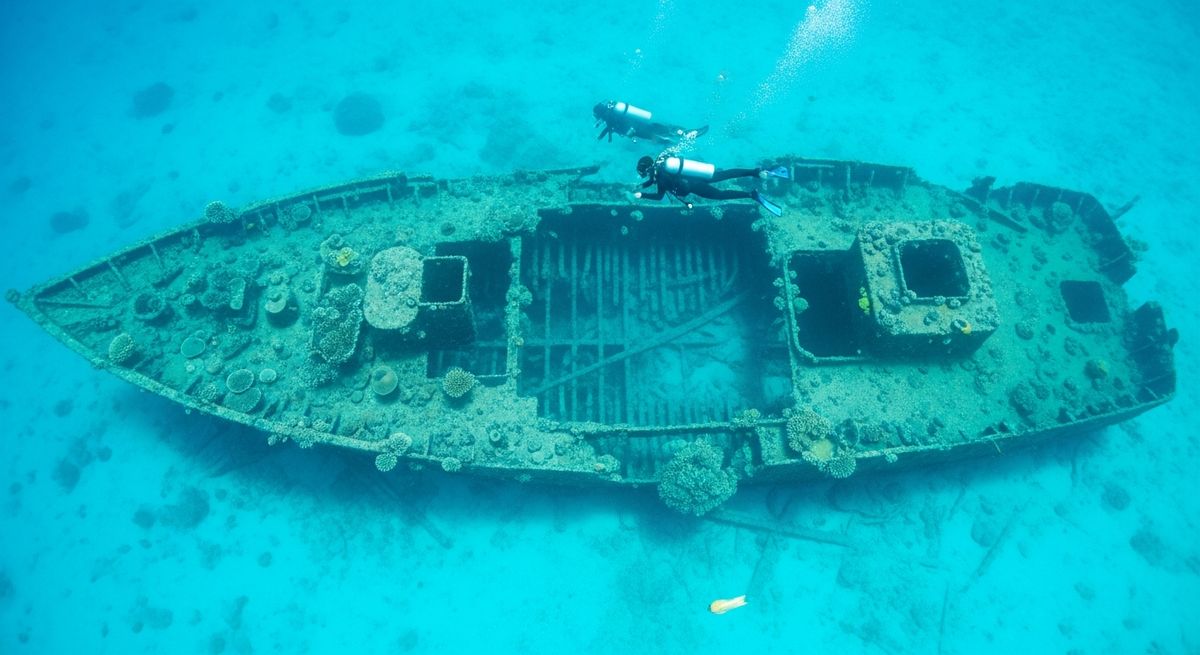
GRETAFIELD (AFTER PART)
Protected Area
East Caithness Cliffs
Why dive here
With 140+ marine species recorded in the area - including blue whales, dolphins, dwarf minke whales, humpback whales and ocean sunfish (mola mola) - GRETAFIELD (AFTER PART) offers some of Scapa Flow, Orkney's richest wreck diving. Water ranges 8-14°C, warmest July, August, September.
The *Gretafield* (After Part) sits shallow, right on the edge of Scapa Flow, a stern section from a tanker that met a U-boat in 1940. We love how accessible this part of the wreck is, especially on a sunny day when the light spills in. You’ll fin down to around 10 meters, spotting the huge triple-expansion engine almost immediately, standing proud amidst the skeletal remains of the hull. It’s a proper engine room dive, with gauges and levers still in place, inviting exploration. Look for the enormous prop shaft disappearing into the stern tube, and imagine the sheer power it once commanded. We often find conger eels tucked into the dark recesses, and the wreck itself is plastered in plumose anemones, their white tentacles swaying in the gentle surge. This site is fantastic for photographers or anyone wanting a relaxed dive with a tangible piece of history; it’s not about grand scale, but about the intricate details.
Typical GRETAFIELD (AFTER PART) Dive Profile
Illustrative profile based on site depth and type. Actual dive profiles vary - always follow your dive computer and training.
Safety Notes
Wreck site - avoid penetration without wreck diving certification. Watch for sharp metal and entanglement hazards.
Cold water this month (avg 13°C). Drysuit or thick wetsuit (7mm+) recommended.
Reviews for GRETAFIELD (AFTER PART)
Conditions
Ocean conditions, forecast and tides for GRETAFIELD (AFTER PART)
GRETAFIELD (AFTER PART) Ocean Conditions
Monthly averages for GRETAFIELD (AFTER PART), sourced from Open-Meteo marine data - nearest station: Open-Meteo marine grid (58.64, -3.16) (8km away)
October Averages
Sea Temperature
13°C
55°F · Range: 11.4–13.8°C
Air Temperature
10°C
50°F
Wind Speed
9.26 m/s
18.0 knots
Atmospheric Pressure
1005.3 hPa
Based on 4 years of monitoring data · Data sources: Open-Meteo marine data
Plan & book
Ways to dive Scapa Flow, Orkney, from day trips to liveaboards.
Day trips & courses
via GetYourGuideGuided dives, courses and snorkel trips with instant booking.
Find dive trips in Scapa Flow, OrkneyPlaces to stay
via Booking.comHotels and dive resorts near Scapa Flow, Orkney.
Search stays in Scapa Flow, OrkneyDive insurance
Most travel insurance excludes or limits scuba. Check what you need before you go.
Dive insurance explainedPartner links: we may earn a commission if you book, at no extra cost to you. How we make money
Where to Stay near GRETAFIELD (AFTER PART)
Prices from Booking.com. We may earn a commission at no extra cost to you.