HMD Lustring
Protected Area
Muckle and Little Green Holm
Why dive here
With 140+ marine species recorded in the area - including blue whales, dolphins, dwarf minke whales, humpback whales and ocean sunfish (mola mola) - HMD Lustring offers some of Scapa Flow, Orkney's richest wreck diving. Water ranges 8-14°C, warmest July, August, September.
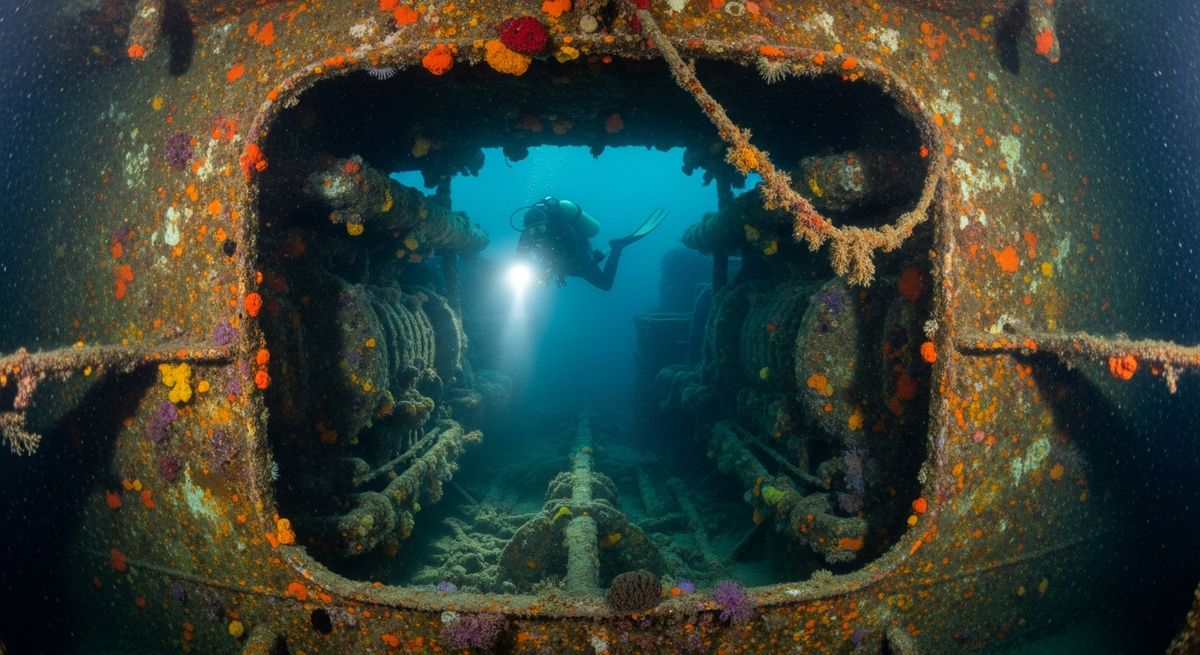
HMD Lustring, for us, is a genuine Scapa Flow treat that often gets overlooked for its bigger, more dramatic neighbours. Dropping onto her scattered remains at 23 metres feels like stepping into an underwater archaeology site. We love how her hull plates lie peeled back, revealing her internal ribs and the robust engine room. It’s not about penetration here, but rather a slow exploration of the debris field. She’s been down since 1918, so the wreck has become a proper home for sea life. You'll often find a lazy anglerfish tucked amongst the frames, and her plates are usually carpeted in dead man’s fingers. Ling and cod lurk in the deeper shadows, while schools of saithe shimmer above the highest points. Visibility can be a bit variable, but on a good day, the low light filtering through the Orkney green water gives the whole site a wonderfully atmospheric, historical feel. It's a great second dive after one of the big German battleships, offering a completely different perspective on Scapa Flow’s past.
Typical HMD Lustring Dive Profile
Illustrative profile based on site depth and type. Actual dive profiles vary - always follow your dive computer and training.
Safety Notes
Depth of 23m - Advanced Open Water certification recommended.
Wreck site - avoid penetration without wreck diving certification. Watch for sharp metal and entanglement hazards.
Cold water this month (avg 13°C). Drysuit or thick wetsuit (7mm+) recommended.
Always perform a 3-minute safety stop at 5m before surfacing.
Nearest Dive Centres to HMD Lustring
Dive shops near HMD Lustring
View all dive centres in Scapa Flow, OrkneyReviews for HMD Lustring
Conditions
Ocean conditions, forecast and tides for HMD Lustring
HMD Lustring Ocean Conditions
Monthly averages for HMD Lustring, sourced from Open-Meteo marine data - nearest station: Open-Meteo marine grid (58.64, -3.16) (8km away)
October Averages
Sea Temperature
13°C
55°F · Range: 11.4–13.8°C
Air Temperature
10°C
50°F
Wind Speed
9.26 m/s
18.0 knots
Atmospheric Pressure
1005.3 hPa
Based on 4 years of monitoring data · Data sources: Open-Meteo marine data
Plan & book
Ways to dive Scapa Flow, Orkney, from day trips to liveaboards.
Day trips & courses
via GetYourGuideGuided dives, courses and snorkel trips with instant booking.
Find dive trips in Scapa Flow, OrkneyPlaces to stay
via Booking.comHotels and dive resorts near Scapa Flow, Orkney.
Search stays in Scapa Flow, OrkneyDive insurance
Most travel insurance excludes or limits scuba. Check what you need before you go.
Dive insurance explainedPartner links: we may earn a commission if you book, at no extra cost to you. How we make money
Where to Stay near HMD Lustring
Prices from Booking.com. We may earn a commission at no extra cost to you.