MISTLEY
Protected Area
Northwall
Why dive here
With 140+ marine species recorded in the area - including blue whales, dolphins, dwarf minke whales, humpback whales and ocean sunfish (mola mola) - MISTLEY offers some of Scapa Flow, Orkney's richest wreck diving. Water ranges 8-14°C, warmest July, August, September.
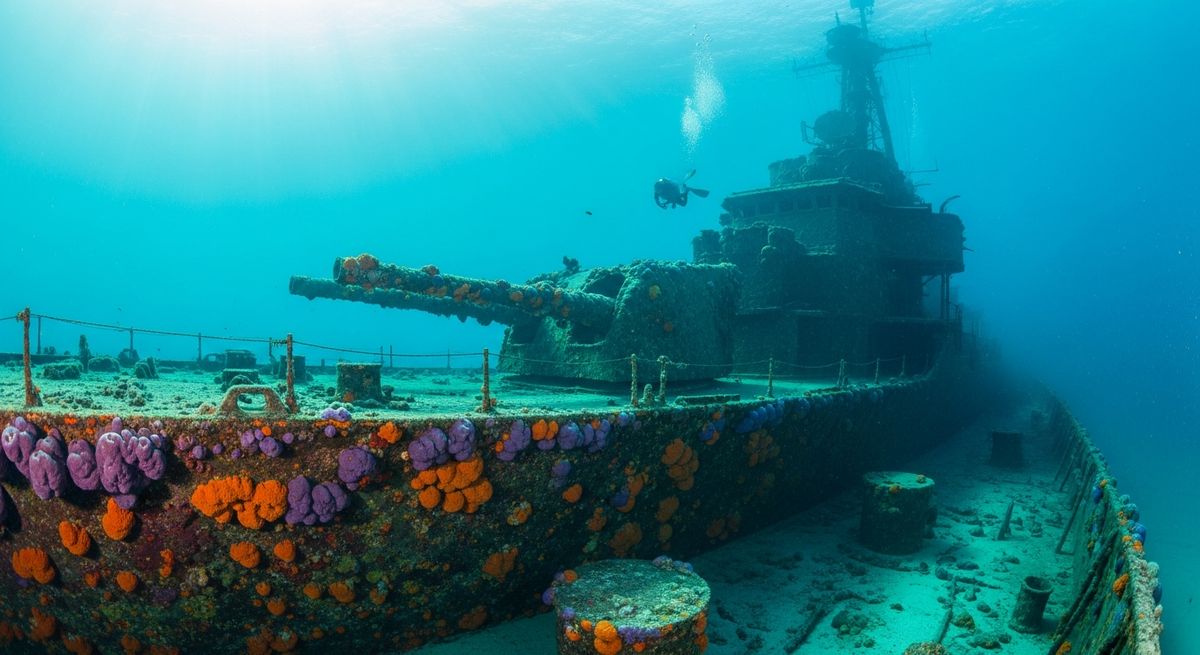
The Mistley isn't a deep dive, at just two metres, but it's one of our favourite shore entries in Scapa Flow. This isn’t about grand exploration, it’s a detailed, intimate wreck experience, perfect for those days when the weather chases you out of the Flow’s deeper sites. We love how accessible she is, the bow practically kisses the surface at low tide. You’re diving an old steamship here, sunk back in '57. Her triple-expansion engine is still largely intact, a real treat to swim around, and we often find small lobsters tucked into the pipework. The real character comes from the way she’s settled, almost on her side, giving you some interesting angles to peek into what’s left of her holds. Visibility can swing a bit depending on the tide, but we've had some cracking dives here with 10-15 metres, enough to really appreciate the shape of the hull. Look closely at the deck plating, it’s a riot of small anemones and nudibranchs. It’s a site for a relaxed poke-around, not a fin-kicking sprint.
Typical MISTLEY Dive Profile
Illustrative profile based on site depth and type. Actual dive profiles vary - always follow your dive computer and training.
Safety Notes
Wreck site - avoid penetration without wreck diving certification. Watch for sharp metal and entanglement hazards.
Cold water this month (avg 13°C). Drysuit or thick wetsuit (7mm+) recommended.
Reviews for MISTLEY
Conditions
Ocean conditions, forecast and tides for MISTLEY
MISTLEY Ocean Conditions
Monthly averages for MISTLEY, sourced from Open-Meteo marine data - nearest station: Open-Meteo marine grid (58.64, -3.16) (8km away)
October Averages
Sea Temperature
13°C
55°F · Range: 11.4–13.8°C
Air Temperature
10°C
50°F
Wind Speed
9.26 m/s
18.0 knots
Atmospheric Pressure
1005.3 hPa
Based on 4 years of monitoring data · Data sources: Open-Meteo marine data
Plan & book
Ways to dive Scapa Flow, Orkney, from day trips to liveaboards.
Day trips & courses
via GetYourGuideGuided dives, courses and snorkel trips with instant booking.
Find dive trips in Scapa Flow, OrkneyPlaces to stay
via Booking.comHotels and dive resorts near Scapa Flow, Orkney.
Search stays in Scapa Flow, OrkneyDive insurance
Most travel insurance excludes or limits scuba. Check what you need before you go.
Dive insurance explainedPartner links: we may earn a commission if you book, at no extra cost to you. How we make money
Where to Stay near MISTLEY
Prices from Booking.com. We may earn a commission at no extra cost to you.