Diving with Mandarin Fish
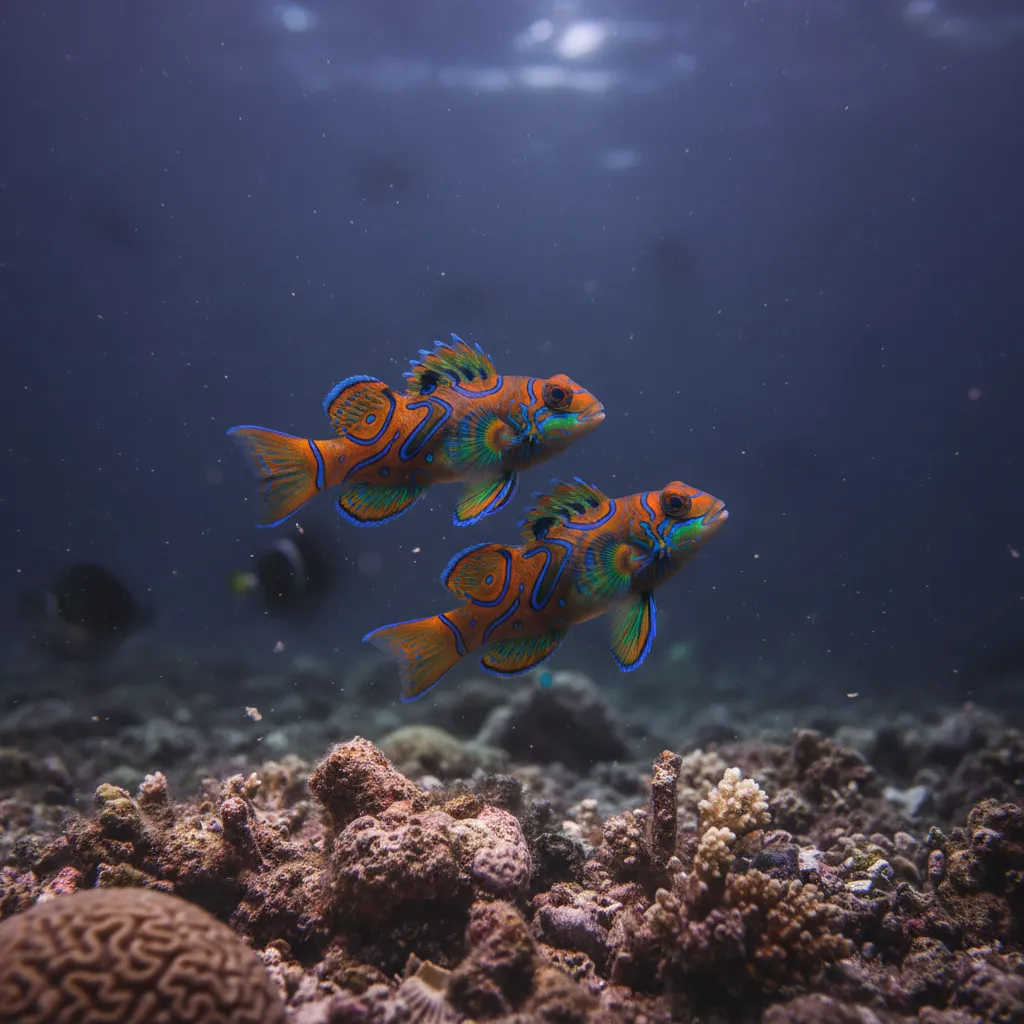
The mandarin fish is arguably the most beautiful fish in the ocean. Barely 6 centimetres long, this tiny dragonet is draped in an otherworldly pattern of electric blue, orange, and green psychedelic swirls that looks like it was designed by an artist on hallucinogens. But the mandarin fish's real claim to fame is its sunset mating dance - one of diving's most intimate and magical spectacles. Each evening, just as the light fades, male and female mandarin fish emerge from the coral rubble to perform an elaborate courtship ritual. The male displays his vivid colours and extended fins to entice a female, and if she accepts, the pair rise together in a brief, spiralling ascent above the reef, releasing eggs and sperm at the apex before separating and darting back into the rubble. This entire performance lasts just seconds and happens in fading twilight, making it one of the most challenging and rewarding things to witness in the underwater world.
Where to Dive with Mandarin Fish
Found across 7 countries, based on 207 verified observation records.







Best Time to See Mandarin Fish
Mandarin fish are resident animals that perform their mating dance year-round, weather permitting. Lembeh Strait (Indonesia) offers mandarin fish dives throughout the year, with the best overall diving conditions from March to November. Malapascua (Philippines) has mandarin fish dives year-round, often combined with morning thresher shark dives - the best conditions are from March to June. Raja Ampat's mandarin fish sites are best from October to April. The mating dance occurs daily at sunset regardless of season, though rough weather and surge can suppress activity. Most dive operators schedule mandarin fish dives as dedicated twilight dives separate from the regular day diving programme.
How to Dive with Mandarin Fish
Mandarin fish mating dives are conducted at dusk, typically entering the water around 30 minutes before sunset. The dives take place in very specific habitats - sheltered lagoons and bays with extensive coral rubble and dead staghorn coral, usually in just 2 to 10 metres of water. Lembeh Strait (Indonesia), Malapascua (Philippines), and Raja Ampat are the most reliable locations. The technique is to position yourself near a known mandarin fish colony (your guide will know exactly where), remain absolutely still, and watch the rubble for emerging fish. Use a red-filtered torch to observe without disturbing them - white light causes them to retreat. The mating rise happens quickly, so you need to be ready with your camera. Open Water certification is sufficient. Group sizes are usually limited to prevent overcrowding of the site.
Is it Safe to Swim with Mandarin Fish?
Mandarin fish are tiny, harmless creatures. Instead of scales, they are covered in a bitter, toxic mucus that deters predators, but this poses no risk to divers. The safety considerations for mandarin fish dives relate to the twilight timing and shallow depth. As these dives happen at dusk, visibility decreases throughout the dive, so carry a torch and stay close to your guide. The shallow depth means there is no decompression concern, but be careful with buoyancy near the delicate coral rubble habitat. The most important rule is to avoid touching or stirring up the rubble - the mandarin fish live within the interstices of dead coral, and disturbing their habitat can cause them to abandon the site permanently. Follow the guide's instructions about torch use - only red-filtered light should be used to observe the mating behaviour.
Conservation Status
Mandarin fish are not currently classified as threatened, but they face localised pressures from the aquarium trade and habitat degradation. Their extreme beauty makes them popular aquarium fish, though they are notoriously difficult to keep in captivity because they feed almost exclusively on live copepods and are slow, deliberate eaters that are outcompeted by other aquarium fish. Wild-caught mandarin fish often starve in aquaria. Captive-bred individuals are increasingly available and better adapted to aquarium life. Coral rubble habitat degradation from blast fishing and anchor damage threatens mandarin fish populations in some areas. Well-managed dive tourism sites, where guides limit group sizes and enforce no-touch rules, have shown that mandarin fish colonies can thrive alongside responsible observation.
Species Profile

Recommended Equipment
A macro lens is the only way to do justice to the mandarin fish's intricate patterns - a 100mm macro lens is ideal, as it provides enough working distance to avoid crowding the tiny fish. A strobe set to low power is useful but must be used sparingly - too many flash bursts can disrupt the mating behaviour. Some photographers prefer to use continuous LED video lights with red filters during the approach phase, switching to a strobe only for the brief mating rise. A fast lens (f/2.8 macro) helps in the low-light conditions. A focus light with a red filter is essential for finding and tracking the fish. For compact cameras, super-macro mode works well. Keep your setup streamlined and avoid dangling accessories that could snag on rubble.
Browse dive equipmentFrequently Asked Questions
Where can you see mandarin fish mating?
The best places to witness the mandarin fish mating dance are Lembeh Strait (Indonesia), Malapascua (Philippines), and Raja Ampat (Indonesia). The dance happens at dusk in shallow coral rubble habitats. Local dive guides know the exact colonies and timing.
What time do mandarin fish mate?
Mandarin fish mate at dusk, typically in the 15-30 minutes after sunset when light levels are fading. Dive operators enter the water about 30 minutes before sunset and position divers at known colony sites. The actual mating rises are brief - lasting just seconds each.
Can you use flash photography with mandarin fish?
Limited flash is generally acceptable, but excessive strobe use can disrupt mating behaviour and cause the fish to retreat into the rubble. Many photographers use red-filtered torches for observation and reserve the strobe for the brief mating rise moment. Follow your guide's instructions about light use.
How small are mandarin fish?
Mandarin fish (Synchiropus splendidus) are tiny, typically reaching only 6-7 centimetres in length. Despite their small size, their extraordinarily vivid blue, orange, and green psychedelic patterns make them one of the most visually striking fish in the ocean.
Are mandarin fish hard to keep in an aquarium?
Yes, mandarin fish are notoriously difficult to keep in captivity. They feed almost exclusively on tiny live copepods and are slow, deliberate eaters that are outcompeted by other fish. Wild-caught specimens often starve. Captive-bred mandarin fish are a better option as they can be trained to accept prepared foods.
More Encounter Guides
Ocean Sunfish (Mola Mola)
The ocean sunfish is one of the most surreal creatures a diver can encounter. Holding the record as ...
Clownfish
Few marine creatures have captured the public imagination quite like the clownfish. Made famous by F...
Napoleon Wrasse
The Napoleon wrasse - also known as the humphead wrasse or Maori wrasse - is one of the most charism...
Lionfish
Few fish command attention quite like the lionfish. With its dramatic array of elongated, venomous s...
Barracuda
The great barracuda is one of the reef's most impressive predators - a silver torpedo with a mouth f...
Giant Moray Eels
The giant moray is the reef's most charismatic lurker. Reaching up to 3 metres in length and weighin...