Diving with Cuttlefish
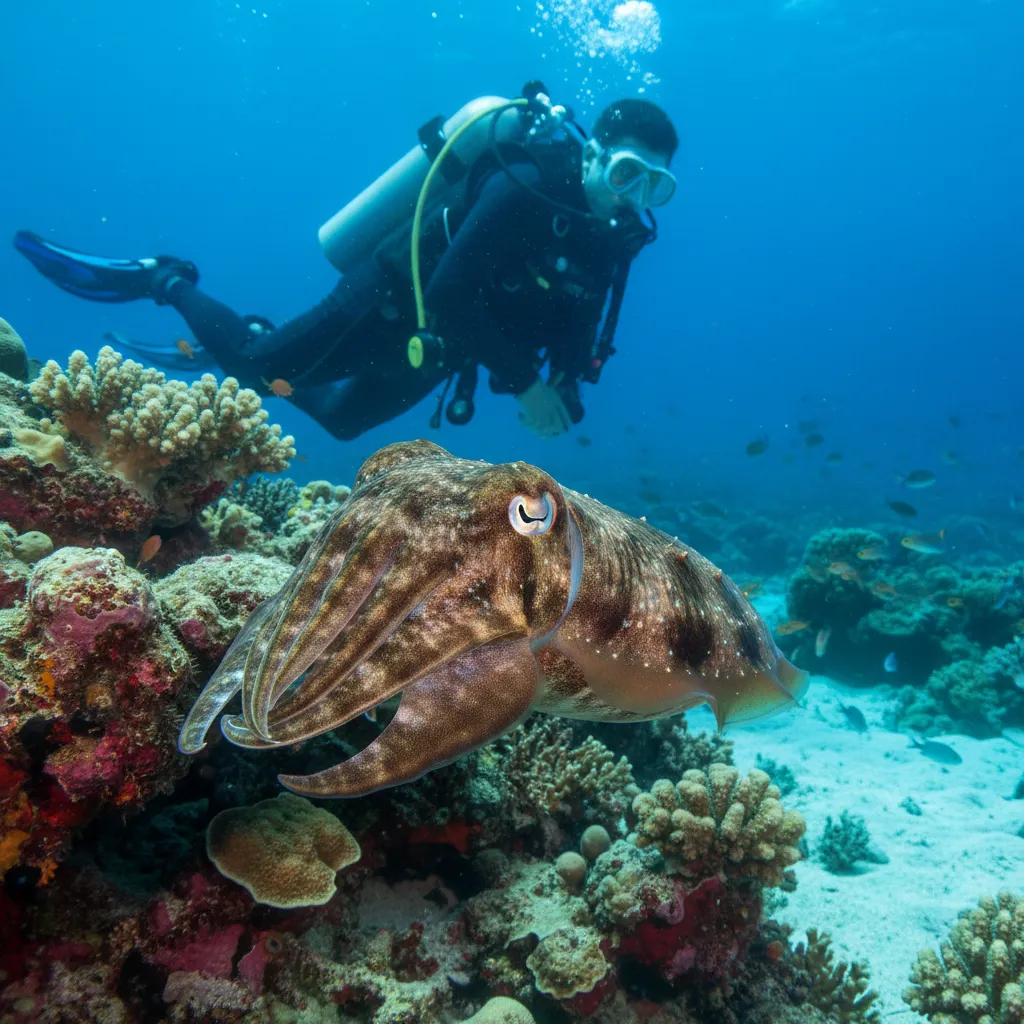
Cuttlefish are the ocean's most hypnotic performers. These soft-bodied cephalopods possess the most sophisticated colour-changing ability in the animal kingdom - waves of colour ripple across their skin in mesmerising pulses that scientists still do not fully understand. Their W-shaped pupils give them an otherworldly appearance, and their intelligence rivals that of octopuses. Watching a cuttlefish hunt is spellbinding: it hovers motionless, flashing hypnotic colour patterns at its prey before striking with two lightning-fast tentacles. During mating season, males perform elaborate colour displays to attract females and intimidate rivals, sometimes splitting their body pattern in half - showing courtship colours on one side and aggressive colours on the other. For divers who appreciate subtlety and complexity over sheer size, cuttlefish encounters are among the most rewarding in the ocean.
Where to Dive with Cuttlefish
Found across 12 countries, based on 4,778 verified observation records.

United Kingdom
5 areas

Croatia
4 areas

Ireland
2 areas

Spain
4 areas

Tunisia
1 area

France
1 area

Montenegro
1 area

Morocco
1 area
+ 4 more countries
Best Time to See Cuttlefish
Whyalla, South Australia: May to August for the giant cuttlefish breeding aggregation - this is a bucket-list event. Peak numbers typically occur in June and July. Mediterranean: cuttlefish are present year-round but most active and easiest to find from April to October. Breeding occurs in spring and early summer. Indonesia and Philippines: year-round on coral reefs, with broadclub and pharaoh cuttlefish common. United Kingdom: April to July for common cuttlefish breeding on the south coast, particularly around Dorset and Devon. Cuttlefish are generally more active and visible at night across all locations.
How to Dive with Cuttlefish
Cuttlefish are found throughout the temperate and tropical waters of Europe, Africa, Asia, and Australia - but notably absent from the Americas. The common cuttlefish (Sepia officinalis) is widespread across the Mediterranean and Eastern Atlantic, frequently encountered on sandy bottoms, seagrass beds, and rocky reefs from 5 to 30 metres. The most spectacular cuttlefish event on Earth is the giant Australian cuttlefish (Sepia apama) aggregation at Whyalla in South Australia, where tens of thousands of animals gather in shallow water to mate between May and August. This is one of the great wildlife spectacles of the underwater world. In Southeast Asia, broadclub and pharaoh cuttlefish are common on coral reefs. The approach is similar to octopus encounters: move slowly, stay low, and let the animal become comfortable with your presence. Cuttlefish are generally less skittish than octopuses and will often hold their ground, giving you extended observation time.
Is it Safe to Swim with Cuttlefish?
Cuttlefish pose no danger to divers whatsoever. They have a small beak capable of delivering a mild bite if handled, but they will not bite unless physically grabbed. The main safety consideration is the dive environment rather than the animal. The Whyalla aggregation takes place in shallow, cold water (12-16°C) with occasional surge and reduced visibility. Mediterranean cuttlefish diving is straightforward on calm, shallow reef. In all cases, avoid touching or chasing cuttlefish - stressed animals will ink and jet away, ending the encounter for you and potentially disrupting mating behaviour. During the breeding season, be especially careful not to interfere with mating pairs or egg-laying females.
Conservation Status
Cuttlefish face significant pressure from commercial trawl fishing, which captures huge numbers as bycatch and targeted catch across the Mediterranean and Asian waters. The giant Australian cuttlefish aggregation at Whyalla was nearly destroyed by a proposed industrial development and overfishing - the population declined by over 90% before protective measures were introduced. Since the creation of a fishing exclusion zone in 2013, the aggregation has recovered substantially. Cuttlefish are short-lived (1-2 years), semelparous (they die after a single breeding event), and sensitive to water temperature changes. Rising sea temperatures may shift breeding timing and locations. Supporting marine protected areas that cover cuttlefish breeding grounds is an important conservation priority.
Species Profile

Recommended Equipment
Cuttlefish are outstanding macro and portrait subjects. A macro lens (60mm or 100mm) captures incredible detail of their skin texture and eye, while a wider lens (35-60mm equivalent) frames the whole animal with reef context. Strobes are essential - cuttlefish colour displays look spectacular under artificial light, revealing colours invisible to the naked eye at depth. Video is particularly rewarding, as still images cannot capture the mesmerising rippling colour changes. For the Whyalla aggregation, a thick wetsuit (7mm) or drysuit is needed for the cold South Australian water. Standard tropical dive gear works for Southeast Asian and Mediterranean encounters. A dive torch for night diving increases your chances of finding hunting cuttlefish.
Browse dive equipmentFrequently Asked Questions
Where is the best place to see cuttlefish while diving?
The giant Australian cuttlefish aggregation at Whyalla, South Australia (May-August) is the world's most spectacular cuttlefish event, with tens of thousands gathering in shallow water to breed. For year-round encounters, the Mediterranean, Indonesia, and the Philippines offer reliable sightings on coral and rocky reefs.
How do cuttlefish change colour?
Cuttlefish have millions of specialised skin cells - chromatophores that expand and contract to show different pigments, iridophores that reflect light, and leucophores that scatter white light. They can produce complex, rapidly changing patterns across their entire body, controlled directly by their brain without hormonal delay.
Are cuttlefish related to octopuses?
Yes, cuttlefish and octopuses are both cephalopods, along with squid and nautiluses. They share a common ancestor and have similar intelligence, colour-changing ability, and jet propulsion. Cuttlefish differ in having an internal shell (the cuttlebone), eight arms plus two longer feeding tentacles, and a different body shape.
Can you dive the Whyalla cuttlefish aggregation?
Yes, the Whyalla cuttlefish aggregation is accessible to divers and snorkellers of all levels. The breeding takes place in shallow water (2-8 metres) along a rocky coastline. Water temperature is cold (12-16°C) and a thick wetsuit or drysuit is essential. Local dive operators run guided trips throughout the May-August season.
What do cuttlefish eat?
Cuttlefish are active predators that feed primarily on shrimp, crabs, small fish, and other crustaceans. They use their hypnotic colour-changing displays to mesmerise prey before striking with two lightning-fast extendable tentacles. They have excellent binocular vision and can judge distance with remarkable accuracy.