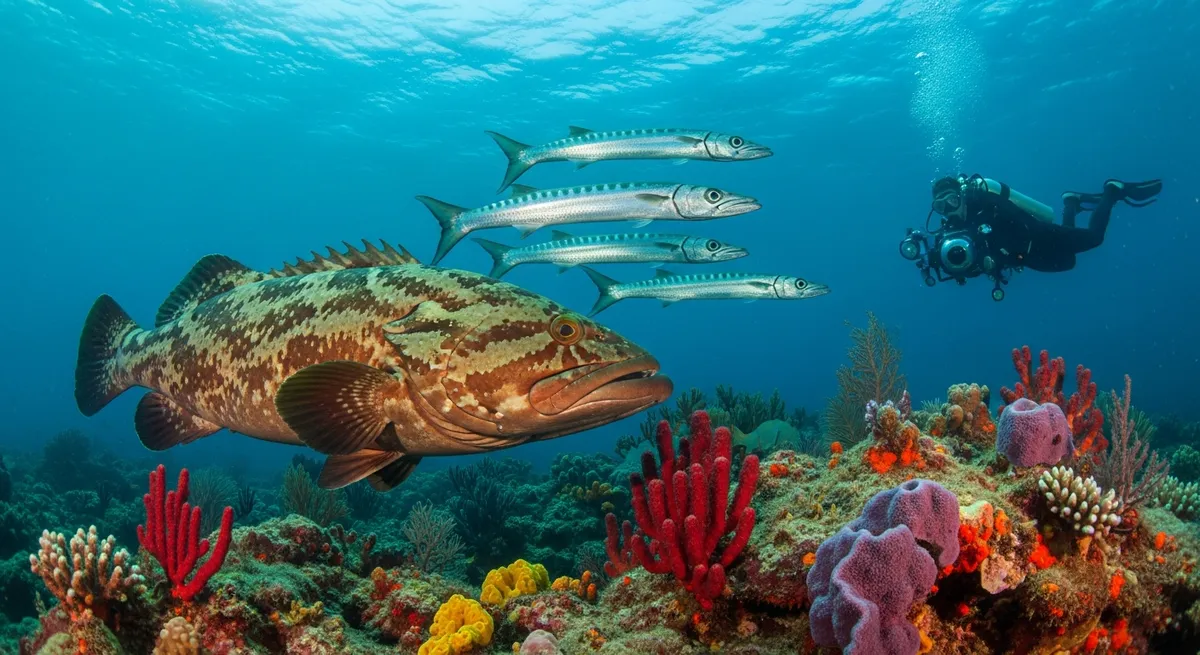
Diving in Cabo de Palos
Why dive here
Cabo de Palos offers some of Spain's richest diving, with 189+ marine species recorded in the area - including dolphins, mobula rays (devil rays), ocean sunfish (mola mola), octopuses and sea turtles.
Cabo de Palos, particularly the Islas Hormigas marine reserve, delivers some of the most dynamic diving in the Spanish Mediterranean. We love the dramatic pinnacles, sheer walls, and the way the light filters through the deeper sections. It’s a place where you genuinely feel the Mediterranean pulse, with plenty of schooling snapper often hugging the reefs and even the occasional common smoothhound cruising past. The reserve is well-known for its pelagic action and deep wrecks, but even at shallower depths, the density of marine life is impressive - think ornate wrasse flitting between pink sea fans and playful common dragonets on the sand. We’d suggest heading out early to beat the crowds, especially in summer. Keep an eye out for Rüppell's scaldback lurking in crevices and don’t be surprised if a curious bellowfish eyeballs you from a gorgonian patch. Currents here can be quite strong, particularly around the pinnacles, so it’s not always a gentle drift.
Cabo de Palos Dive Site Map
Dive sites and dive centres in Cabo de Palos
Cabo de Palos Dive Sites
158 dive sites in Cabo de Palos
AMISTADA
Amistada isn't your average Med wreck; she’s a proper dive, and one we always try to fit in when we're around Cabo de Palos. This isn't some deep, dark behemoth, but a graceful yacht, settled upright at a perfectly manageable 24 meters. We love how the light filters down through the clear water, illuminating her lines. You can practically imagine her sailing days. The Amistada herself is interesting enough, with her elegant bow and stern still largely intact, but it’s the marine life that really makes her sing. Schools of barracuda often circle her mast, glinting in the sun, and the decks are a vibrant tapestry of nudibranchs, often some of the biggest we've seen in Spain. Look closely in the engine room – if you can manage the silty entry – for the conger eels peeking out from behind corroded machinery. We always aim for a morning dive here; the visibility tends to be at its best before any boat traffic kicks up the sediment, and the currents, while usually mild, can pick up a bit later in the day.
ANA M'PORTILLA
We’ve heard some call Ana M'Portilla a "training wreck," and sure, at just five metres, it's shallow. But don't let that fool you. This isn’t just a simple dip; it’s a proper wreck experience with a fascinating story. The motor vessel, classified as "dangerous" back in the day, now sits peacefully, broken into two main sections. Our favourite part is poking around the bow, which points north. You can still make out the anchor chain, heavy and barnacle-encrusted, leading away into the sand. The stern is a jumble of collapsed metal, but the propeller is often still visible, a dark silhouette against the sandy bottom. You can swim right into the cargo holds, where the light filters in from above, illuminating shoals of damselfish that dart between the frames. Look closely, and you’ll often spot a moray eel peeking from a dark corner or a conger eel snaking through the debris. The wreck itself is covered in a tapestry of sponges and anemones, especially vibrant when the sun breaks through the surface chop. This is a site we’d suggest for anyone looking to spend time exploring a genuine wreck without the pressure of depth or strong currents. It's a photographer's dream on a sunny day.
Anthias
Anthias is one of those sites we always recommend, especially if you’ve got a couple of dives under your belt and appreciate a bit of structure. It’s not just a rocky outcrop, it’s a series of ledges and small caves, creating plenty of nooks and crannies to explore. We’ve spent whole dives just poking into every overhang, finding conger eels peering out and those striking black leather sponges clinging to the walls. The real draw here, though, are the snapper and Annular seabream. They school in impressive numbers, often hanging just off the reef, a shimmering wall of silver that parts as you approach. Keep an eye out for the small stuff too; the transparency gobies are masters of disguise against the sand, and we’ve often spotted European common squid zipping through the seagrass beds nearby. It’s a site that rewards slow, deliberate diving – don't rush it. We find mornings are best before any wind picks up, keeping the surface calm for the short boat ride out.
Bajo de Emilio
Bajo de Emilio is a decent spot off Cabo de Palos, shallow and generally calm. You’ll find a sandy bottom with scattered rocks, home to smaller Mediterranean fish like bream and wrasse. It’s a good choice for newer divers or those looking for a relaxed second dive. We’ve found the visibility here can be quite good on a quiet day.
Bajo del Faro - Isla Benidorm
Bajo del Faro, just off Isla Benidorm, is one of those easy-going Mediterranean spots we appreciate for a relaxed dive. The depth settles around 20 metres, making it a comfortable experience for newer divers or anyone looking for a chilled-out afternoon. You’ll find schools of barracuda often hanging around the rocks, and it's a good place to spot octopuses tucked into crevices if you’re patient. It's a reliable choice for getting wet without battling strong currents or complex navigation.
Bajo de Piles II Marine Reserve
Bajo de Piles II is a pretty chilled out spot, a good introduction to the reserve for newer divers. At 22 metres, it’s a comfortable depth, allowing plenty of bottom time to explore the rocky seabed. We’ve found groups of barracuda hanging around the deeper sections and often spot octopus tucked into the crevices. It’s a gentle drift on most days, making it ideal for those getting their sea legs in the Med.
Bajo de Piles I Marine Reserve
Bajo de Piles I sits at a comfortable 22 meters, making it a great spot if you’re newer to diving or just want a relaxed potter around. We’ve always found the visibility here pretty reliable, often pushing past 15 meters, which lets you take your time spotting things. Look closely among the rocks and you’ll likely find octopuses tucked into crevices, some decent sized scorpionfish, and plenty of nudibranchs if you have an eye for the small stuff. It’s a gentle introduction to the marine reserve, perfect for a couple of easy dives.
Bajo el Descargador
Bajo el Descargador is a good spot for new divers in Cabo de Palos, sitting at a consistent 15 metres. We find it’s a calm introduction to the area, often with good visibility. You'll likely encounter smaller Mediterranean species here, like bream or blennies darting amongst the rocky substrate. It’s a comfortable, easy dive, ideal for those building confidence.
Bajo La Morra
Bajo La Morra is a shallow dive, maxing out at 22 metres, making it a good choice for newer divers in Cabo de Palos. It's a fairly simple dive, mostly rock formations and sand. You'll likely see the usual Mediterranean suspects here – damselfish, wrasse, and perhaps an octopus tucked into a crevice if you look closely. A nice easy-going option for a relaxed afternoon.
Bajo las Palomas Reserve
Bajo las Palomas is a solid choice when you’re looking for a relaxed dive in Cabo de Palos. At a gentle 19 metres, it’s a perfect spot for newer divers or for getting back in the water after a break. You’ll weave through small canyons and rock formations, often spotting barracuda cruising by and plenty of smaller reef fish darting between the rocks. It’s a comfortable, easy dive, usually with good visibility, making it one of our regular picks when we just want to enjoy being underwater without any fuss.
Cabo San Antonio
Cabo San Antonio offers a straightforward dive along the rocky coastline of Cabo de Palos. You'll find a mix of Mediterranean species like scorpionfish tucked into crevices and moray eels peeking from under rocks. It’s a good spot for a relaxed dive, suitable for divers wanting to explore the local shallows without strong currents.
Cabo San Martin
Cabo San Martin sits just off the lighthouse at Cabo de Palos. It's a straightforward dive, generally calm, with decent visibility on most days. The rock formations provide plenty of nooks for moray eels and octopus, and we often spot good-sized groupers here. It’s a solid pick for less experienced divers looking for an easy entry into the local scene.
Show all 158 dive sites in Cabo de Palos
- Cabo Tinoso
- Cala Abierta
- Cala Cortina
- Cala de la escalera
- Cala del Faro
- Cala del Mal Pas
- Cala del Tango
- Cala el Raco
- Cala Higuera
- Cala Morena
- Cala Palmera
- Cala Rayo
- Cala Reona
- Cala Tio Ximo
- Cala Verde
- CALIFA
- Cap d or
- Carbonero
- CASTILLO OLITE
- CB Alisub
- CB Almasub
- CB Costa Campello
- CB Profundo Azul
- CORAZON DE MARIA
- Corralón
- Cotobro
- Cueva del Agua
- Cueva de la Virgen Neptuno
- Cueva del elefante
- Cueva del Lago
- Cueva del marmol
- Cueva del Morach
- D. A. GORDON
- Damsel s Wreck
- Deniamar
- DING HAO
- DOMINGO JIMENEZ
- Dragaminas
- El Acuario II
- El Arco
- El Arco de San Andres
- El Calon
- El farallon
- El Hornillo
- El Jardin
- El Mogote
- El morrito
- El motor
- El nido de la Aguila
- El Pecio
- EL PINGANO
- El Tunel Naranja
- ENGLISH TANKER
- Escollera del Puerto
- Escull
- Escull de la Caleta
- Escull de las Cruces
- Escull Negre
- FARO DE SAN POLA
- Final de paseo
- GANDIA
- Granadella
- Grau Vell
- HJ-2
- HMS Manxman
- Isla de Escombreras
- Isla de las Palomas
- Isla de Paco
- Isla grossa
- Isla mitjana
- Islas Hormigas
- Isleta del Moro
- Islote de la Nao
- Jardin de neptuno
- La Calita
- La Cresta - Isla del Fraile
- La cueva de la Virgen
- La Cueva del Frances
- LA FELGUERA
- La Grieta
- La Herradura Playa Western side
- La Isla de los Faisanes
- La Laja
- La Llosa
- La Losa de Calarreona
- La Piedra de Rosa
- La Punta
- La Punta del Castillo
- LAS CUATRO UÑAS
- Las Nasas
- LOOTENSIA (OR MORTENSIA)
- Losa del Payo
- Los arcos
- Los Arcos
- Los Burros
- Los Cañones
- Los Coches de Marina del Este
- Los Escull de Punta de Algas
- Los Escullos 1
- Los meros
- Los penones de Almunecar
- LOS TRES HERMANOS
- Loza del Payo
- LUIS IBORRA
- Manaca1
- Mar Menor
- MAURA
- Merolandia
- MINERVA
- MINERVA (POSSIBLY)
- Mushroom rocks
- Naranjito
- Nautica Scuba Elx
- Pantalanes
- Pared de San pedro
- Pecio 19
- Pecio Los Candelabros
- Pecios del C B A
- Piedra Blanca
- Piedra de Santa Maria
- Piedras Altas
- Playa de Bahía
- Playa de Calabardina
- Playa del Mojón
- Playa del Puerto
- Portixoll North
- Puerto de Mazarron
- Punta de la Mona
- Punta del Viento
- Punta Estrella
- Punta Falcon
- REUS
- Rivemar Playa
- SILVERCLYDE
- SIRIO
- S.S. L’ILLA /CARBONERO
- SS Stanfield
- S.S. STANFIELD /NITZA
- Tres Picos
- Tres Piedras
- Tubular Paradise
- Vadum Maris
- VENUS
- WILD LEOPARD
- YOKOTANI
- Zeneta
Cabo de Palos Dive Centres
42 dive shops and operators in Cabo de Palos
Adventure Divers & Activity Center
Albadive
Ali Sub
Aquatours Almeria
AQUAVENTURA BUCEO
Branquias2.0 Dive Carboneras, S.L.
Bubbles Dive Torrevieja Escuela de submarinismo
Buceo Cabo La Nao
Show all 42 dive centres in Cabo de Palos
- BUCEO CALAMAR GIGANTE
- Buceo en Cabo de Gata
- BUCEO ESTELA
- Buceo Hispania Mazarron
- Buceo Las Negras SL
- Buceo Puerto Jávea
- CELACANTO escuela de buceo
- Centro de buceo Agua Amarga
- Centro de Buceo Mojacar
- Club de Buceo Islas Hormigas
- DEEP EMOTION
- Dive Academy Santa Pola
- Dive Center el Mar de Valencia
- Dive & Dive
- DIVERGENTE BUCEO Y APNEA
- DIVING JAVEA
- Diving Shop
- Diving Stones
- Isub
- LA SAL DIVING CENTER
- Les Basetes
- Moondive Center
- Nisos Benidorm
- Odisea Diving
- Pagaza Diving
- RIVEMAR DIVE RESORT SL
- RUBIBUCEO
- SCORPORA C.B.
- Scuba Moraira
- Scuba Murcia
- Scubaworld
- THE BLUE JUMP ECODIVING
- YOBUCEO Hesperides
- ZOEA Aguilas
Ocean Wildlife in Cabo de Palos
189 species recorded in Cabo de Palos
Cabo de Palos Daylight & Sunrise/Sunset
Sunrise and sunset times for Cabo de Palos, calculated from coordinates
Today - Sunday 11 October
Sunrise
06:08
Sunset
17:36
Daylight
11h 28m
Golden Hour
17:00
First light (dawn) at 05:42 · Last light (dusk) at 18:02
Monthly Averages
| Month | Sunrise | Sunset | Daylight |
|---|---|---|---|
| Jan | 07:19 | 17:08 | 9h 49m |
| Feb | 06:56 | 17:42 | 10h 46m |
| Mar | 06:18 | 18:10 | 11h 52m |
| Apr | 05:31 | 18:39 | 13h 7m |
| May | 04:56 | 19:06 | 14h 10m |
| JunLongest | 04:43 | 19:28 | 14h 45m |
| Jul | 04:54 | 19:27 | 14h 33m |
| Aug | 05:19 | 19:00 | 13h 41m |
| Sep | 05:46 | 18:16 | 12h 30m |
| OctNow | 06:12 | 17:30 | 11h 18m |
| Nov | 06:44 | 16:55 | 10h 11m |
| DecShortest | 07:12 | 16:47 | 9h 35m |
Times are approximate local times based on longitude. Actual times may vary slightly depending on the exact timezone observed in Cabo de Palos.
Where to Stay near Cabo de Palos
Prices from Booking.com. We may earn a commission at no extra cost to you.
Marine Protected Areas near Cabo de Palos
58 protected areas near Cabo de Palos - please respect local regulations when diving
Espacio marino Cañones de Alicante
Sur de Almería - Seco de los Olivos
Plataforma-talud marinos del Cabo de la Nao
Valles submarinos del Escarpe de Mazarrón
Bahía de Almería
Espacio marino de Tabarca-Cabo de Palos
Mar Menor y Costa Oriental De La Region De Murcia
Espacio marino de Tabarca
Espacio marino de Tabarca
Mar Menor
Franja Litoral Sumergida de la Región de Murcia
Mar Menor
Showing 12 largest of 58
Getting to Cabo de Palos
Corvera
Alicante
Valencia
Plan & book
Ways to dive Cabo de Palos, from day trips to liveaboards.
Day trips & courses
via GetYourGuideGuided dives, courses and snorkel trips with instant booking.
Find dive trips in Cabo de PalosPlaces to stay
via Booking.comHotels and dive resorts near Cabo de Palos.
Search stays in Cabo de PalosDive insurance
Most travel insurance excludes or limits scuba. Check what you need before you go.
Dive insurance explainedPartner links: we may earn a commission if you book, at no extra cost to you. How we make money