Diving in Vis & Biševo
Why dive here
Vis & Biševo offers some of Croatia's richest diving, with 138+ marine species recorded in the area - including dolphins, octopuses, sea turtles and cuttlefish.
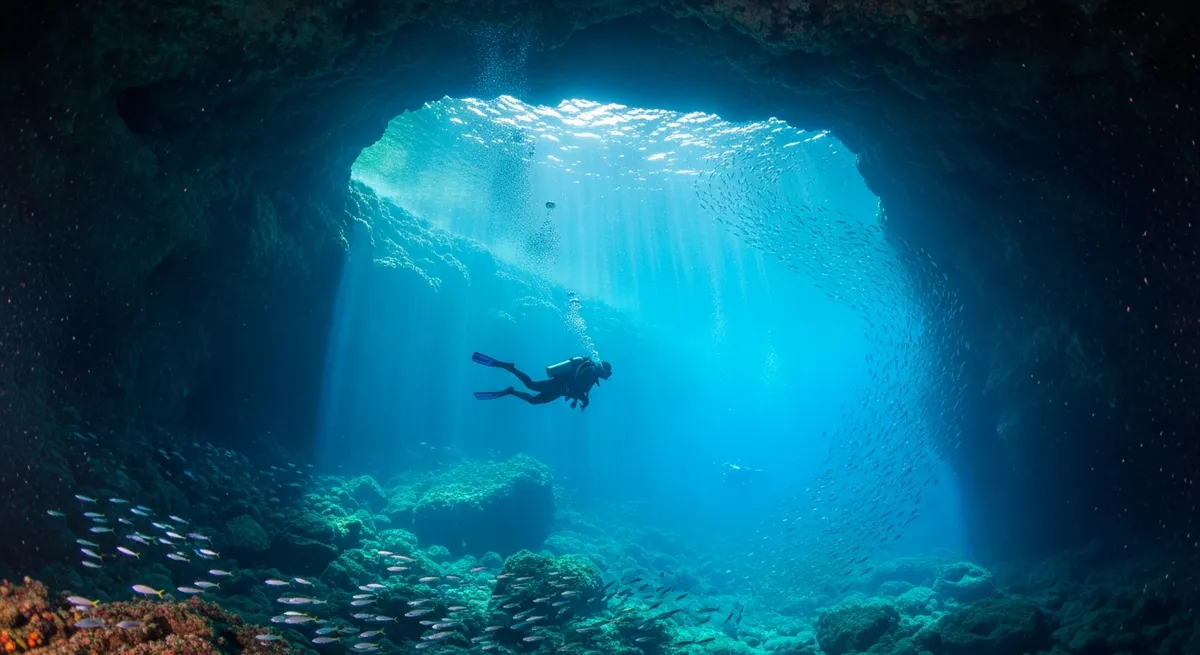
Vis and Biševo offer some of our favourite diving in Croatia, a region we think often gets overlooked for its quality. Forget what you think you know about Mediterranean diving; here, it’s all about dramatic topography and fascinating history. We’re talking about the famous Blue Cave, a surreal experience where sunlight filters through an underwater opening, turning the water an ethereal blue. It’s like swimming in liquid sapphire, absolutely stunning on a sunny morning. But Vis is more than just pretty caves. The B-17 bomber wreck is a standout, an incredibly preserved piece of history resting at 70 meters. It’s an expert dive, but for those with the training, it’s an emotional experience to glide over the fuselage and see the intricate details. For something shallower, the Vassilios cargo ship is a fantastic exploration, with plenty of entry points for light to stream through. Expect to see schools of saddled seabream darting around the wreckage, and if you’re lucky, a ribbonfish or two gliding past on a wall dive. Currents can be present, especially around the exposed pinnacles, so keep an eye on the dive brief. We’d suggest visiting in late spring or early autumn for the best visibility and fewer crowds.
Vis & Biševo Dive Site Map
Dive sites and dive centres in Vis & Biševo
Vis & Biševo Dive Sites
80 dive sites in Vis & Biševo
Airplane
The Airplane wreck near Vis is one of those sites we always come back to. Not because it’s a deep, challenging dive, but because it’s just… easy, and charming. Dropping down to 20 metres, you find the plane surprisingly intact, a B-17 Flying Fortress that ditched back in 1944. You can see the cockpit, the gun turrets, even some of the instrument panels if you look closely. It’s a proper piece of history right there on the seabed. We love exploring the fuselage, watching the schools of damselfish flit in and out of the openings where the wings once joined. There are often conger eels poking their heads out from darker corners, and nudibranchs grazing on the metal. The visibility here is usually excellent, so the light plays beautifully through the wreck, giving it a slightly eerie, peaceful feel. It’s perfect for new wreck divers, or anyone who just wants a relaxing dive with a cool story. Our top tip: go early to have it all to yourself, it can get busy.
Amfore
Amfore, off Vis, is a gentle dive, mostly shallow. We’ve found scattered Roman amphorae here, remnants of ancient trade, lying among the rocks and sand. It's an easy drift, suitable for newer divers or those looking for a relaxing second dive, often with damselfish darting between the fragments. Keep an eye out for octopus tucked into the pottery.
Amphora Wall
Amphora Wall gives you a good feel for diving off Vis. We usually drop onto the top of the wall around 10m, then follow it down to the ancient amphora scattered on the seabed at 26m. It's a nice easy drift along the wall, with plenty of cracks to peek into for crabs or small morays. Intermediate divers will enjoy the straightforward profile.
Anchor Wall
The Anchor Wall in Vis offers a gentle wall dive, dropping to around 26 meters. It's a nice easygoing spot for intermediate divers looking to explore some typical Mediterranean reef life, like smaller schools of damselfish and various nudibranchs on the rock face. You'll find a couple of old anchors embedded in the wall, which give the site its name and make for decent photo ops. It’s not a thrill-a-minute dive, but it's a solid, relaxing choice.
Anfore
Anfore, off Vis, is a gentle Mediterranean dive, ideal for those seeking a relaxed exploration. The site’s main draw is the scattered Roman amphorae, giving it a real sense of history. Visibility is typically good, making it easy to spot smaller critters amongst the rocks. We think it’s a good choice for newer divers or anyone wanting a straightforward, interesting second dive.
Anfore - Komiza
Dropping down at Anfore, near Komiža, you’re looking at a collection of ancient amphorae scattered across the seabed. It's a nice easy dive, shallow enough for most certifications, with good light playing on the pottery. We’d suggest it for anyone keen on a bit of history without the need for deep diving or complex navigation. Visibility here is usually pretty reliable, making it a relaxed afternoon trip.
Anfore - Mliki rat
Anfore - Mliki rat offers a look at a sunken pottery site, with amphorae scattered across the seabed. It’s a quiet dive, good for those interested in underwater archaeology without a strong current. The site is generally calm, making it suitable for divers looking for a relaxed exploration rather than dramatic coral formations or large pelagics. Visibility here is usually quite good, allowing for clear views of the pottery.
B-17G
The B-17G Flying Fortress off Vis Island is a proper dive, a deep one that asks a bit from you. Sitting around 70 meters, this is a technical dive, no two ways about it. The bomber lies mostly intact on the seabed, a surprisingly complete silhouette, with its wings still attached and the bomb bay doors ajar, hinting at its final moments. We've seen conger eels make homes in the fuselage and schools of executioner fish hover above the wings. It’s a somber, impressive dive that suits experienced divers looking for a true piece of history.
B-24 Tulsamerican
Dropping onto the B-24 Tulsamerican is like stepping back into a moment frozen in time. This isn’t just a pile of metal; it’s a sombre, almost perfectly preserved piece of history resting upright on the seabed. We love the way the light catches the aircraft's intact fuselage, wings, and engines, making the whole scene feel incredibly dramatic, especially when the thermoclines dance around it. The sheer scale is impressive, and exploring the cockpit section, even from the outside, gives you a real sense of its past. Look for the resident conger eels peeking out from the bomb bay and schools of delicate anthias fluttering around the gun turrets. This dive is definitely for experienced wreck enthusiasts, requiring careful buoyancy and a deep appreciation for its story. We’d suggest going in the late morning when the sun hits the wreck just right, illuminating its details and enhancing the visibility.
B-24 (Wreck)
Dropping down to the B-24 Liberator, you immediately feel the weight of history. It’s a proper aircraft wreck, not just a pile of scattered metal. The plane lies mostly intact at 40 metres, upright on the seabed, its wings still spread wide. We love that you can see the cockpit, the gun turrets, even the faint outline of the bomb bay doors. Swimming along the fuselage, you get a real sense of its scale. It’s a sobering reminder of the war, yet it's also a thriving artificial reef. Conger eels peer from gaping holes where engines once were, and bright orange scorpionfish blend perfectly with the encrusted metal. Our favourite part has to be finning past the tail section, imagining the sheer force of its landing. This dive is definitely for those who appreciate wrecks with a story, and who are comfortable at depth. Visibility here is usually good, often 20 metres or more, making it an excellent site for photographers too.
Baba Reef
Baba Reef is a straightforward dive, perfect for getting comfortable in the water. It’s a gentle slope down to 20 metres, with plenty of small nooks and crannies to explore. We’ve seen octopuses here, sometimes camouflaged so well you almost miss them, along with scorpionfish tucked into the rocks. It’s a good spot for newer divers or those looking for a relaxed afternoon underwater.
Bisevo Blue Cave
Forget the brochures. The Bisevo Blue Cave is one of those places you *think* you know from photos, but nothing prepares you for the actual experience. We love it because it’s a proper spectacle, a real natural marvel rather than just another pretty cave. You want to aim for mid-morning, around 10 or 11 AM, when the sun hits just right. You descend into what feels like a perfectly ordinary cavern, then you turn a corner and suddenly, the water itself is glowing. It’s an electric, ethereal blue that lights up the rock walls, transforming the space into something otherworldly. It’s not about finding rare nudibranchs here, though we've spotted dory lurking in the deeper corners. This dive is about immersion in pure, refracted light. The effect is created by sunlight bouncing off the white seabed through a narrow underwater opening, and it really is something else. Outside the main cave, the surrounding walls drop off, offering a good spot to look for brown skate or the occasional marbled electric ray resting on the sand. It’s a relatively easy dive, not too deep, making it perfect for divers who appreciate natural phenomena and want to capture some truly unique underwater photos. Just be mindful of boat traffic outside the cave, it can get busy in peak season.
Show all 80 dive sites in Vis & Biševo
- Bisevo Wall
- Blue Cave Bisevo
- Blue Lagoon
- BRIONI
- Brioni wreck
- Brusnik
- Campanella
- Cave
- Duba Wreck
- EDEN V
- Fortunal
- Fortunal (Wreck)
- Fun Dive Club - House Reef
- Gaće
- Galija
- Gorgonija
- Greben
- Green Cave
- Hellenistic Port
- Island Ravnik
- Kamik
- Kampanel
- KAVRAZ
- Komiza Wall
- Livka
- Lovac
- MANIA
- Marinero
- Medvidina spilja
- Mrduja Island Wreck
- Oključna
- Orud
- PANAYIOTA (POSSIBLY)
- Piscena
- Plocica
- Pokemon cave
- Poseidon Pillar
- Punta od covika
- Punta Planka
- Rt Kabal
- Rt Mociguzica
- Rt Pelegrin
- Sarac
- Sika
- Sirena Bay, Hvar
- Smociguzica
- SS Zagreb Wreck
- Stambedar
- Stomorska
- Stupiste
- Sutivan
- TETI
- Ursus (Wreck)
- Uvala Vlaka
- Vassilios T
- Vela Grcka
- Velika Špilja
- Vis Island Wall
- Vodnjak
- Voliči
- Wall
- Wall Bisevo
- Wreck Brioni
- Wreck Teti
- Wreck Wasilios T
- Zakamica
- Žali Potok/Šekoda
- Zid
Vis & Biševo Dive Centres
6 dive shops and operators in Vis & Biševo
Ocean Wildlife in Vis & Biševo
138 species recorded in Vis & Biševo
Vis & Biševo Daylight & Sunrise/Sunset
Sunrise and sunset times for Vis & Biševo, calculated from coordinates
Today - Sunday 11 October
Sunrise
06:04
Sunset
17:21
Daylight
11h 17m
Golden Hour
16:43
First light (dawn) at 05:36 · Last light (dusk) at 17:50
Monthly Averages
| Month | Sunrise | Sunset | Daylight |
|---|---|---|---|
| Jan | 07:25 | 16:45 | 9h 21m |
| Feb | 06:54 | 17:26 | 10h 32m |
| Mar | 06:09 | 18:01 | 11h 53m |
| Apr | 05:16 | 18:36 | 13h 20m |
| May | 04:34 | 19:11 | 14h 37m |
| JunLongest | 04:16 | 19:37 | 15h 21m |
| Jul | 04:29 | 19:34 | 15h 6m |
| Aug | 05:00 | 19:01 | 14h 1m |
| Sep | 05:34 | 18:10 | 12h 35m |
| OctNow | 06:08 | 17:16 | 11h 8m |
| Nov | 06:48 | 16:33 | 9h 45m |
| DecShortest | 07:21 | 16:22 | 9h 1m |
Times are approximate local times based on longitude. Actual times may vary slightly depending on the exact timezone observed in Vis & Biševo.
Where to Stay near Vis & Biševo
Prices from Booking.com. We may earn a commission at no extra cost to you.
Marine Protected Areas near Vis & Biševo
193 protected areas near Vis & Biševo - please respect local regulations when diving
Lastovski i Mljetski kanal
J. Molat-Dugi-Kornat-Žirje-Zlarin-Murter-Pašman-Ugljan-Rivanj-Sestrunj-Molat
Viški akvatorij
SZ Dalmacija i Pag
NP Kornati i PP Telašćica
Kornati
Nacionalni park Kornati
Lastovsko otočje
Lastovsko otočje
Park prirode Lastovsko otočje
Sitsko-žutska otočna skupina
Malostonski zaljev
Showing 12 largest of 193
Getting to Vis & Biševo
Gornji Humac
Split
Zadar
Plan & book
Ways to dive Vis & Biševo, from day trips to liveaboards.
Day trips & courses
via GetYourGuideGuided dives, courses and snorkel trips with instant booking.
Find dive trips in Vis & BiševoPlaces to stay
via Booking.comHotels and dive resorts near Vis & Biševo.
Search stays in Vis & BiševoDive insurance
Most travel insurance excludes or limits scuba. Check what you need before you go.
Dive insurance explainedPartner links: we may earn a commission if you book, at no extra cost to you. How we make money