Diving with Octopuses
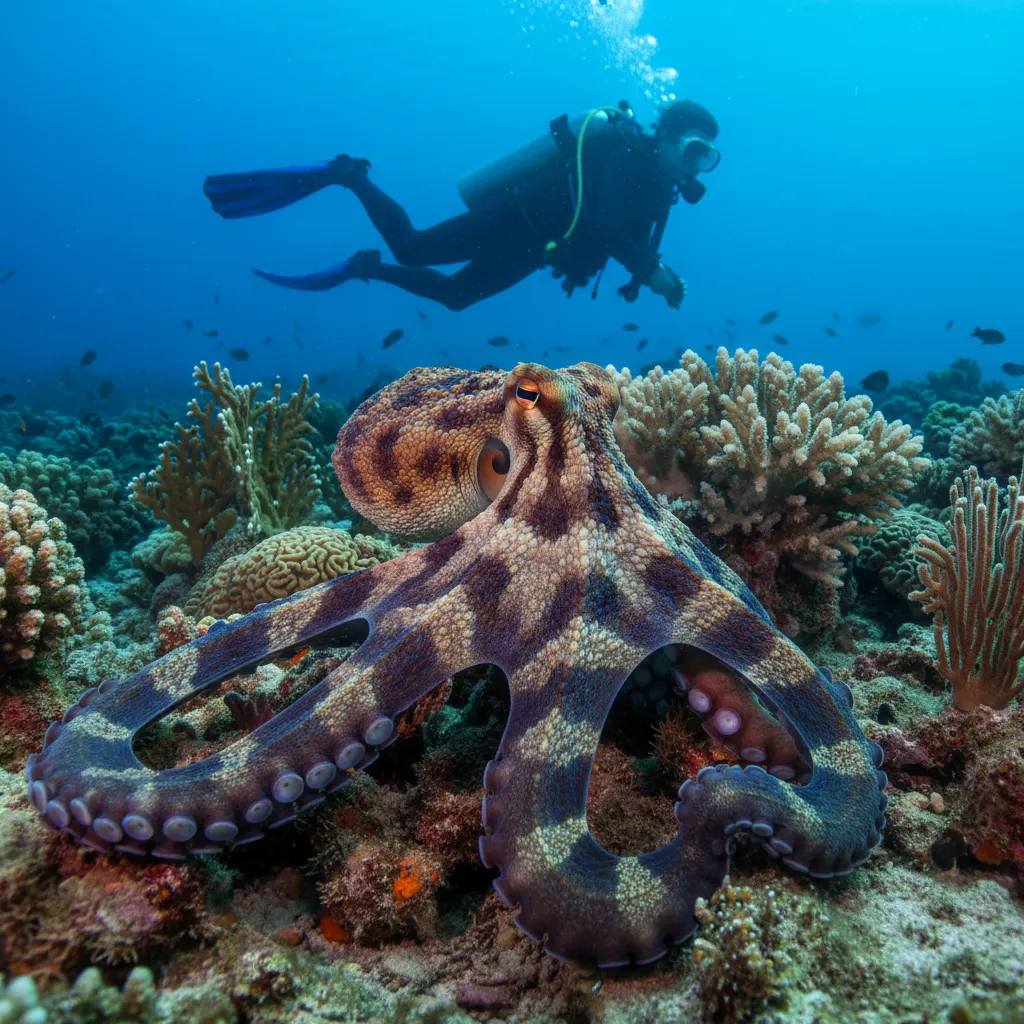
Octopuses are widely regarded as the most intelligent invertebrates on the planet, and watching one in its natural habitat is like observing an alien intelligence at work. These eight-armed cephalopods can change their colour, texture, and body shape in milliseconds - flowing from rough brown rock to smooth white sand to rippling coral in the blink of an eye. They solve problems, use tools, and display individual personalities that vary dramatically from one animal to the next. A patient diver who finds an octopus on the reef and settles in to watch will witness behaviours that challenge every assumption about invertebrate cognition: jet propulsion escapes, den-building with collected shells, coordinated colour displays during hunting, and a curious intelligence that sometimes turns its attention directly on you.
Where to Dive with Octopuses
Found across 41 countries, based on 1,499 verified observation records.

Croatia
4 areas

Spain
4 areas

Tunisia
1 area

South Africa
1 area

Portugal
2 areas

Seychelles
1 area

Philippines
3 areas

Puerto Rico
3 areas
+ 33 more countries
Best Time to See Octopuses
Lembeh Strait, Indonesia: year-round, with the best conditions (calm seas, good visibility) from March to November. Mediterranean: May to October for common octopus encounters on rocky reefs, with water temperatures of 18-26°C. Hawaii: year-round for day octopus, particularly good on shallow reefs along the Kona coast. Red Sea: year-round, with octopuses common on reef flats and in sandy areas. Bali and Komodo, Indonesia: year-round, with muck diving sites producing rare species. Octopuses are generally more active at night across all locations.
How to Dive with Octopuses
Octopus encounters reward patience and sharp observation skills far more than swimming ability. The common octopus (Octopus vulgaris) is found throughout the Mediterranean, Atlantic, and Caribbean, often in rocky reef areas with plenty of crevices. The day octopus (Octopus cyanea) is the star of Indo-Pacific reefs, frequently seen hunting across open reef during daylight hours. Look for telltale signs of an occupied den: a neat pile of empty shells and crab carapaces (called a midden) outside a hole in the reef. Once you spot an octopus, settle onto the sand at a respectful distance and stay still. Sudden movements will cause it to jet away or retreat into its den. Night diving dramatically increases your chances - many species are primarily nocturnal hunters. Lembeh Strait in Indonesia is legendary for rare species including the mimic octopus, blue-ringed octopus, and wonderpus. The Mediterranean offers excellent common octopus encounters on rocky reefs. Hawaii's day octopus is famously bold and often hunts in broad daylight across shallow reefs.
Is it Safe to Swim with Octopuses?
Most octopuses are completely harmless to divers and will flee rather than confront. The critical exception is the blue-ringed octopus (Hapalochlaena species), found in the Indo-Pacific - this tiny, beautiful animal carries tetrodotoxin, one of the most potent neurotoxins in nature, and a bite can be fatal. Never handle any octopus, no matter how small or docile it appears. Beyond venom risk, handling causes severe stress to octopuses and can damage their delicate skin. Maintain a respectful observation distance, avoid blocking den entrances, and never use a pointer or stick to prod an octopus out of hiding. If an octopus inks, back away slowly - the ink cloud is a stress response and a clear signal to give the animal space.
Conservation Status
Octopuses are under significant pressure from commercial fishing worldwide. The common octopus is one of the most heavily fished cephalopod species, with global catches exceeding 300,000 tonnes annually. Proposals for industrial octopus farming have raised serious ethical concerns given their demonstrated intelligence, problem-solving ability, and capacity for suffering. Habitat degradation, pollution, and ocean acidification also threaten octopus populations. Most octopus species are short-lived (1-2 years) with a single reproductive event followed by death, meaning populations can fluctuate dramatically. Supporting sustainable fishing practices and opposing octopus farming initiatives are meaningful conservation actions divers can take.
Species Profile


Recommended Equipment
Macro photography gear is essential for octopus encounters. A 60mm or 100mm macro lens captures stunning detail of their skin texture and colour changes. A compact camera with a strong macro mode works well too. Strobes or video lights reveal colours that are invisible under natural light at depth, and they illuminate the incredible texture changes in high detail. A pointer or muck stick (used only for stabilisation on sand, never to touch animals) helps with positioning on muck dives. Standard scuba gear is sufficient - octopuses are found at all recreational depths from the shallows to 40 metres. For night dives, bring a focused primary light and a red filter or low-power secondary light, as octopuses are less disturbed by red light.
Browse dive equipmentFrequently Asked Questions
Where is the best place to dive with octopuses?
Lembeh Strait in Indonesia is the world capital for octopus diversity, home to mimic octopuses, blue-ringed octopuses, wonderpus, and coconut octopuses. For common octopus encounters, the Mediterranean offers excellent rocky reef diving. Hawaii's Kona coast is renowned for bold day octopuses hunting in the shallows.
Are octopuses dangerous to divers?
The vast majority of octopuses are completely harmless and will flee from divers. The exception is the blue-ringed octopus, found in the Indo-Pacific, which carries potentially fatal tetrodotoxin. Never handle any octopus - admire them from a respectful distance.
How do you spot an octopus while diving?
Look for middens - piles of empty shells and crab remains outside a reef hole. Watch for subtle colour or texture shifts on rocks and coral. Night diving dramatically increases your chances, as many species are nocturnal hunters. A skilled dive guide at muck diving destinations can spot species you would never find on your own.
How intelligent are octopuses?
Octopuses are considered the most intelligent invertebrates, with roughly 500 million neurons (comparable to a dog). They solve mazes, use tools (carrying coconut shells for shelter), recognise individual humans, and display distinct personalities. Their intelligence evolved independently from vertebrates, making them a remarkable case of convergent evolution.
Can octopuses really change colour?
Yes, octopuses can change their colour, pattern, texture, and even body shape in under a second using specialised cells called chromatophores, iridophores, and papillae. They use this ability for camouflage, communication, and hunting. Some species can match the colour and texture of over a dozen different substrates.