Diving with Mantis Shrimp
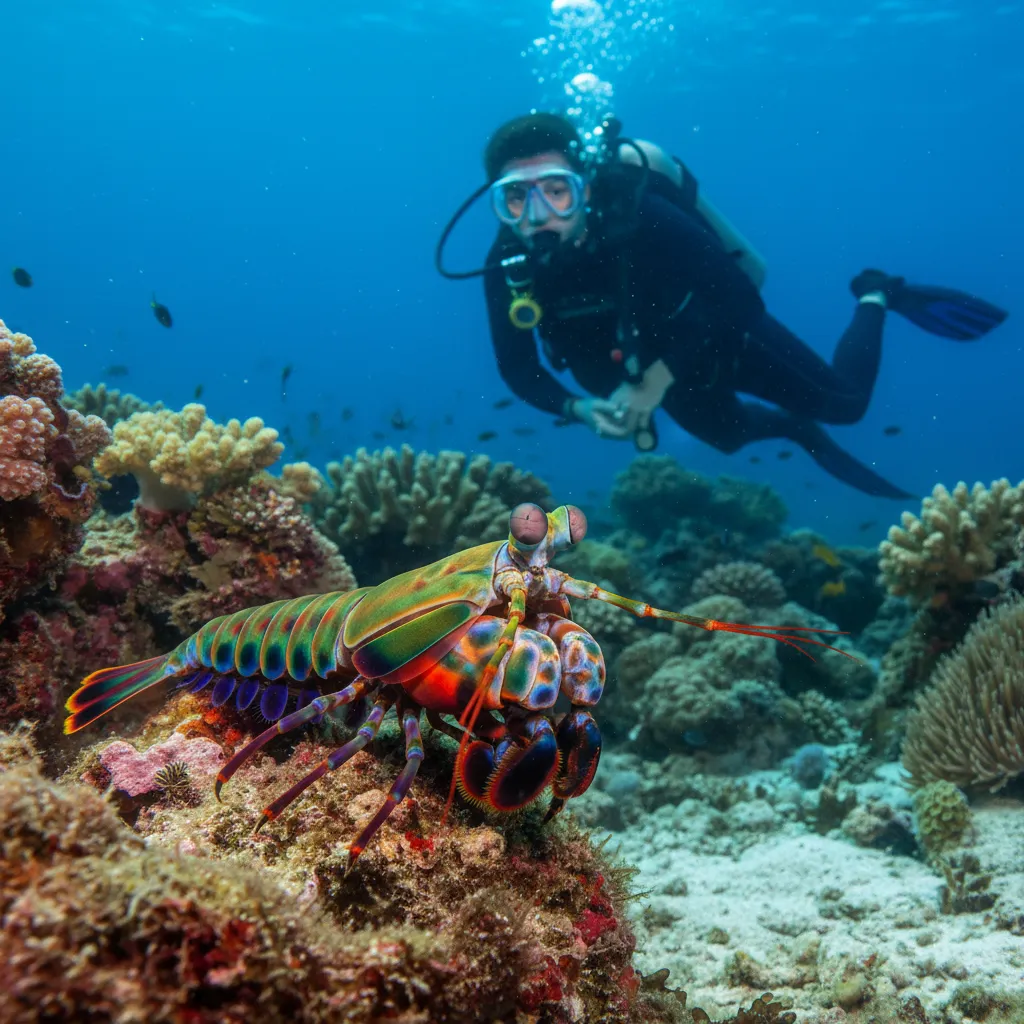
Mantis shrimp are among the most extraordinary creatures in the ocean - and quite possibly the most underestimated. These stomatopods, which are neither mantises nor shrimp but belong to their own ancient crustacean order, possess the most complex eyes in the animal kingdom with 16 types of colour receptors (humans have just three), can perceive ultraviolet light and polarised light, and wield appendages that strike with the speed of a bullet - literally. The peacock mantis shrimp (Odontodactylus scyllarus), the poster child of the group, delivers a punch clocked at 23 metres per second, accelerating with the force of a .22 calibre bullet. The strike is so fast it creates cavitation bubbles that produce a secondary shockwave, a flash of light, and temperatures approaching that of the sun's surface - all in a few milliseconds. There are over 450 species of mantis shrimp divided into 'smashers' that break open hard shells and 'spearers' that impale soft-bodied prey. For divers patient enough to find them peering out from rubble holes with their alien stalked eyes, mantis shrimp encounters are mesmerising windows into an evolutionary marvel that has been perfecting its hunting techniques for over 400 million years.
Where to Dive with Mantis Shrimp
Found across 41 countries, based on 418 verified observation records.

United States
2 areas

Mexico
4 areas

New Zealand
2 areas

Ecuador
1 area

Puerto Rico
3 areas

Bahamas
6 areas

US Virgin Islands
1 area

Barbados
2 areas
+ 33 more countries
Best Time to See Mantis Shrimp
Lembeh Strait, Indonesia: year-round, with the calmest conditions from March to November. Best mantis shrimp encounters are on afternoon and dusk dives when they're most active. Anilao, Philippines: year-round, with peak season from November to June. Caribbean (Florida, Bonaire, Curaçao): year-round on reef rubble from shallow water to 20 metres. Red Sea: year-round, look on reef flats and sandy areas adjacent to coral reefs. Great Barrier Reef, Australia: year-round, with large smasher species found on inshore reefs and rubble zones. Mantis shrimp are generally more visible at dusk and at night when they emerge to hunt.
How to Dive with Mantis Shrimp
Mantis shrimp are found throughout tropical and subtropical waters worldwide, but the best encounters happen on muck dives and rubble-strewn reef flats. They live in burrows - either self-excavated in sand and rubble or in existing holes in dead coral. The key to finding them is looking for their distinctive stalked eyes protruding from a dark hole. Lembeh Strait in Indonesia is the world's premier mantis shrimp destination - virtually every muck dive produces sightings, and the rainbow-coloured peacock mantis shrimp is a regular star. Anilao in the Philippines is equally productive. In the Caribbean, Neogonodactylus species are common on reef rubble from Florida to Brazil. The best time to observe mantis shrimp behaviour is during the late afternoon when they're often more active and may be partially emerged from their burrows hunting. Some species, particularly the smashers, maintain elaborate dens with carefully sorted rubble and shell fragments - look for unusually tidy circular arrangements on the reef flat. At night, some species emerge fully to hunt, offering the best photography opportunities. A skilled local dive guide at muck diving destinations is invaluable - they know individual animals and their burrow locations.
Is it Safe to Swim with Mantis Shrimp?
Never attempt to handle a mantis shrimp. Both smashers and spearers can inflict serious injuries. Smasher species can break aquarium glass and have been documented breaking human fingers - their strikes generate forces hundreds of times their body weight. Spearer species have razor-sharp barbed appendages that can cause deep lacerations. Even small species pack a surprising punch. If you find a mantis shrimp partially emerged from its burrow, keep your fingers well clear of the entrance. Avoid placing your hands into rubble holes or crevices on reef flats where mantis shrimp live. The force of their strike is so extreme that researchers handle them with thick gloves and purpose-built containers. Divers who have been 'thumbed' by a mantis shrimp (a common experience when handling them for aquarium collection) report intense pain and significant bruising or cuts.
Conservation Status
Most mantis shrimp species are not formally assessed for conservation status, which is itself a concern - we know relatively little about their population dynamics. They are collected for the marine aquarium trade, where the peacock mantis shrimp commands high prices but is notoriously difficult to keep (it will break glass tanks if the glass is too thin). In some Asian countries, larger species (particularly Oratosquilla oratoria) are fished commercially and considered a seafood delicacy. Habitat destruction is the primary threat - mantis shrimp depend on healthy rubble zones, reef flats, and sandy substrates, all of which are degraded by dredging, trawling, coastal development, and blast fishing. Coral reef decline indirectly affects mantis shrimp by reducing the rubble habitat they depend on. Supporting marine protected areas and opposing destructive fishing practices protects mantis shrimp habitat.
Species Profile


Recommended Equipment
Macro photography is the name of the game for mantis shrimp. A 100mm macro lens is ideal for capturing the extraordinary detail of their eyes, colourful body segments, and hunting appendages. A 60mm macro works well too and gives slightly more working distance. Dual strobes are essential - mantis shrimp live in burrows, and you need strong, well-positioned light to illuminate them without creating harsh shadows in the hole. A snoot or focused light can create dramatic spotlight effects. For video, a macro diopter on a wide-angle setup can work but dedicated macro is better. A pointer or muck stick (for stabilisation on rubble, never for touching animals) is standard kit at muck diving sites. Patience is your most important piece of equipment - settle in front of an occupied burrow, stay still, and wait for the mantis shrimp to emerge. They're curious animals and will often come out to investigate a patient observer.
Browse dive equipmentFrequently Asked Questions
Where is the best place to dive with mantis shrimp?
Lembeh Strait in Indonesia is the world's best destination for mantis shrimp encounters. The peacock mantis shrimp is a regular sighting on muck dives. Anilao in the Philippines is equally productive. In the Caribbean, mantis shrimp are common on reef rubble from Florida to the ABC islands.
How hard can a mantis shrimp punch?
The peacock mantis shrimp delivers one of the fastest strikes in the animal kingdom at 23 metres per second, accelerating with over 1,500 Newtons of force. The strike is so fast it creates cavitation bubbles that collapse with a secondary shockwave, a flash of light, and momentary temperatures approaching 4,700°C. They can break aquarium glass and human fingers.
Are mantis shrimp dangerous to divers?
They won't seek out divers, but they can inflict serious injuries if handled or cornered. Smasher species can break bones, and spearers can cause deep lacerations. Never place your hands in rubble holes on reef flats where mantis shrimp live. Observe them from a respectful distance and keep fingers away from burrow entrances.
Why do mantis shrimp have such complex eyes?
Mantis shrimp eyes have 16 types of photoreceptor cells (humans have 3), allowing them to see ultraviolet, infrared, and polarised light. Each eye can move independently and perceive depth on its own. This extraordinary vision likely evolved for species recognition (many mantis shrimp fluoresce under UV light), prey detection, and communication using polarised light signals invisible to other animals.
Can you keep mantis shrimp in an aquarium?
While some aquarists keep mantis shrimp, they're challenging - smasher species can break thin glass tanks and will kill tankmates. They require species-only setups with appropriately thick walls. Collecting mantis shrimp from the wild also raises conservation concerns. If you want to appreciate these animals, observing them on a muck dive in their natural habitat is far more rewarding.