Diving with Southern Right Whales
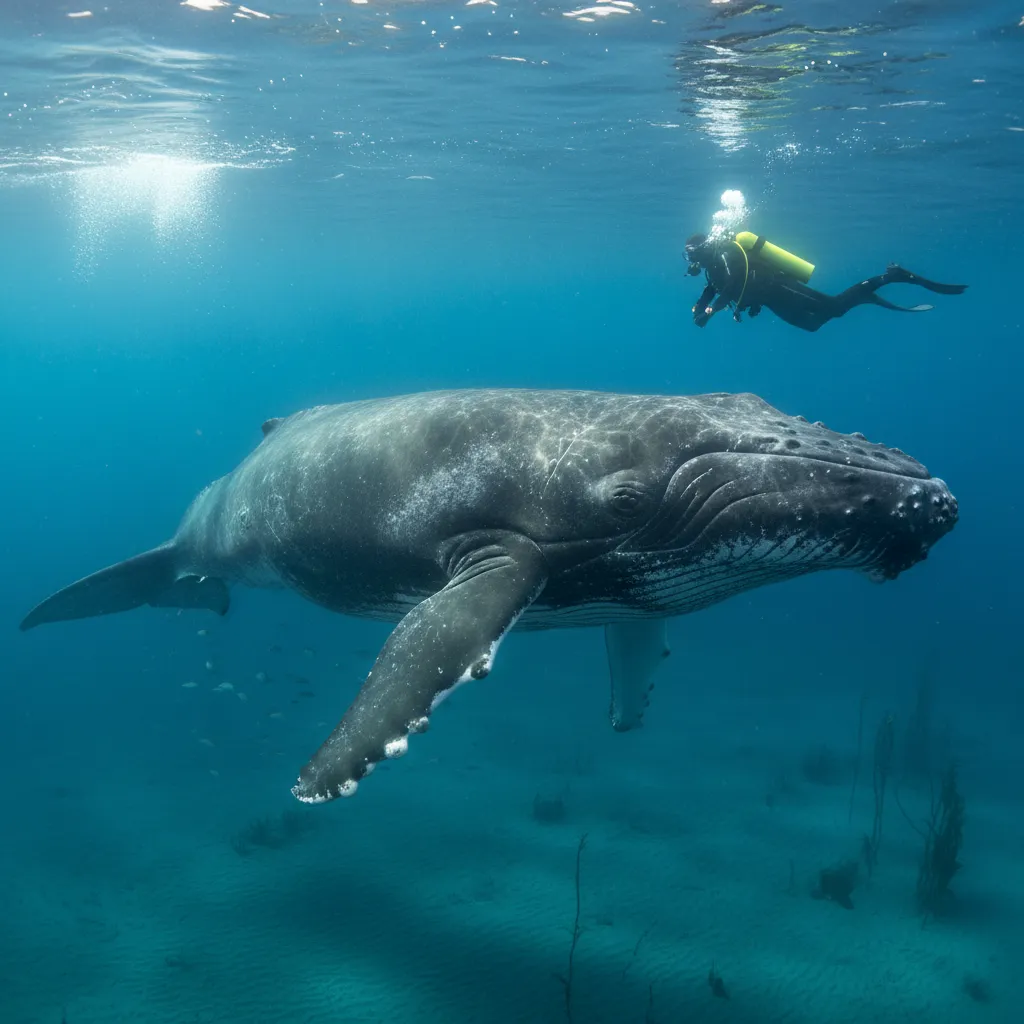
Southern right whales earned their grim name from whalers who considered them the 'right' whale to hunt - they swam slowly, floated when killed, and yielded enormous quantities of oil and baleen. Today, these same traits that once made them easy targets make them one of the most rewarding whale species for marine encounters. Southern rights are slow, curious, and remarkably approachable, often initiating contact by swimming directly toward boats and snorkellers. Their massive, rotund bodies - up to 18 metres and 80 tonnes - are adorned with distinctive white callosities on the head, unique to each individual like a fingerprint. Watching a mother and calf resting in a sheltered bay, the calf playfully rolling at the surface, is one of the southern hemisphere's great wildlife spectacles.
Where to Dive with Southern Right Whales
Found across 5 countries, based on 2,743 verified observation records.




Best Time to See Southern Right Whales
Southern right whales follow a predictable annual cycle, migrating from Southern Ocean feeding grounds to sheltered coastal waters for breeding. Hermanus and Walker Bay (South Africa): June to November, peaking August to October. Península Valdés (Argentina): June to December, with peak calving in September and October. Head of Bight (Australia): May to October, with the largest aggregations in August. Warrnambool and the Great Australian Bight also have winter sightings. Auckland Islands (New Zealand) have a growing population but are remote and rarely visited.
How to Dive with Southern Right Whales
In-water encounters with southern right whales are possible at select locations, primarily by snorkelling. Argentina's Península Valdés is one of the few places offering regulated in-water encounters - operators position snorkellers near resting mother-calf pairs in the calm, shallow waters of the Golfo Nuevo. The whales often approach out of curiosity, particularly the calves. In South Africa's Hermanus and Walker Bay, land-based whale watching is world-class (whales come within 20 metres of the cliffs), though in-water encounters are not permitted. Australia's Head of Bight offers spectacular cliff-top viewing of large aggregations. Boat-based encounters are available in several locations. You do not need any certification - confident swimming ability is sufficient for in-water programs.
Is it Safe to Swim with Southern Right Whales?
Southern right whales are among the most docile large whales, but their size demands caution. At up to 80 tonnes, even gentle contact could be harmful to a swimmer. Calves are particularly playful and may approach very closely - resist the temptation to touch them, as this can agitate the mother. Southern right whales have powerful tail flukes and can breach unexpectedly, launching their entire body clear of the water. Maintain a safe distance from breaching whales at all times. In Argentina, in-water encounters are conducted under strict regulation with trained guides who manage positioning and timing. Never enter the water near southern right whales without a licensed operator.
Conservation Status
Southern right whale populations were devastated by centuries of commercial whaling, with some populations reduced to just a few hundred individuals. Since international protection was established in 1935, most populations have recovered well, and the species is currently classified as Least Concern by the IUCN, though the southwest Atlantic population remains of concern. Ongoing threats include entanglement in fishing gear, ship strikes, kelp gull harassment of calves in Argentina (gulls have learned to feed on whale skin), and the effects of climate change on their krill-based food supply. Whale-watching tourism at Península Valdés and Hermanus generates tens of millions of dollars annually, providing powerful incentives for continued protection.
Species Profile

Recommended Equipment
For in-water encounters, standard snorkel gear is all that is required: a comfortable mask, snorkel, and fins. The waters at Península Valdés can be cool (12-16°C from June to December), so a 5mm or even 7mm wetsuit is recommended, along with a hood and gloves. In South Africa, a 5mm wetsuit suits the temperate waters of Walker Bay. A wide-angle underwater camera is essential - a GoPro on a short pole works perfectly as these whales come very close. For land-based viewing at Hermanus or Head of Bight, binoculars and a telephoto camera lens are more appropriate.
Browse dive equipmentFrequently Asked Questions
Where can you see southern right whales?
The best locations are Hermanus (South Africa) for land-based viewing, Península Valdés (Argentina) for in-water encounters and boat trips, and Head of Bight (Australia) for clifftop viewing of large aggregations. All offer sightings from June to November.
Can you swim with southern right whales?
Yes, in-water encounters are available at Península Valdés, Argentina, where licensed operators position snorkellers near resting mother-calf pairs. The whales - especially calves - often approach out of curiosity. In-water encounters are not permitted in South Africa.
Why are they called right whales?
Whalers named them the 'right' whale to hunt because they swam slowly, stayed close to shore, floated when killed (due to high blubber content), and yielded large quantities of oil and baleen. This made them easy and profitable targets, leading to near-extinction.
What is the best time to see southern right whales in South Africa?
Southern right whales visit the coast of Hermanus and Walker Bay from June to November, with peak sightings in August to October. The annual Hermanus Whale Festival in September celebrates their arrival. Whales often come within 20 metres of the shore cliffs.
How do you tell southern right whales apart?
Each southern right whale has a unique pattern of callosities - rough, whitish patches of thickened skin on the head. These patterns are as distinctive as human fingerprints and are used by researchers to identify and track individual whales over their lifetimes.
More Encounter Guides
Humpback Whales
Encountering a humpback whale underwater is one of the most profound experiences available to ocean ...
Orcas (Killer Whales)
Orcas are the ocean's apex predators - intelligent, social, and devastatingly effective hunters that...
Dolphins
Dolphins are the ocean's most joyful inhabitants, and swimming with them in the wild is an experienc...
Sperm Whales
The sperm whale is the largest toothed predator on Earth, a deep-ocean titan that routinely dives be...
Blue Whales
The blue whale is the largest animal ever to have lived on Earth - larger than any dinosaur, reachin...
Spinner Dolphins
Spinner dolphins are the acrobats of the ocean, famous for their spectacular aerial displays - launc...