Diving with Dolphins
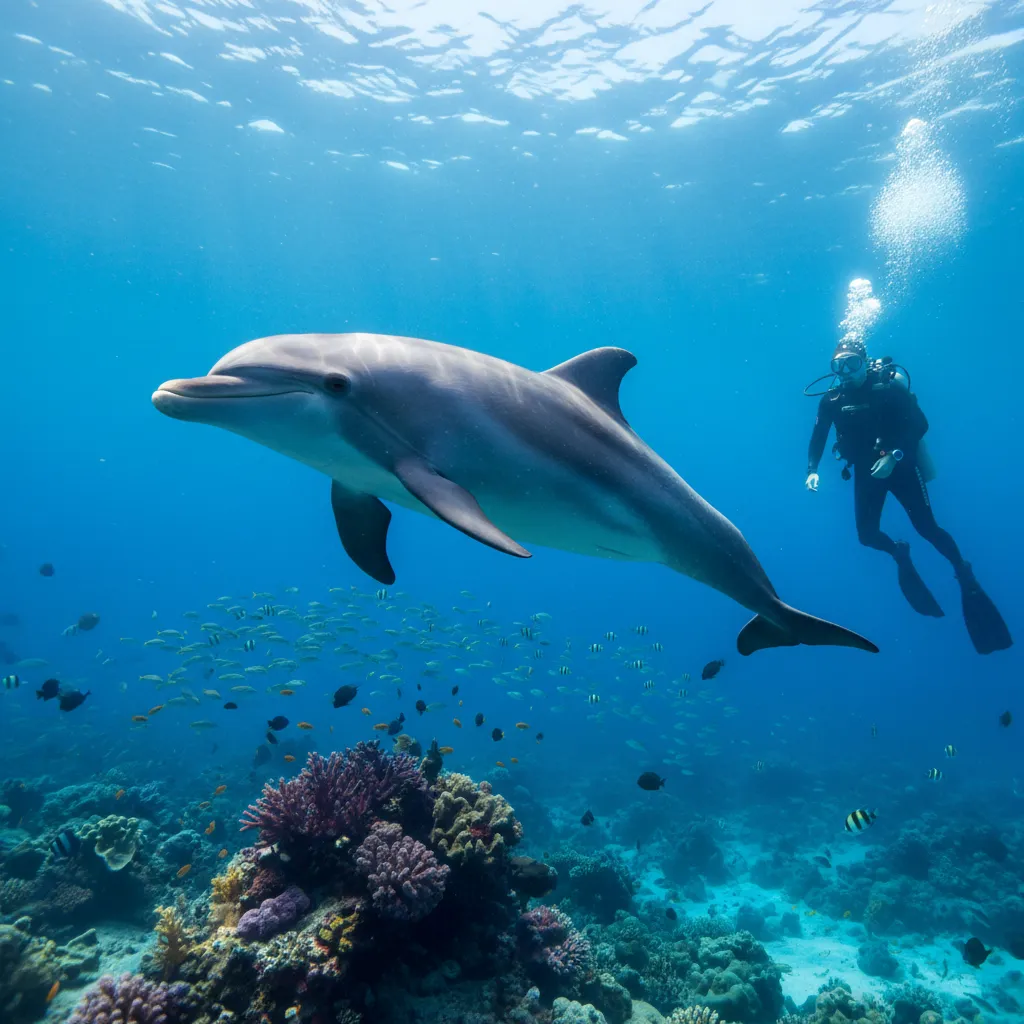
Dolphins are the ocean's most joyful inhabitants, and swimming with them in the wild is an experience of pure delight. Bottlenose dolphins - the most commonly encountered species - are intelligent, playful, and genuinely curious about humans. They'll zoom past at speed, circle back to check you out, and sometimes engage in prolonged interactions, mimicking your movements or blowing bubble rings. Unlike many marine encounters that are passive observations, dolphin interactions feel like genuine two-way engagement. The sound of their clicks and whistles underwater is something you feel as much as hear.
Where to Dive with Dolphins
Found across 58 countries, based on 51,064 verified observation records.

United Kingdom
5 areas

United States
2 areas

Portugal
2 areas

Bahamas
7 areas

Ireland
2 areas
Belize
3 areas

New Zealand
3 areas

France
2 areas
+ 50 more countries
Best Time to See Dolphins
Dolphin encounters are available year-round in many tropical locations. Bahamas (Bimini): May to September for spotted dolphins. Red Sea (Egypt): year-round at Samadai, Sha'ab El Erg, and Sataya Reef. Hawaii: year-round spinner dolphins (check current regulations). Azores: June to October for multiple dolphin species. Mauritius: year-round bottlenose dolphins. New Zealand (Kaikoura): year-round dusky dolphins. The Maldives: year-round spinner dolphins on early morning dhoni trips.
How to Dive with Dolphins
Wild dolphin encounters are usually done while snorkelling or freediving, as scuba bubbles can deter dolphins and their fast-moving, surface-oriented behaviour doesn't suit scuba logistics. The technique is to enter the water quietly, swim steadily (not frantically), and let the dolphins decide whether to interact. Making eye contact, diving down, and spinning underwater can attract their attention. The Bahamas (Bimini) has resident pods of spotted dolphins that have been interacting with humans for decades. Egypt's Samadai Reef has a protected spinner dolphin population. Hawaii has wild spinner dolphins, though regulations increasingly restrict interaction. The Red Sea's Sha'ab El Erg and Sataya Reef offer reliable spinner dolphin encounters.
Is it Safe to Swim with Dolphins?
Dolphins are not dangerous to humans. They are, however, powerful swimmers and large animals (bottlenose dolphins can be 3-4 metres long), so maintain awareness. Never chase, corner, or attempt to touch a dolphin. In some locations, regulations restrict approach distances and interaction times to prevent harassment of resting dolphins. Hawaii, for example, has a 50-yard rule for spinner dolphins to prevent disturbance of their daytime resting behaviour. Always choose operators who follow responsible interaction guidelines.
Conservation Status
Bottlenose dolphins are classified as Least Concern globally, but many local populations face significant threats including bycatch in fishing nets, pollution (particularly heavy metals and plastics), noise pollution from shipping and sonar, habitat degradation, and live capture for marine parks. Spinner dolphins are also Least Concern globally but vulnerable to disturbance from tourism - resting pods that are repeatedly disrupted during the day show reduced fitness. Responsible dolphin tourism that respects approach distances and interaction times is crucial for maintaining healthy populations.
Species Profile

Recommended Equipment
Snorkelling gear is all you need: a comfortable mask with good visibility, a snorkel, and fins. Freediving fins allow you to keep pace with dolphins more effectively. A rash guard or thin wetsuit provides sun protection. An underwater camera is highly recommended - a GoPro or action camera handles the fast-moving encounters well. Some operators offer hookah (surface-supplied air) for extended bottom time at dolphin sites. No special equipment beyond standard snorkelling gear is needed.
Browse dive equipmentFrequently Asked Questions
Where can you swim with wild dolphins?
Top wild dolphin swim destinations include Bimini (Bahamas) for spotted dolphins, Samadai and Sataya Reef (Egypt) for spinner dolphins, the Azores for multiple species, and Kaikoura (New Zealand) for dusky dolphins.
Is it safe to swim with wild dolphins?
Yes, wild dolphins are not dangerous to humans. They are curious and may approach swimmers voluntarily. The main consideration is to avoid chasing or cornering dolphins, and to follow local regulations about approach distances.
What is the best way to interact with wild dolphins?
Enter the water quietly, swim steadily, make eye contact, and let the dolphins approach you. Freediving and spinning underwater can attract their attention. Never chase or try to touch them. If dolphins are resting, give them space.
Do you need a certification to swim with dolphins?
No, most wild dolphin encounters are done while snorkelling. You just need to be a confident swimmer. Some locations offer scuba encounters, but snorkelling generally works better as dolphins are fast-moving, surface-oriented animals.
More Encounter Guides
Humpback Whales
Encountering a humpback whale underwater is one of the most profound experiences available to ocean ...
Orcas (Killer Whales)
Orcas are the ocean's apex predators - intelligent, social, and devastatingly effective hunters that...
Sperm Whales
The sperm whale is the largest toothed predator on Earth, a deep-ocean titan that routinely dives be...
Blue Whales
The blue whale is the largest animal ever to have lived on Earth - larger than any dinosaur, reachin...
Southern Right Whales
Southern right whales earned their grim name from whalers who considered them the 'right' whale to h...
Spinner Dolphins
Spinner dolphins are the acrobats of the ocean, famous for their spectacular aerial displays - launc...