Diving with Spinner Dolphins
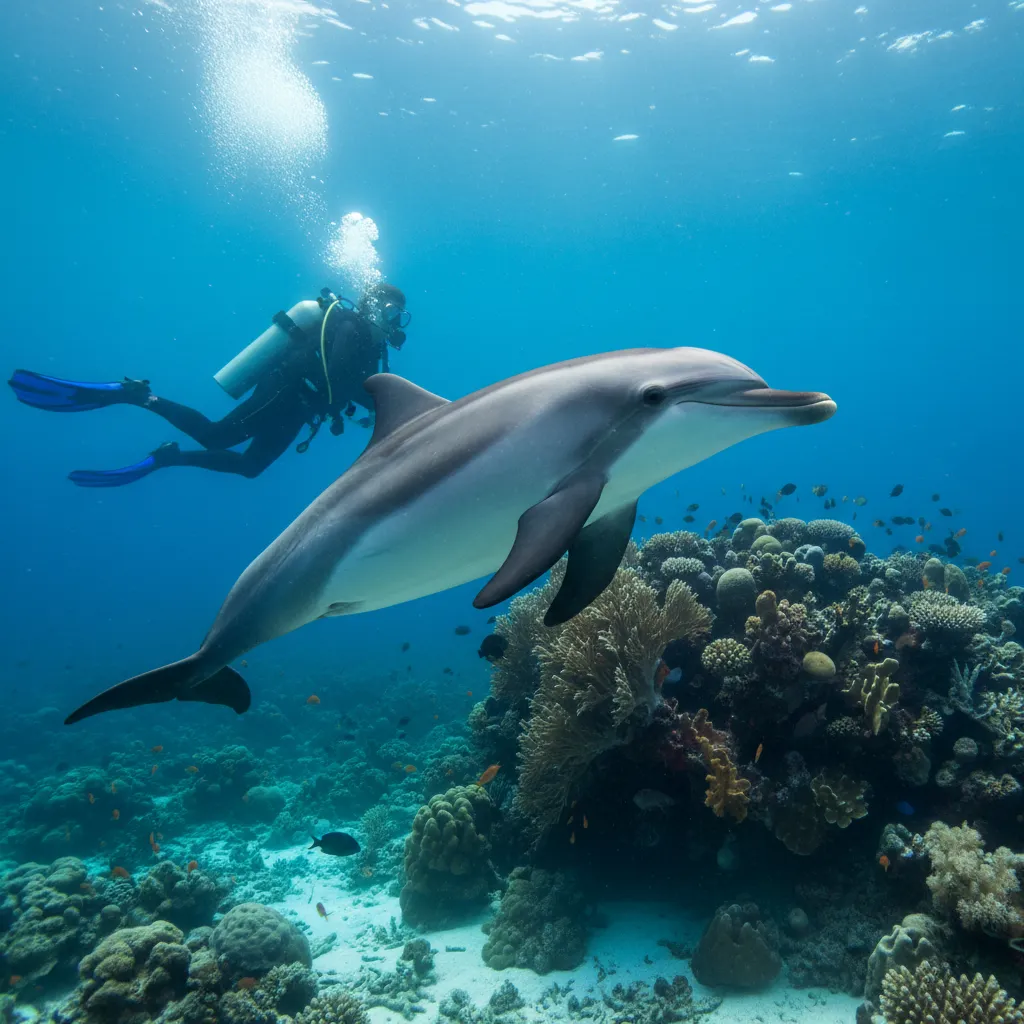
Spinner dolphins are the acrobats of the ocean, famous for their spectacular aerial displays - launching themselves from the water and spinning up to seven times on a single leap before crashing back into the sea. Found in large, sociable pods of dozens to hundreds of individuals across the world's tropical oceans, they are among the most frequently encountered dolphins on the planet. In the water, they are fast, inquisitive, and endlessly playful, weaving around snorkellers in coordinated groups with a grace that makes them seem almost choreographed. The experience of floating in warm, clear water as a pod of fifty spinners streams past - clicking, whistling, and occasionally leaping clear of the surface in your peripheral vision - is pure, uncomplicated joy.
Where to Dive with Spinner Dolphins
Found across 28 countries, based on 863 verified observation records.

Egypt
7 areas

Mayotte
1 area

French Polynesia
1 area

Seychelles
1 area

Samoa
1 area

Maldives
5 areas

Tanzania
2 areas

Dominica
2 areas
+ 20 more countries
Best Time to See Spinner Dolphins
Spinner dolphins are present year-round at most tropical locations, making them one of the most reliably encountered cetaceans. Red Sea (Sataya and Samadai): year-round, with calmest seas from March to November. Hawaii: year-round in sheltered bays on leeward coasts, but note the 50-yard approach regulation. Fernando de Noronha, Brazil: year-round, with the largest pods (up to 1,000 individuals) seen from the Baia dos Golfinhos viewpoint. Maldives: year-round on early morning dolphin cruises. Bali and Lovina: year-round morning trips. The consistency of spinner dolphin encounters makes them an excellent choice for travellers who want a reliable marine mammal experience.
How to Dive with Spinner Dolphins
Spinner dolphin encounters are typically done while snorkelling from boats that locate resting or socialising pods. In the Red Sea, the reefs of Sataya (Dolphin House) and Samadai are among the world's most reliable locations - large resident pods rest in shallow lagoons during the day, and snorkellers can enter the water at a respectful distance. Hawaii also has spinner dolphins resting in sheltered bays, though recent regulations (effective 2021) prohibit swimming within 50 yards of spinners to protect their daytime rest. Fernando de Noronha, Brazil, has large pods visible from clifftops and accessible on boat trips. In the Maldives, early morning dhoni trips frequently encounter spinners in channels between atolls. No certification is needed - these are surface snorkelling encounters. The key technique is to enter the water quietly, float passively, and let the dolphins come to you.
Is it Safe to Swim with Spinner Dolphins?
Spinner dolphins pose no physical danger to swimmers - they are small dolphins, typically 1.5-2 metres in length. The primary safety consideration is an ethical one: spinners rest in shallow bays during the day after hunting in deep water at night. Excessive human disturbance during rest periods can cause chronic stress and force dolphins to abandon preferred resting sites. Always follow local regulations regarding approach distances and times. At Samadai Reef in Egypt, a zoning system restricts where snorkellers can swim to minimise disturbance. In Hawaii, federal regulations make it illegal to swim within 50 yards of spinner dolphins. Choose operators who respect rest behaviour and do not chase pods.
Conservation Status
Spinner dolphins are classified as Least Concern by the IUCN, with healthy populations across the tropics. However, they suffered enormous losses during the 20th century tuna purse-seine fishery in the eastern tropical Pacific - spinners associate with yellowfin tuna, and millions were killed as bycatch when nets were set around dolphin schools to catch the tuna beneath. Changes to fishing practices have dramatically reduced dolphin mortality, but some populations have not fully recovered. Today, the main threats to spinners are habitat disturbance from tourism (ironically), boat strikes in busy coastal areas, and marine pollution. Responsible tourism operations that follow approach guidelines actually benefit spinner conservation by providing economic value to their habitats.
Species Profile

Recommended Equipment
A mask, snorkel, and fins are all the equipment you need for spinner dolphin encounters. Freediving fins are helpful for keeping pace if dolphins are moving, but short snorkel fins work fine when dolphins are resting and approaching you. A rash guard or thin wetsuit provides sun protection during extended surface swims in tropical waters (27-30°C). An underwater camera with a wide-angle setting is ideal - spinners move fast and often pass in groups, so a GoPro or action camera on a short pole captures the action better than a bulky housed camera. Avoid bright, noisy, or splashy entry into the water.
Browse dive equipmentFrequently Asked Questions
Where can you swim with spinner dolphins?
The best spinner dolphin destinations are Sataya and Samadai reefs in Egypt's Red Sea (year-round), Fernando de Noronha in Brazil (year-round), the Maldives (year-round morning trips), and Hawaii - though Hawaii's 2021 regulations now prohibit swimming within 50 yards of spinners.
Why do spinner dolphins spin?
Scientists believe spinning serves multiple purposes: communication within the pod, dislodging parasites and remora fish, and possibly pure play. A single leap can involve up to seven full rotations. Spinners are the only dolphins that perform this behaviour consistently.
Can you swim with spinner dolphins in Hawaii?
As of 2021, NOAA regulations prohibit swimming within 50 yards (45 metres) of spinner dolphins in Hawaii. This rule protects their critical daytime rest in shallow bays. You can still observe them from boats at a respectful distance, and some operators offer compliant viewing trips.
Are spinner dolphins friendly to humans?
Spinner dolphins are naturally curious and social. In locations where they are habituated to human presence (like the Red Sea), they may approach snorkellers closely and swim around them. They are not aggressive and pose no danger to swimmers.
What is the best time of day to see spinner dolphins?
Spinner dolphins hunt in deep water at night and return to shallow bays and reefs in the morning to rest and socialise. Early to mid-morning is typically the best time for encounters, when pods are settling into sheltered areas. Late afternoon may see them becoming more active before their nightly feeding.
More Encounter Guides
Humpback Whales
Encountering a humpback whale underwater is one of the most profound experiences available to ocean ...
Orcas (Killer Whales)
Orcas are the ocean's apex predators - intelligent, social, and devastatingly effective hunters that...
Dolphins
Dolphins are the ocean's most joyful inhabitants, and swimming with them in the wild is an experienc...
Sperm Whales
The sperm whale is the largest toothed predator on Earth, a deep-ocean titan that routinely dives be...
Blue Whales
The blue whale is the largest animal ever to have lived on Earth - larger than any dinosaur, reachin...
Southern Right Whales
Southern right whales earned their grim name from whalers who considered them the 'right' whale to h...