Diving with Blue Whales
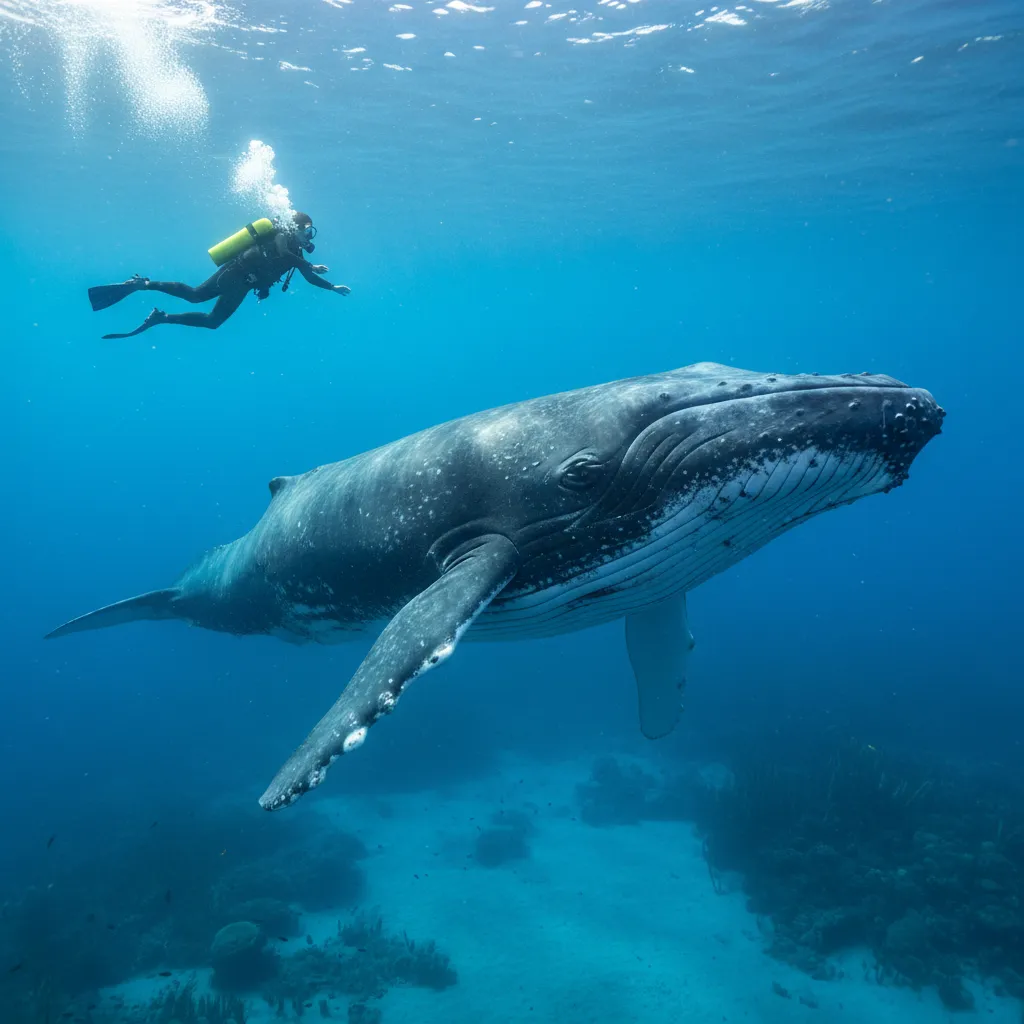
The blue whale is the largest animal ever to have lived on Earth - larger than any dinosaur, reaching 30 metres in length and weighing up to 150 tonnes. Seeing one from a boat is extraordinary, but slipping into the water alongside one is an experience that defies language. Their sheer scale is incomprehensible until you are in their presence: a single eye the size of a grapefruit fixes on you as a body longer than a basketball court glides past with impossible grace. These encounters are among the rarest and most sought-after in all of marine wildlife tourism, available in only a handful of locations worldwide.
Where to Dive with Blue Whales
Found across 13 countries, based on 1,181 verified observation records.

Portugal
2 areas

Iceland
1 area

Mexico
2 areas

Australia
2 areas

Sri Lanka
1 area

South Africa
1 area

United States
1 area

Canada
2 areas
+ 5 more countries
Best Time to See Blue Whales
Sri Lanka (Mirissa) has blue whale sightings from December to April, with peak encounters in February and March when whales migrate through the southern coast. The Azores see blue whales from March to June, with April being the most reliable month. Baja California's Sea of Cortez has blue whales from January to March. Iceland offers summer sightings from June to August, primarily from boats in Husavik. Monterey Bay, California has boat-based sightings from June to October. In-water encounters remain rare at all locations and are never guaranteed.
How to Dive with Blue Whales
Blue whale encounters are almost exclusively snorkelling-based and are exceptionally challenging to arrange. These are fast-swimming, open-ocean animals that do not linger near the surface the way humpbacks do in breeding grounds. Sri Lanka's south coast, particularly around Mirissa, offers some of the most accessible encounters - operators use experienced spotters to locate whales, then carefully position snorkellers ahead of their travel path. The Azores offers boat-based whale watching with occasional in-water opportunities. Baja California's Sea of Cortez has emerging blue whale snorkel programs. In all cases, encounters are brief and unpredictable. You need to be an exceptionally strong swimmer capable of entering open ocean quickly and swimming hard to get into position.
Is it Safe to Swim with Blue Whales?
Blue whales are the largest animals on the planet, and their size alone is the primary safety consideration. A casual movement of a tail fluke generates forces that could seriously injure a swimmer. Maintain maximum distance and never attempt to position yourself in the path of a moving blue whale - they travel at 5-20 knots and cannot stop or manoeuvre quickly. Open ocean conditions add additional risk: strong currents, deep water, boat traffic, and distance from shore. Only attempt in-water encounters with experienced, licensed operators who have whale-specific safety protocols. Blue whales are baleen filter feeders and have no interest in humans whatsoever, so the risk is purely mechanical.
Conservation Status
Blue whales are classified as Endangered by the IUCN, with global populations estimated at only 10,000-25,000 individuals - a fraction of the 200,000-300,000 that existed before industrial whaling. Antarctic blue whales were hunted to within 1% of their original population and have been the slowest to recover. Ongoing threats include ship strikes, ocean noise pollution, climate change affecting krill populations (their sole food source), and entanglement in fishing gear. The recovery of blue whale populations is one of conservation's most critical ongoing challenges, and every responsible encounter reinforces the economic case for their protection.
Species Profile

Recommended Equipment
You need high-performance snorkel gear: a low-volume freediving mask, a streamlined snorkel, and long freediving fins are essential because you may need to swim hard and fast to get into position before the whale passes. A 3mm wetsuit is appropriate for Sri Lanka and Baja, while the Azores requires a 5mm suit due to cooler Atlantic waters. A wide-angle action camera (GoPro or similar) on a short pole is the only practical camera setup - there is no time to fiddle with complex housings. Avoid any loose or dangling equipment. Physical fitness and open-water swimming confidence are non-negotiable prerequisites.
Browse dive equipmentFrequently Asked Questions
Can you swim with blue whales?
Yes, but it is extremely rare and challenging. Sri Lanka (Mirissa), the Azores, and Baja California offer the best chances for in-water encounters. These are brief, unpredictable encounters in open ocean - you need to be a very strong swimmer and work with experienced operators.
How big are blue whales?
Blue whales are the largest animals ever to have lived on Earth, reaching up to 30 metres (100 feet) in length and weighing up to 150 tonnes. Their heart alone is the size of a small car, and their tongue weighs as much as an elephant.
Where is the best place to see blue whales?
For in-water encounters, Sri Lanka's Mirissa coast (December–April) offers the most accessible opportunities. The Azores (March–June) and Baja California (January–March) are alternatives. For boat-based whale watching, Iceland (June–August) and Monterey Bay (June–October) are excellent.
Are blue whales dangerous to swimmers?
Blue whales are not aggressive and have no interest in humans. The danger comes purely from their enormous size - an accidental contact with a tail fluke or body could be injurious. Maintain safe distance, never block their path, and follow operator protocols.
How many blue whales are left in the world?
An estimated 10,000-25,000 blue whales remain worldwide, compared to 200,000-300,000 before industrial whaling. They are classified as Endangered by the IUCN. Antarctic blue whale populations were reduced to roughly 1% of their original numbers and remain critically low.
More Encounter Guides
Humpback Whales
Encountering a humpback whale underwater is one of the most profound experiences available to ocean ...
Orcas (Killer Whales)
Orcas are the ocean's apex predators - intelligent, social, and devastatingly effective hunters that...
Dolphins
Dolphins are the ocean's most joyful inhabitants, and swimming with them in the wild is an experienc...
Sperm Whales
The sperm whale is the largest toothed predator on Earth, a deep-ocean titan that routinely dives be...
Southern Right Whales
Southern right whales earned their grim name from whalers who considered them the 'right' whale to h...
Spinner Dolphins
Spinner dolphins are the acrobats of the ocean, famous for their spectacular aerial displays - launc...