Diving with Humpback Whales
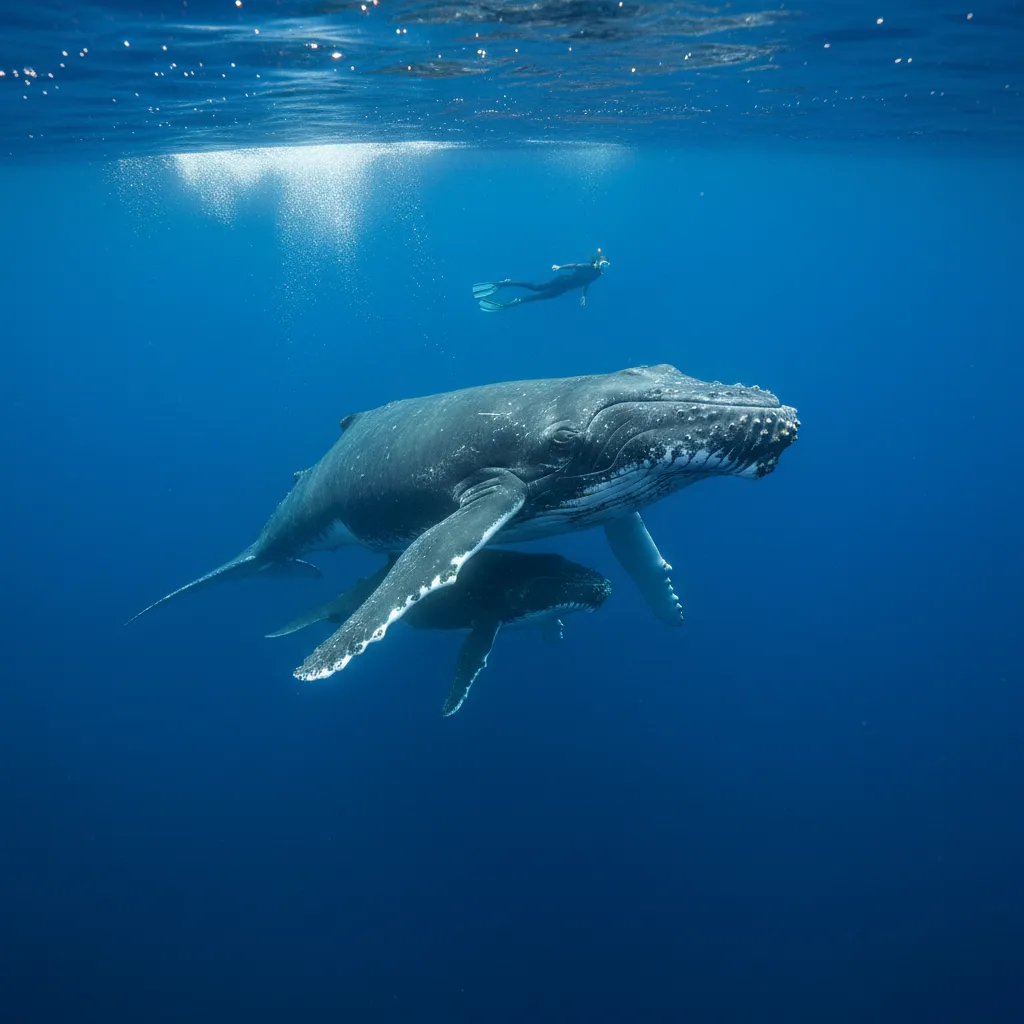
Encountering a humpback whale underwater is one of the most profound experiences available to ocean lovers. These 15-metre, 30-tonne animals migrate thousands of kilometres between polar feeding grounds and tropical breeding areas, and it is in these warm, clear breeding waters that divers and snorkellers can share the water with them. The sounds of a male's haunting song reverberating through your chest, or a curious calf approaching within arm's reach while its mother watches from below - these are moments that change people's lives forever.
Where to Dive with Humpback Whales
Found across 62 countries, based on 84,125 verified observation records.

Mexico
2 areas

South Africa
3 areas

United States
2 areas

Australia
8 areas

Dominican Republic
3 areas

Réunion
1 area

Canada
3 areas

Iceland
2 areas
+ 54 more countries
Best Time to See Humpback Whales
Humpback whale seasons follow their migration between polar feeding grounds and tropical breeding waters. Tonga: July to October. Dominican Republic (Silver Bank): January to March. Hawaii: December to April. Reunion Island: June to October. Norway (feeding, not breeding): May to September. Colombia: July to November. Each destination offers different encounter types - breeding behaviour in the tropics versus feeding behaviour in polar waters.
How to Dive with Humpback Whales
In-water humpback encounters are almost always done while snorkelling or freediving, not scuba diving. The bubbles and noise from scuba gear can disturb whales, and most regulations prohibit scuba approaches. The technique is to slip quietly into the water from a boat that has positioned itself at a respectful distance, then float at the surface and let the whales decide whether to approach. Tonga is the gold standard for in-water humpback encounters, with licensed operators running dedicated whale swim trips. Silver Bank in the Dominican Republic and Reunion Island are other top destinations. You need to be a confident swimmer but no diving certification is required.
Is it Safe to Swim with Humpback Whales?
Humpback whales are not aggressive toward humans, but their sheer size demands respect. A casual flick of a tail fluke can be dangerous simply due to the forces involved. Never approach a whale head-on or from behind - always approach from the side. Never get between a mother and calf. Stay at the surface and horizontal, making yourself as non-threatening as possible. Follow all guide instructions without exception. In most jurisdictions, there are strict minimum distance regulations (often 30 metres for boats, and specific protocols for in-water encounters in permitted locations).
Conservation Status
Humpback whales are one of conservation's great success stories. After being hunted to near extinction (populations fell to around 10% of pre-whaling numbers), a 1966 international whaling ban allowed populations to recover. Most populations are now classified as Least Concern by the IUCN, though some subpopulations remain endangered. Responsible whale watching and swimming tourism now generates billions of dollars globally, far exceeding the historical value of whale hunting. Climate change and ship strikes remain ongoing threats.
Species Profile

Recommended Equipment
Snorkel gear is all you need: a high-quality mask with clear lenses, a purge snorkel, and comfortable fins. Freediving fins allow you to cover more distance with less effort. A wetsuit or rash guard provides warmth and sun protection in tropical breeding grounds (water is typically 25-28°C). An underwater camera with a wide-angle lens is essential - humpbacks are enormous and often very close. A GoPro on a pole works well. Do not bring any equipment that makes noise or creates bubbles.
Browse dive equipmentFrequently Asked Questions
Where can you swim with humpback whales?
The best places to swim with humpback whales are Tonga (July–October), Silver Bank in the Dominican Republic (January–March), and Reunion Island (June–October). These are the few places where in-water encounters are legal and well-regulated.
Is it safe to swim with humpback whales?
Yes, when done with licensed operators following established protocols. Humpback whales are not aggressive toward humans. The main risk is their enormous size - maintain a safe distance and never position yourself where a whale might accidentally hit you with a fin or tail.
Do you need scuba gear to swim with humpback whales?
No, humpback whale encounters are done while snorkelling, not scuba diving. Scuba bubbles can disturb whales, and most regulations prohibit scuba approaches. You simply need to be a confident swimmer with mask, snorkel, and fins.
What is the best time of year to see humpback whales?
It depends on the hemisphere. Southern hemisphere breeding grounds (Tonga, Reunion): July–October. Northern hemisphere (Dominican Republic, Hawaii): January–April. Arctic/sub-Arctic feeding grounds (Norway, Iceland): May–September.
More Encounter Guides
Orcas (Killer Whales)
Orcas are the ocean's apex predators - intelligent, social, and devastatingly effective hunters that...
Dolphins
Dolphins are the ocean's most joyful inhabitants, and swimming with them in the wild is an experienc...
Sperm Whales
The sperm whale is the largest toothed predator on Earth, a deep-ocean titan that routinely dives be...
Blue Whales
The blue whale is the largest animal ever to have lived on Earth - larger than any dinosaur, reachin...
Southern Right Whales
Southern right whales earned their grim name from whalers who considered them the 'right' whale to h...
Spinner Dolphins
Spinner dolphins are the acrobats of the ocean, famous for their spectacular aerial displays - launc...