Diving with Sperm Whales
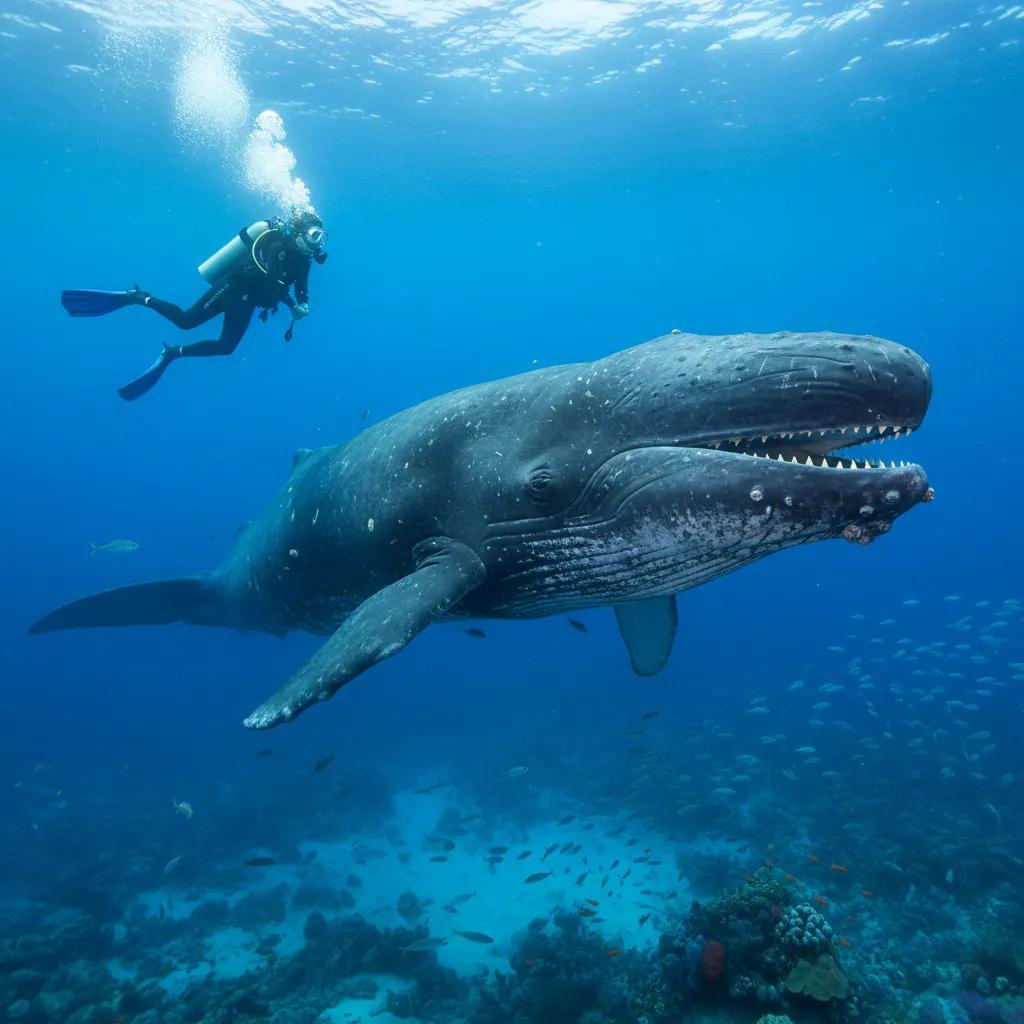
The sperm whale is the largest toothed predator on Earth, a deep-ocean titan that routinely dives beyond 2,000 metres in pursuit of giant squid. Encountering one in the wild is a confrontation with raw, ancient intelligence - their massive block-shaped heads house the largest brain of any animal that has ever lived. In the few places where in-water encounters are possible, you slip into the blue to find yourself suspended alongside a creature the length of a bus, its wrinkled grey skin and slow, deliberate movements radiating an almost unsettling calm. Made famous by Moby Dick, sperm whales continue to captivate anyone fortunate enough to share the water with them.
Where to Dive with Sperm Whales
Found across 78 countries, based on 22,029 verified observation records.

Portugal
2 areas

Bahamas
7 areas

Dominica
2 areas

United Kingdom
5 areas

Martinique
2 areas

New Zealand
2 areas

Guadeloupe
1 area

France
2 areas
+ 70 more countries
Best Time to See Sperm Whales
Dominica offers sperm whale encounters year-round thanks to its resident population of family groups, though sea conditions are calmest from November to March. The Azores season runs from April to October, with peak sightings in May and June as whales migrate through. Sri Lanka's Mirissa coast offers sightings from November to April during the northeast monsoon season. Kaikoura, New Zealand has year-round male sperm whales that feed in the deep Kaikoura Canyon, though in-water encounters are less established there. Mauritius and the Canary Islands are emerging destinations with occasional sightings.
How to Dive with Sperm Whales
Sperm whale encounters are conducted exclusively by snorkelling or freediving - scuba gear is not permitted as the noise and bubbles disturb these acoustically sensitive animals. Dominica is the world's premier destination, home to a year-round resident population of family groups that rest and socialise in the island's deep coastal waters. Licensed operators use hydrophones to locate whales by their echolocation clicks, then position snorkellers in the water ahead of approaching animals. You float at the surface while whales pass below or beside you, sometimes stopping to investigate. The Azores and Sri Lanka also offer encounters during seasonal migrations. Confident swimming ability is essential, but no certification is needed.
Is it Safe to Swim with Sperm Whales?
Sperm whales are not aggressive toward humans, but their enormous size - up to 18 metres and 50 tonnes - demands absolute respect. Their powerful tail flukes can generate immense force, and their echolocation clicks are among the loudest sounds produced by any animal, capable of being physically felt in your chest at close range. Never approach from directly in front or behind. Stay at the surface and horizontal, allowing the whale to control the interaction. Do not dive down toward a whale, as this can be perceived as a threat, particularly near mothers with calves. Follow your guide's instructions precisely - Dominica's whale-watching regulations are strictly enforced and exist for the safety of both humans and whales.
Conservation Status
Sperm whales are classified as Vulnerable by the IUCN. Industrial whaling in the 18th to 20th centuries devastated populations worldwide - it is estimated that a third of the global population was killed during the modern whaling era alone. Recovery has been slow due to their low reproductive rate, with females producing a single calf every four to six years. Today, threats include ship strikes, entanglement in fishing gear, ocean noise pollution disrupting their acoustic communication, and ingestion of marine debris. Dominica declared its entire western coast a sperm whale reserve in 2023, and responsible tourism provides a powerful economic argument for continued protection across the Caribbean.
Species Profile

Recommended Equipment
A well-fitting mask, snorkel, and fins are all you need. Freediving fins are strongly recommended as they allow efficient, quiet movement through the water. Dominica's waters are warm (26-28°C year-round), so a rash guard or thin 2mm shorty is sufficient for sun protection and minor thermal comfort. Bring a wide-angle underwater camera - a GoPro on a short pole is ideal, as sperm whales are enormous and encounters happen at close range. Avoid any equipment that creates noise or bubbles. Ear equalisation ability is not needed since you remain at the surface, though experienced freedivers occasionally descend a few metres for better angles.
Browse dive equipmentFrequently Asked Questions
Where can you swim with sperm whales?
Dominica is the world's best destination for in-water sperm whale encounters, with a resident population year-round. The Azores (April–October) and Sri Lanka (November–April) offer seasonal sightings. Kaikoura, New Zealand has year-round males but in-water encounters are less developed.
Is it safe to swim with sperm whales?
Yes, when done with licensed operators following strict protocols. Sperm whales are not aggressive toward humans. The main risk is their enormous size - stay at the surface, never dive toward them, and follow your guide's instructions. Dominica has well-established regulations for safe encounters.
How deep do sperm whales dive?
Sperm whales are the deepest diving mammals, regularly reaching depths of 1,000-2,000 metres and staying submerged for up to 90 minutes. The deepest recorded dive exceeded 2,250 metres. They hunt giant squid and deep-sea fish in the abyss.
Do you need scuba gear to swim with sperm whales?
No, sperm whale encounters are done while snorkelling or freediving. Scuba gear is not permitted because the noise and bubbles disturb these acoustically sensitive animals. You float at the surface with mask, snorkel, and fins while whales approach.
What is the best time to swim with sperm whales in Dominica?
Dominica has resident sperm whale families year-round, making it unique among whale destinations. Sea conditions are calmest from November to March during the dry season. Licensed operators run trips throughout the year, weather permitting.
More Encounter Guides
Humpback Whales
Encountering a humpback whale underwater is one of the most profound experiences available to ocean ...
Orcas (Killer Whales)
Orcas are the ocean's apex predators - intelligent, social, and devastatingly effective hunters that...
Dolphins
Dolphins are the ocean's most joyful inhabitants, and swimming with them in the wild is an experienc...
Blue Whales
The blue whale is the largest animal ever to have lived on Earth - larger than any dinosaur, reachin...
Southern Right Whales
Southern right whales earned their grim name from whalers who considered them the 'right' whale to h...
Spinner Dolphins
Spinner dolphins are the acrobats of the ocean, famous for their spectacular aerial displays - launc...