Diving with Seahorses
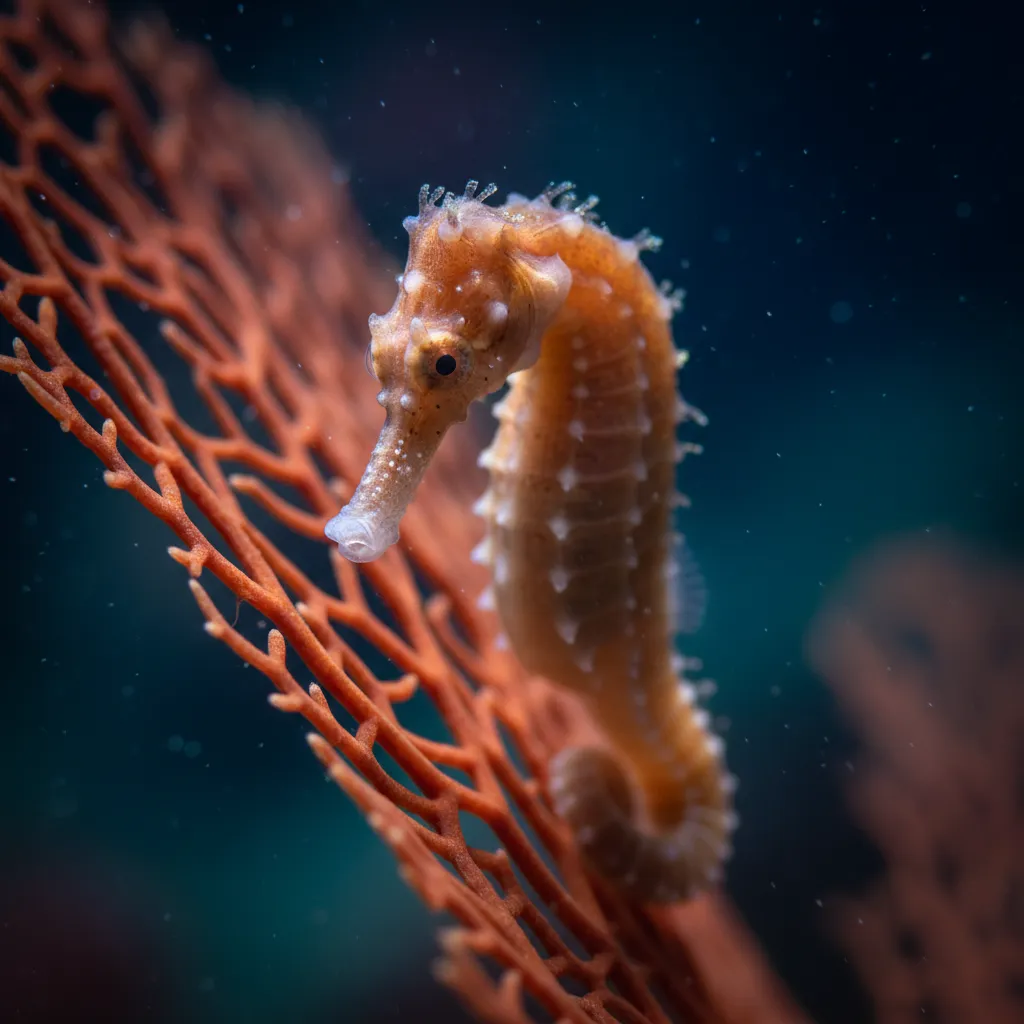
Seahorses are among the ocean's most enchanting and improbable creatures. With their horse-shaped heads, prehensile tails, independently moving eyes, and the remarkable fact that males carry and give birth to live young, they seem almost too fantastical to be real. Yet there are over 40 recognised species of seahorse found in temperate and tropical waters worldwide, ranging from the tiny pygmy seahorses (smaller than a fingernail) to the pot-bellied seahorse of southern Australia, which can reach 35 centimetres. For divers, finding a seahorse in the wild is the holy grail of macro diving - these masters of camouflage can take 30 minutes of careful searching to locate, but the reward of watching one wrap its tail around a sea fan, gently swaying with the current while its eyes track your movements independently, is an utterly magical experience.
Where to Dive with Seahorses
Found across 32 countries, based on 606 verified observation records.

New Zealand
4 areas

United States
2 areas

Australia
3 areas
Bahamas
5 areas

Barbados
2 areas

Singapore
1 area

South Africa
1 area

Philippines
2 areas
+ 24 more countries
Best Time to See Seahorses
Seahorses are resident animals and can be found year-round at known habitats. Lembeh Strait in Indonesia, widely regarded as the world's best muck diving destination, offers seahorse sightings year-round with optimal conditions from March to November. Anilao in the Philippines is best from November to June (the dry season provides calmer seas and better visibility). Sodwana Bay in South Africa has its endemic Hippocampus nalu and is best from April to September. Temperate species like the pot-bellied seahorse of southern Australia are found year-round in Port Phillip Bay and Rapid Bay. Seahorse mating displays and male brooding are more commonly observed during warmer months in both tropical and temperate regions.
How to Dive with Seahorses
Seahorse diving is the ultimate test of patience, observation, and buoyancy control. These small, superbly camouflaged animals cling to sea fans, sponges, coral rubble, and even artificial structures like jetty pylons and ropes. You will almost certainly need an experienced guide to find them - at world-class muck diving destinations like Lembeh Strait and Anilao, guides spend years learning where specific species hide. Move extremely slowly along the substrate, scanning sea fans and soft corals at close range. Pygmy seahorses (Hippocampus bargibanti and relatives) live exclusively on specific gorgonian sea fans and are barely a centimetre long - finding them without a guide is nearly impossible. Open Water certification is technically sufficient, but excellent buoyancy is non-negotiable. Many seahorse habitats are fragile, and a careless fin kick can destroy the very structure the animal calls home.
Is it Safe to Swim with Seahorses?
Seahorses are completely harmless to divers. The safety concerns with seahorse diving are entirely about diver skill and environmental impact. The biggest risk is reef damage from poor buoyancy - seahorse habitats (sea fans, sponges, coral rubble) are fragile and easily destroyed by contact. Never touch the substrate around a seahorse, and be hyperaware of your fin position. Photographers should never move or manipulate a seahorse for a better shot - this is stressful for the animal and can cause it to abandon its home. Flash photography is widely debated: while brief strobe bursts are generally accepted, continuous video lights can stress seahorses. Keep encounters brief and give the animal space.
Conservation Status
Many seahorse species are classified as Vulnerable by the IUCN, and seahorses as a group face severe conservation challenges. An estimated 37 million seahorses are taken from the wild annually for traditional medicine (particularly in China), the aquarium trade, and as dried curios. Habitat loss from coastal development, trawling, and coral reef degradation compounds the problem. Seahorses have small home ranges, low mobility, and low reproductive rates compared to other fish, making them especially vulnerable to overexploitation. The entire genus Hippocampus is listed under CITES Appendix II. Project Seahorse, based at the University of British Columbia, leads global conservation efforts, and marine protected areas in the Philippines and Indonesia have shown that seahorse populations can recover when given adequate protection.
Species Profile


Recommended Equipment
A dedicated macro lens is essential - a 100mm or 105mm macro lens is ideal for seahorses, providing enough working distance to avoid disturbing the animal while achieving life-size magnification. A dioptre or teleconverter helps for pygmy seahorses, which are barely 1 centimetre long. A strobe with a snoot (a focused beam modifier) produces beautiful spotlight effects that isolate the seahorse from its background. A focus light is critical for helping your camera lock focus in the often murky, low-contrast conditions of muck diving sites. Compact cameras with super-macro modes can also produce excellent seahorse images. Wear a thin, streamlined exposure suit to minimise drag near delicate substrates.
Browse dive equipmentFrequently Asked Questions
Where are the best places to find seahorses while diving?
Lembeh Strait (Indonesia) is the world capital of seahorse diving, with multiple species including pygmy seahorses. Anilao (Philippines) is another top destination with excellent macro diving. Sodwana Bay (South Africa), Port Phillip Bay (Australia), and Komodo (Indonesia) also offer reliable sightings.
How do you find seahorses underwater?
Seahorses are masters of camouflage and extremely difficult to spot without experience. Hiring an experienced local guide is essential at most destinations. Look closely at sea fans, gorgonians, sponges, coral rubble, and artificial structures like ropes and jetty pylons. Move slowly and scan methodically.
Are seahorses endangered?
Many seahorse species are classified as Vulnerable by the IUCN. An estimated 37 million are taken from the wild annually for traditional medicine, the aquarium trade, and curios. Habitat loss and trawling are additional threats. The entire genus is listed under CITES Appendix II.
Do male seahorses really give birth?
Yes, seahorses have a unique reproductive system where the female deposits eggs into the male's brood pouch. The male fertilises and incubates the eggs for 2-4 weeks, then gives birth to fully formed miniature seahorses. A single brood can produce hundreds of tiny offspring.
How small are pygmy seahorses?
Pygmy seahorses (such as Hippocampus bargibanti and Hippocampus denise) are typically less than 2 centimetres long - smaller than a fingernail. They live exclusively on specific gorgonian sea fans and are so well camouflaged that they were only discovered when a scientist collected the fan they lived on.
More Encounter Guides
Ocean Sunfish (Mola Mola)
The ocean sunfish is one of the most surreal creatures a diver can encounter. Holding the record as ...
Clownfish
Few marine creatures have captured the public imagination quite like the clownfish. Made famous by F...
Napoleon Wrasse
The Napoleon wrasse - also known as the humphead wrasse or Maori wrasse - is one of the most charism...
Lionfish
Few fish command attention quite like the lionfish. With its dramatic array of elongated, venomous s...
Barracuda
The great barracuda is one of the reef's most impressive predators - a silver torpedo with a mouth f...
Giant Moray Eels
The giant moray is the reef's most charismatic lurker. Reaching up to 3 metres in length and weighin...