Diving with Frogfish
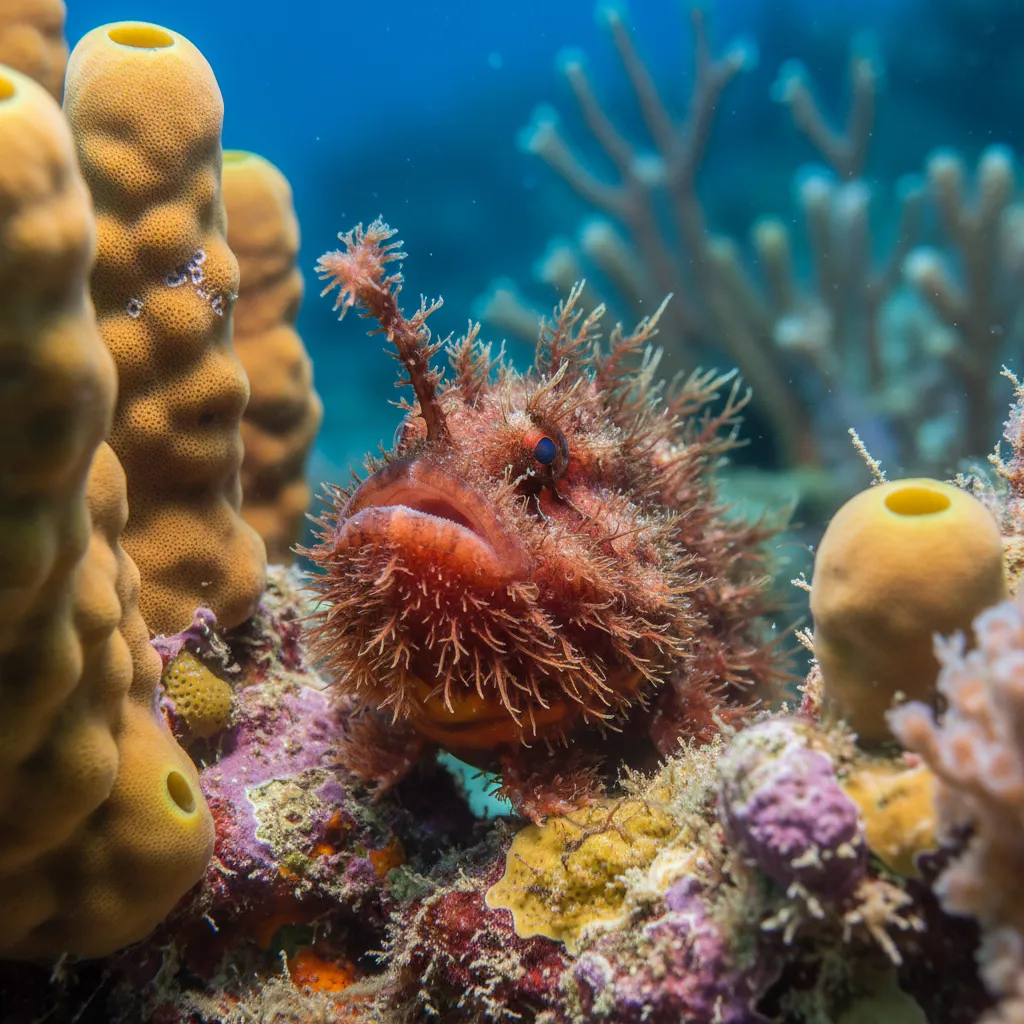
Frogfish are the ocean's ultimate ambush predators and masters of disguise. These bizarre, bulbous fish look nothing like a typical fish - with stubby, hand-like pectoral fins they use to walk along the seafloor, a textured body that mimics sponges, algae, or coral, and a built-in fishing rod (a modified dorsal spine called an illicium) tipped with a fleshy lure that they wiggle to attract prey. When an unsuspecting fish approaches the lure, the frogfish strikes with one of the fastest movements in the animal kingdom - its expandable mouth creates a vacuum that engulfs prey in as little as 6 milliseconds. There are around 50 species of frogfish found worldwide, ranging from the tiny painted frogfish to the giant frogfish, and they come in virtually every colour imaginable: yellow, orange, pink, red, black, white, and even striped or spotted patterns. For macro photography enthusiasts, finding and photographing a frogfish is one of diving's greatest thrills.
Where to Dive with Frogfish
Found across 29 countries, based on 650 verified observation records.

Australia
2 areas

Bahamas
5 areas

Colombia
1 area

South Africa
3 areas

Puerto Rico
3 areas

New Zealand
1 area

Martinique
2 areas

Réunion
1 area
+ 21 more countries
Best Time to See Frogfish
Frogfish are resident animals and can be found year-round at known habitats. Lembeh Strait (Indonesia) offers frogfish sightings on virtually every dive throughout the year, with the best conditions from March to November during the dry season. Anilao (Philippines) is best from November to June when seas are calmer on the eastern Batangas coast. Bonaire has frogfish at the Town Pier and various reef sites year-round. Bali's Padang Bai and Tulamben have frogfish year-round with the best visibility from April to November. Temperate frogfish species can be found in places like Sydney, Australia (year-round) and the Canary Islands. Frogfish can change colour over weeks to match their surroundings, so the same individual may look completely different on consecutive visits.
How to Dive with Frogfish
Frogfish diving requires patience, sharp eyes, and often an experienced guide. These animals are supremely camouflaged and rarely move, making them almost invisible to the untrained eye. The world's best frogfish destinations are dedicated muck diving sites - Lembeh Strait in Indonesia is the undisputed capital, with multiple species found on virtually every dive. Anilao in the Philippines, Bonaire's Town Pier, and Bali's east coast are other hotspots. Frogfish are found from tidal rock pools to depths of over 100 metres, though most encounters happen between 5 and 25 metres on coral rubble, sponge gardens, and artificial structures. Move very slowly along the substrate, scanning for any object that seems slightly out of place. Frogfish often sit on sponges that match their colour exactly. Open Water certification is sufficient, but impeccable buoyancy control is essential to avoid disturbing the fragile muck diving habitats.
Is it Safe to Swim with Frogfish?
Frogfish are completely harmless to divers. They are sedentary ambush predators with no defensive mechanisms that could injure a human. The main safety considerations relate to the diving environment rather than the animal. Muck diving sites often have silty, low-visibility conditions - maintain good situational awareness and stay close to your guide. Be extremely careful with buoyancy near the bottom to avoid stirring up silt, which ruins visibility for everyone and can smother delicate organisms. When photographing frogfish, never touch or reposition the animal. Some unscrupulous guides have been known to move frogfish to more photogenic positions - refuse to participate in this practice, as it stresses the animal and can lead to its death.
Conservation Status
Frogfish are not currently considered threatened at a species level, though specific populations can be affected by habitat degradation. Their primary habitat - coral rubble zones, sponge gardens, and muck diving environments - is often overlooked in conservation planning because it lacks the visual appeal of pristine coral reefs. Yet these habitats support extraordinary biodiversity. The economic value of muck diving tourism, driven largely by creatures like frogfish, provides powerful arguments for protecting these unglamorous but ecologically important environments. Lembeh Strait generates millions of dollars annually from macro diving tourism, much of which supports local communities. Supporting responsible muck diving operators who enforce no-touch policies and invest in habitat protection helps ensure frogfish populations remain healthy.
Species Profile

Recommended Equipment
A dedicated macro lens is non-negotiable for frogfish photography - a 60mm or 100mm macro lens is the standard choice. The 100mm provides more working distance, which is helpful for skittish subjects, though frogfish are usually very tolerant of close approach. A strobe (or ideally two strobes) is essential for lighting these close-up subjects and revealing their true colours, which are often washed out by depth. A snoot attachment creates dramatic spotlight effects that make the frogfish pop against its background. A focus light helps your camera lock focus in the often dim muck diving conditions. For compact cameras, super-macro mode with an external wet-mount dioptre produces excellent results. Wear a streamlined exposure suit and avoid dangling accessories.
Browse dive equipmentFrequently Asked Questions
Where are the best places to find frogfish?
Lembeh Strait (Indonesia) is the world's premier frogfish destination, with multiple species on virtually every dive. Anilao (Philippines), Bonaire (Town Pier), Bali (Padang Bai, Tulamben), and Dauin (Philippines) are other excellent locations for finding frogfish.
How do you spot a frogfish underwater?
Frogfish are masters of camouflage, so spotting them requires a trained eye or an experienced guide. Look for objects on the reef that seem slightly out of place - a sponge that is a slightly different colour or texture than its surroundings, or anything with a visible eye. Frogfish rarely move, so scan slowly and methodically.
How fast is a frogfish strike?
A frogfish strike is one of the fastest movements in the animal kingdom - its expandable mouth creates a vacuum that engulfs prey in as little as 6 milliseconds (0.006 seconds). The strike is so fast it cannot be seen with the naked eye and requires high-speed cameras to capture.
Can frogfish change colour?
Yes, frogfish can change colour over a period of days to weeks to match their surroundings. This is a slow process unlike the rapid colour changes of octopus or cuttlefish. A frogfish may be bright yellow on one visit and dark brown a few weeks later if it has moved to a different substrate.
What camera equipment do you need for frogfish photography?
A macro lens (60mm or 100mm) is essential. Pair it with one or two strobes for lighting. A snoot creates dramatic spotlight effects. A focus light helps your camera lock focus in dim muck diving conditions. Compact cameras with super-macro mode and a wet-mount dioptre can also produce excellent frogfish images.
More Encounter Guides
Ocean Sunfish (Mola Mola)
The ocean sunfish is one of the most surreal creatures a diver can encounter. Holding the record as ...
Clownfish
Few marine creatures have captured the public imagination quite like the clownfish. Made famous by F...
Napoleon Wrasse
The Napoleon wrasse - also known as the humphead wrasse or Maori wrasse - is one of the most charism...
Lionfish
Few fish command attention quite like the lionfish. With its dramatic array of elongated, venomous s...
Barracuda
The great barracuda is one of the reef's most impressive predators - a silver torpedo with a mouth f...
Giant Moray Eels
The giant moray is the reef's most charismatic lurker. Reaching up to 3 metres in length and weighin...