Best Diving in the South Pacific
Remote paradise islands with pristine reefs and legendary pelagic encounters
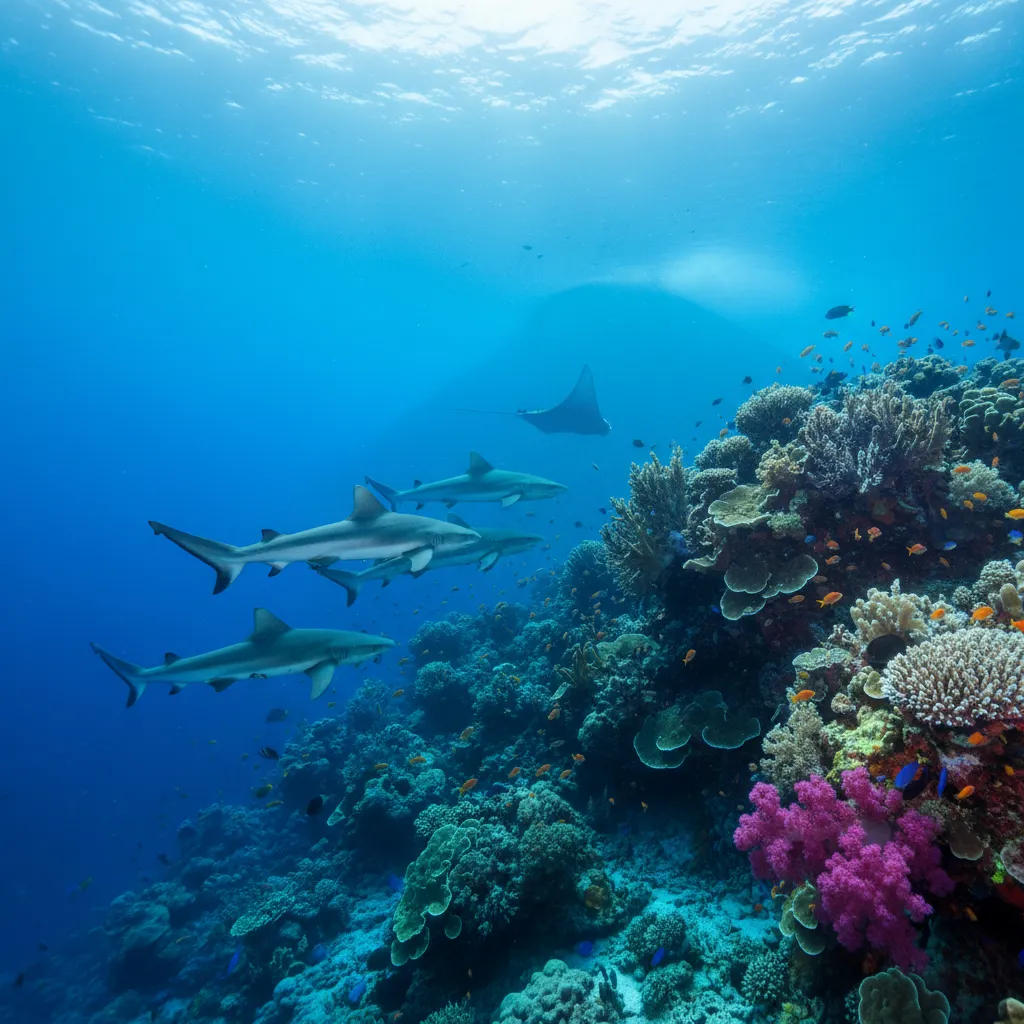
The South Pacific is the stuff of scuba diving legend. A vast expanse of brilliant blue ocean dotted with thousands of idyllic islands, it represents the ultimate frontier for underwater exploration. This is where you'll find some of the most remote and pristine dive sites on Earth, far from the crowds and blessed with unparalleled marine biodiversity. The journey may be long, but the reward is an adventure into a world of vibrant coral gardens, sheer drop-offs, and thrilling encounters that most divers only dream of.
Renowned for its healthy shark populations, the South Pacific offers some of the planet's most exhilarating big animal encounters. Destinations like Palau are legendary for their high-octane channel dives, where reef sharks patrol in huge numbers. In Papua New Guinea, you can explore volcanic seascapes teeming with diverse shark species. This region is a sanctuary for healthy, vibrant coral reef ecosystems, boasting world-class visibility that often exceeds 40 meters (130 feet), making it a paradise for underwater photographers.
Beyond the sharks, the South Pacific is a hotspot for graceful megafauna. Gentle giants like manta rays are a common sight at cleaning stations in Fiji and Micronesia, offering truly awe-inspiring interactions. From the historic WWII wrecks of Chuuk Lagoon and the Solomon Islands to the fast-paced drift dives of French Polynesia's atolls, the variety is staggering. Embarking on a dive trip to the South Pacific is more than a vacation; it's a true expedition to the heart of the world's most vibrant ocean.
At a Glance
| Destination | Difficulty | Best Months |
|---|---|---|
| Moorea & Tahiti, French PolynesiaFrench Polynesia | All Levels | Jan-Dec |
| Kadavu & Great Astrolabe Reef, FijiFiji | All Levels | - |
| Rock Islands, PalauPalau | All Levels | Jan-Dec |
| Prony Bay, New CaledoniaNew Caledonia | All Levels | Jan-Dec |
| Bora Bora, French PolynesiaFrench Polynesia | All Levels | Jan-Dec |
| Loyalty Islands, New CaledoniaNew Caledonia | All Levels | Jan-Dec |
| Taveuni & Somosomo Strait, FijiFiji | All Levels | - |
| Rangiroa, French PolynesiaFrench Polynesia | All Levels | Jan-Dec |
| Iron Bottom Sound, Solomon IslandsSolomon Islands | All Levels | Jan-Dec |
| Chuuk (Truk) Lagoon, MicronesiaMicronesia | All Levels | Jan-Dec |
| Rarotonga, Cook IslandsCook Islands | All Levels | Jan-Dec |
| Yap, MicronesiaMicronesia | All Levels | Jan-Dec |
| Port Vila & Efate, VanuatuVanuatu | All Levels | Jan-Dec |
| Espiritu Santo, VanuatuVanuatu | All Levels | Jan-Dec |
| Gizo & Western Province, Solomon IslandsSolomon Islands | All Levels | - |
| Vava'u Group, TongaTonga | All Levels | Jan-Dec |
| Bikini Atoll, Marshall IslandsMarshall Islands | All Levels | Jan-Dec |
| Rabaul & New Britain, Papua New GuineaPapua New Guinea | All Levels | Jan-Dec |
| Milne Bay, Papua New GuineaPapua New Guinea | All Levels | Jan-Dec |
| Kimbe Bay, Papua New GuineaPapua New Guinea | All Levels | Jan-Dec |
Moorea & Tahiti, French Polynesia
French Polynesia
Escape to the heart of the South Pacific, where the legendary islands of Moorea and Tahiti offer a diving experience defined by remoteness and pristine beauty. With year-round diving in balmy waters ranging from 26-29°C, these volcanic islands are a sanctuary for underwater adventurers. Explore a staggering 73 dive sites, from vibrant coral gardens inside calm lagoons to thrilling drift dives in ocean passes. The underwater topography is as dramatic as the islands themselves, with sheer drop-offs, canyons, and even 7 intriguing wreck sites waiting to be discovered.
The marine life in French Polynesia is nothing short of spectacular. Prepare for exhilarating encounters with an abundance of sharks, including lemon, blacktip reef, and grey reef sharks, who patrol the outer reefs. Graceful eagle rays and stingrays glide through the blue, while schools of colourful fish swarm over healthy coral. With over 335 documented marine species, every descent promises a new discovery. The true magic, however, happens between July and November, when migrating humpback whales arrive to nurse their young, creating an unforgettable and humbling backdrop to your dives.
While French Polynesia is a renowned liveaboard destination for exploring remote atolls, the islands of Moorea and Tahiti are perfectly geared for land-based diving adventures. With 15 professional dive centers scattered across the islands, accessing the incredible dive sites is both easy and convenient. This allows you to combine world-class diving with the unique culture and luxury of island life, offering a more flexible alternative to a dedicated liveaboard trip without compromising on the quality of the underwater experience.
Difficulty
All Levels
Best Months
Jan-Dec
Water Temp
26-29°C
Dive Centres
15
Practical Info
- dive Sites:
- 73
- marine Species:
- 335
- avg Temp:
- 28°C
- wrecks:
- 7
Did you know?
Between July and November, Moorea becomes a sanctuary for humpback whales, offering divers the life-changing opportunity to witness and even swim with these gentle giants and their calves in the warm, clear waters.
Escape the crowds and discover one of Fiji's best-kept secrets: the remote island of Kadavu and the magnificent Great Astrolabe Reef. As one of the largest barrier reefs in the world, this is a destination for the true dive adventurer, where the journey is rewarded with some of the most pristine and untouched underwater ecosystems on the planet. The remoteness of Kadavu means its coral gardens, dramatic drop-offs, and intricate passages have been preserved in a near-perfect state, offering a glimpse into a vibrant, living underwater wilderness far from the beaten path.
The sheer health of the Great Astrolabe Reef supports an incredible density of marine life. Divers can expect powerful currents sweeping through channels, bringing in schools of pelagic fish, reef sharks, and other large species. The legendary Manta Reef is a must-visit cleaning station where graceful manta rays congregate, while other sites offer thrilling drift dives and walls adorned with technicolor soft corals. With over 250 documented dive sites, the variety is staggering, ensuring every dive reveals a new wonder, from macro critters hiding in the reef to sharks patrolling the blue.
Given the vastness and remoteness of the reef system, a liveaboard is often considered the ultimate way to experience Kadavu. These vessels grant access to the most far-flung and exclusive dive sites that are difficult to reach from land-based operations, maximizing your time in the water. However, the intimate and eco-conscious resorts dotted along Kadavu's coastline also offer world-class diving, providing a deep connection to the local culture and the stunning natural environment both above and below the surface.
Difficulty
All Levels
Dive Centres
47
Practical Info
- dive Sites:
- 253
- avg Temp:
- Varies
- wrecks:
- 19
Did you know?
Beyond its legendary reef, the Kadavu region is also a hidden gem for wreck diving enthusiasts, with 19 documented wreck sites offering a different kind of underwater adventure.
Rock Islands, Palau
Palau
Escape to a diver's utopia in the remote South Pacific: Palau's Rock Islands. This UNESCO World Heritage site is a breathtaking archipelago of limestone islands set in a turquoise lagoon, offering some of the most pristine and biodiverse diving on the planet. Far from the beaten path, these waters are a sanctuary for over 394 marine species, where vibrant coral gardens remain untouched and teeming with life. The sense of raw, untamed nature is palpable, promising an adventure for divers seeking the ultimate underwater wilderness.
The diving here is legendary, defined by thrilling currents and spectacular encounters. At world-famous sites like Blue Corner, you'll hook into the reef and watch a parade of grey reef sharks, barracuda, and massive schools of jacks sweep by. Glide through German Channel for a chance to witness majestic manta rays at their cleaning stations, or explore the ghosts of WWII with four fascinating wreck sites. With crystal-clear visibility and balmy water temperatures of 28-30°C year-round, every dive is exceptional. To truly immerse yourself in this vast aquatic playground, a liveaboard is unparalleled, granting access to the most secluded sites and maximizing your time in this underwater paradise.
Difficulty
All Levels
Best Months
Jan-Dec
Water Temp
28-30°C
Dive Centres
19
Practical Info
- dive Sites:
- 21
- marine Species:
- 394
- avg Temp:
- 30°C
- wrecks:
- 4
Did you know?
In 2009, Palau created the world's first national shark sanctuary, banning all commercial shark fishing in its waters and making it one of the most reliable destinations on Earth for incredible shark encounters.
Prony Bay, New Caledonia
New Caledonia
Escape to the wild heart of the South Pacific in Prony Bay, a remote and breathtakingly pristine corner of New Caledonia's Southern Province. For divers seeking true adventure far from the crowds, this is an untouched paradise. With 44 documented dive sites and only a handful of operators, you'll feel like an explorer discovering these vibrant ecosystems for the first time. The bay's protected, clear waters offer superb conditions year-round, revealing a thriving seascape set against a backdrop of dramatic, red-earth landscapes that plunge into the sea.
The underwater world of Prony Bay is a testament to its isolation, boasting incredibly healthy coral reefs and a remarkable diversity of over 346 marine species. The diving experience is exceptionally varied, ranging from intricate hard coral gardens and dramatic drop-offs to a collection of 12 fascinating wreck sites that add a historical dimension to your explorations. The warm water, consistently between 22-27°C, is perfect for encountering everything from colourful reef fish and cruising pelagics to unique macro life hiding amongst the pristine corals.
Given its expansive and remote nature, exploring Prony Bay by liveaboard is arguably the ultimate way to experience its wonders. A liveaboard grants unparalleled access to the most secluded and spectacular spots that day boats cannot reach, maximizing your time in the water and fully immersing you in the adventure. It is the definitive method for uncovering all the secrets of this rugged, beautiful, and unforgettable New Caledonian diving frontier.
Difficulty
All Levels
Best Months
Jan-Dec
Water Temp
22-27°C
Dive Centres
4
Practical Info
- dive Sites:
- 44
- marine Species:
- 346
- avg Temp:
- 25°C
- wrecks:
- 12
Did you know?
Prony Bay is home to the 'Aiguille de Prony' (Prony Needle), a rare and spectacular underwater hydrothermal chimney that rises over 30 meters from the seabed, creating a truly otherworldly dive experience unlike any other in the South Pacific.
Bora Bora, French Polynesia
French Polynesia
Escape to the legendary turquoise lagoon of Bora Bora, a remote jewel in the heart of the South Pacific that promises some of the most pristine diving on the planet. With water temperatures a blissful 27-29°C year-round, the conditions are always perfect for exploring its vibrant underwater world. The isolation of French Polynesia has created a unique and thriving ecosystem, where vibrant coral gardens inside the calm lagoon give way to dramatic ocean drop-offs and thrilling channel passes, offering an unparalleled sense of discovery far from the beaten path.
The true adventure of diving in Bora Bora lies with its incredible megafauna. The island is world-famous for its shark encounters, offering divers the chance to drift alongside walls of blacktip reef sharks, grey reef sharks, and inquisitive lemon sharks in their natural habitat. Head to the famous Anau channel for almost guaranteed encounters with graceful manta rays as they visit their cleaning stations. With 39 dive sites showcasing over 362 marine species, every descent is a cinematic experience, from exploring the island's single wreck to navigating the currents of the famous Teavanui Pass.
While liveaboards are fantastic for exploring the wider Tuamotu Archipelago, Bora Bora's underwater wonders are perfectly accessed via its excellent land-based dive centres. The island's geography means that all the premier sites, from the lagoon's 'Aquarium' to the adrenaline-pumping outer reef passes, are just a short boat ride away. This allows divers to combine world-class underwater adventure with the iconic overwater bungalow experience, making it the ultimate dive and relaxation destination.
Difficulty
All Levels
Best Months
Jan-Dec
Water Temp
27-29°C
Dive Centres
8
Practical Info
- dive Sites:
- 39
- marine Species:
- 362
- avg Temp:
- 28°C
- wrecks:
- 1
Did you know?
Bora Bora's main channel, Teavanui Pass, acts as a natural 'superhighway' for marine life. During an incoming tide, divers can experience thrilling drift dives alongside sharks, eagle rays, and huge schools of barracuda.
Loyalty Islands, New Caledonia
New Caledonia
Escape the crowds and discover a diver's frontier in the Loyalty Islands, New Caledonia. This remote South Pacific archipelago offers an unparalleled adventure for those seeking pristine, untouched underwater worlds. With year-round diving in balmy waters ranging from 24-28°C, the islands are a haven of tranquility. The experience here is less about ticking off a list and more about pure exploration, connecting with a raw, wild marine environment that few have been privileged to witness. The sense of isolation and discovery is what truly sets the Loyalty Islands apart as a world-class diving destination.
Beneath the surface, 39 documented dive sites reveal a staggering biodiversity, with over 363 marine species calling these waters home. Divers can explore dramatic drop-offs, intricate cave systems, and vibrant coral gardens teeming with life. Expect encounters with grey reef sharks, majestic manta rays, and schools of pelagic fish, while the region's single wreck site offers a hauntingly beautiful alternative. The limited human impact means the reefs are exceptionally healthy, creating a vibrant canvas of colour and activity that feels like stepping back in time.
Given the archipelago's scattered nature and the limited number of land-based operators, a liveaboard is often considered the ultimate way to experience the Loyalty Islands. This approach unlocks the most remote and inaccessible dive sites, allowing for a truly immersive expedition. A liveaboard adventure provides the flexibility to follow the best conditions and marine life encounters, ensuring you dive the very best of what this pristine wilderness has to offer, from the northernmost atolls to the southernmost reefs, all in one seamless journey.
Difficulty
All Levels
Best Months
Jan-Dec
Water Temp
24-28°C
Dive Centres
3
Practical Info
- dive Sites:
- 39
- marine Species:
- 363
- avg Temp:
- 26°C
- wrecks:
- 1
Did you know?
The Loyalty Islands are so remote and untouched that underwater visibility often exceeds 40 meters, revealing intricate cave systems and perfectly preserved coral gardens that have been seen by very few divers.
Escape to the remote heart of Fiji to discover the Somosomo Strait, a legendary channel separating the islands of Taveuni and Vanua Levu. Revered as the "Soft Coral Capital of the World," this is a destination for the true adventurer. The narrow strait acts as a funnel for nutrient-rich currents, creating a thriving, pristine ecosystem that feels a world away from anywhere else. The diving here is dynamic and exhilarating, offering drift dives through kaleidoscopic coral gardens that pulse with life, making every descent an unforgettable experience.
The region boasts iconic sites like the Great White Wall and Rainbow Reef, where the sheer density of colourful soft corals is simply staggering. These currents attract an incredible array of marine life, from massive schools of barracuda and trevally to cruising whitetip reef sharks, manta rays, and even the occasional hammerhead. Look closer within the vibrant gardens to find a treasure trove of macro life, including nudibranchs and ghost pipefish. With over 230 dive sites and a few wrecks to explore, the variety is immense, offering world-class diving year-round.
Given the vastness and remoteness of the dive sites, a liveaboard is an exceptional way to experience the full grandeur of the Somosomo Strait. It allows you to access the most secluded spots and maximize your time in the water. However, excellent land-based dive centers on Taveuni also provide fantastic access to the main reefs, blending world-class diving with the charm of Fijian island life. Whichever you choose, Taveuni promises a journey into one of the most vibrant and untouched underwater realms on the planet.
Difficulty
All Levels
Dive Centres
2
Practical Info
- dive Sites:
- 233
- avg Temp:
- Varies
- wrecks:
- 4
Did you know?
The famous Great White Wall is a sheer drop-off covered in luminous white soft corals that only 'bloom' and reveal their ghostly glow when the currents are just right, making the timing of the dive critical.
Rangiroa, French Polynesia
French Polynesia
Venture to the heart of the South Pacific to experience Rangiroa, a vast, remote atoll in French Polynesia where the diving is as wild as the landscape is pristine. This isn't a destination for calm coral gardens; it's an adrenaline-fueled adventure defined by its two famous channels, Tiputa Pass and Avatoru Pass. The sheer isolation has preserved an incredible density of marine life, offering divers a front-row seat to one of the ocean's most dramatic spectacles. The experience is all about powerful currents, epic drifts, and encounters with staggering numbers of large pelagic species.
The main draw is the exhilarating drift diving. As the tide floods into the atoll, you'll be carried through the passes alongside an astonishing amount of life. Rangiroa is world-renowned for its 'wall of sharks,' where hundreds of grey reef sharks congregate, often joined by silvertips, whitetips, and even the occasional great hammerhead. Beyond the sharks, expect to see majestic manta rays, huge schools of barracuda, and pods of bottlenose dolphins that are known to playfully interact with divers in the current. It's a raw, powerful, and unforgettable underwater adventure.
With only a few dive centers on the atoll, many divers wonder if a liveaboard is the best way to explore Rangiroa. While land-based operations offer incredible access to the main passes, a liveaboard provides a more immersive experience. It allows for exploration of more remote sites within the massive lagoon and the flexibility to dive the passes at optimal tidal times, day and night. For those wanting to maximize their bottom time and fully embrace the adventure, a liveaboard is arguably the ultimate way to conquer this world-class diving frontier.
Difficulty
All Levels
Best Months
Jan-Dec
Water Temp
27-29°C
Dive Centres
4
Practical Info
- dive Sites:
- 26
- marine Species:
- 354
- avg Temp:
- 28°C
- wrecks:
- 1
Did you know?
The resident pod of bottlenose dolphins in Rangiroa's Tiputa Pass is famous for actively seeking out scuba divers, often leaping through the waves and interacting playfully with them during their safety stops.
Iron Bottom Sound, Solomon Islands
Solomon Islands
Escape to the heart of the South Pacific and discover the Solomon Islands, a remote and untamed paradise for the truly adventurous diver. Centered around the legendary Iron Bottom Sound, this destination remains remarkably untouched, offering pristine conditions far from the crowds. With over 70 dive sites to explore and warm, 30°C waters year-round, the Solomons promise an unparalleled underwater journey. The reefs here are a vibrant tapestry of hard and soft corals, teeming with an incredible diversity of marine life, from tiny macro critters hiding in plain sight to schools of pelagic fish patrolling the deep blue.
The defining feature of this region is its staggering collection of World War II history. Iron Bottom Sound is a world-renowned mecca for wreck diving, home to more than 30 accessible shipwrecks and aircraft from the historic Battle of Guadalcanal. These once mighty vessels are now ghostly underwater museums, transformed into spectacular artificial reefs encrusted with coral and swarming with life. Divers can explore everything from Japanese freighters and American troop carriers to sunken B-17 bombers, each telling a silent story of the past while providing a haven for a myriad of fish species, crustaceans, and vibrant corals.
Given the sheer number of sites and their remote locations, the ultimate way to experience the full breadth of the Solomon Islands is aboard a liveaboard. These dedicated vessels grant access to the most secluded and spectacular reefs and wrecks that are simply out of reach for day trips. A liveaboard adventure allows you to immerse yourself completely in this wild frontier, waking up each day to a new, world-class dive site right on your doorstep, ensuring you see the very best of what this incredible archipelago has to offer.
Difficulty
All Levels
Best Months
Jan-Dec
Water Temp
30-30°C
Dive Centres
4
Practical Info
- dive Sites:
- 70
- avg Temp:
- 30°C
- wrecks:
- 30
Did you know?
The name 'Iron Bottom Sound' was coined by Allied sailors during WWII, referencing the immense concentration of over 50 ships and numerous aircraft sunk in this narrow strait during the fierce Battle of Guadalcanal.
Chuuk (Truk) Lagoon, Micronesia
Micronesia
Deep in the remote South Pacific lies Chuuk Lagoon, Micronesia-a destination that is more than just a dive spot; it's a submerged time capsule. Known to divers as the world's greatest wreck diving destination, Chuuk (formerly Truk) is home to an entire Japanese naval fleet sunk during Operation Hailstone in 1944. This 'ghost fleet' comprises over 35 accessible shipwrecks and aircraft, preserved in the lagoon's calm, pristine waters. The sense of adventure is unparalleled as you descend into history, with warm water hovering at a consistent 29°C all year round, making any time perfect for this unique underwater pilgrimage.
What makes diving in Chuuk so special is the vibrant life that has reclaimed these metal giants. Each wreck has transformed into a spectacular artificial reef, draped in a kaleidoscope of soft corals, sea fans, and anemones. Schools of trevally and fusiliers swarm the superstructures, while reef sharks patrol the perimeters, creating a hauntingly beautiful scene where nature and history collide. This isn't just diving; it's exploring a living museum where every artifact tells a story.
To truly unlock the secrets of this vast lagoon and its 39 dive sites, a liveaboard is undoubtedly the best approach. The sheer scale of the area and the distance between key wrecks make a land-based operation limiting. A liveaboard maximizes your time in the water, providing access to the more remote and less-dived sites, offering the ultimate adventure and allowing you to fully immerse yourself in one of the planet's most epic dive destinations.
Difficulty
All Levels
Best Months
Jan-Dec
Water Temp
29-29°C
Dive Centres
3
Practical Info
- dive Sites:
- 39
- avg Temp:
- 29°C
- wrecks:
- 35
Did you know?
Chuuk Lagoon is considered the world's largest ship graveyard, holding the wrecks of an entire Imperial Japanese fleet sunk in just two days during WWII's Operation Hailstone in 1944.
Rarotonga, Cook Islands
Cook Islands
Escape to the heart of the South Pacific and discover Rarotonga, a volcanic jewel ringed by a vibrant, pristine coral reef. Far from the crowded dive hubs, the Cook Islands offer an unparalleled sense of remote adventure. The underwater world here is exceptionally clear, with visibility often exceeding 30 meters, revealing a dramatic topography of canyons, swim-throughs, and breathtaking drop-offs. Diving in Rarotonga is about immersing yourself in an untouched paradise, where the reefs are as healthy and full of life as the island itself.
The consistently warm 26°C waters are a sanctuary for a rich variety of marine life. Explore sprawling hard coral gardens patrolled by schools of colourful reef fish, graceful eagle rays, and curious green sea turtles. Keep an eye out in the blue for white-tip and grey reef sharks cruising the reef edges, and for a different kind of adventure, explore the island's four intriguing wreck sites. While diving is fantastic year-round, the true magic happens between July and October when migrating humpback whales grace these waters with their presence.
With 36 dive sites easily accessible via short boat rides from the island's four professional dive centres, Rarotonga is perfectly suited for a land-based adventure. A liveaboard isn't necessary to experience the best of the island's diving; instead, you can combine world-class underwater exploration with the relaxed 'island time' culture, making for a truly unforgettable and personal dive holiday.
Difficulty
All Levels
Best Months
Jan-Dec
Water Temp
26-26°C
Dive Centres
4
Practical Info
- dive Sites:
- 36
- avg Temp:
- 26°C
- wrecks:
- 4
Did you know?
During the humpback whale migration season from July to October, you can often hear their mesmerising songs underwater on nearly every dive, even when the gentle giants themselves are out of sight.
Yap, Micronesia
Micronesia
Escape to the far-flung corner of Micronesia and discover Yap, an island destination where adventure feels truly authentic. Its remoteness is its greatest asset, preserving some of the most pristine coral reefs and healthiest marine ecosystems in the South Pacific. With only two dive centers servicing 36 uncrowded sites, you'll feel like you have the ocean to yourself. The journey here is part of the experience, rewarding intrepid divers with crystal-clear waters, vibrant coral gardens, and a genuine sense of stepping back in time, both above and below the surface.
Yap's global fame comes from one majestic animal: the manta ray. The island is home to a large, resident population of reef mantas, and encounters are virtually guaranteed year-round at dedicated cleaning stations within the channels. Beyond the mantas, Yap's diverse underwater landscape offers thrilling shark dives along outer reef walls, fascinating macro life, and a collection of six historical wreck sites waiting to be explored. The consistently warm water, averaging 29°C, makes every dive a comfortable and captivating experience.
While many remote destinations are best explored by liveaboard, Yap offers a unique choice. Its compact size and excellent land-based dive centers make it easy to access all the key sites from a resort, allowing you to immerse yourself in the island's rich and traditional culture. This makes for a complete diving holiday that combines world-class underwater encounters with a rare cultural experience, solidifying Yap's reputation as a must-visit for the serious dive traveler.
Difficulty
All Levels
Best Months
Jan-Dec
Water Temp
29-29°C
Dive Centres
2
Practical Info
- dive Sites:
- 36
- avg Temp:
- 29°C
- wrecks:
- 6
Did you know?
Yap is a global pioneer in marine conservation, having established the world's first government-sanctioned manta ray sanctuary in 2008, protecting over 8,000 square miles of critical habitat.
Port Vila & Efate, Vanuatu
Vanuatu
Escape to the heart of the South Pacific and discover the pristine underwater world of Port Vila and Efate. This is Vanuatu diving at its most accessible yet utterly unspoiled. Volcanic origins have sculpted a dramatic sub-aquatic landscape of intricate caverns, vibrant coral gardens, and thrilling drop-offs. With consistently warm waters hovering around 29°C and excellent visibility year-round, Efate offers a remote paradise where the reefs are teeming with life, far from the crowded dive hubs of the world. The adventure begins the moment you descend into its crystal-clear, blue waters.
The true magic of diving around Efate lies in its incredible diversity. Across more than 23 distinct sites, you'll find everything from shallow, sun-drenched reefs perfect for spotting colourful anemonefish and turtles, to deep, mysterious wrecks steeped in history. The region is a haven for wreck enthusiasts, boasting eight sunken treasures including the majestic 19th-century tall ship, the 'Star of Russia', and the intentionally sunk 'Konanda'. These artificial reefs have blossomed into vibrant ecosystems, attracting schools of fusiliers, patrolling reef sharks, and a kaleidoscope of tropical fish, all thriving in the healthy, remote conditions.
While some parts of Vanuatu are best explored by liveaboard, the beauty of Port Vila and Efate is its world-class, land-based diving. With four professional dive centres, accessing these incredible sites via comfortable day boats is a breeze. This approach allows you to combine thrilling underwater adventures with the rich culture and stunning scenery of the island itself. It provides a personalised and unforgettable South Pacific diving experience without the need to set sail for days on end.
Difficulty
All Levels
Best Months
Jan-Dec
Water Temp
29-29°C
Dive Centres
4
Practical Info
- dive Sites:
- 23
- avg Temp:
- 29°C
- wrecks:
- 8
Did you know?
Port Vila is home to the majestic 'Star of Russia', a 19th-century square-rigger sailing ship that now rests upright on the seabed, offering a hauntingly beautiful wreck dive into maritime history.
Espiritu Santo, Vanuatu
Vanuatu
Espiritu Santo in Vanuatu is a diver's pilgrimage site, a remote South Pacific paradise where world-class wreck diving meets pristine, untouched reefs. The main draw is the legendary SS President Coolidge, the world's most accessible large shipwreck. This former luxury liner turned WWII troopship rests just off the beach, offering an underwater museum of jeeps, guns, and personal effects. With year-round water temperatures holding steady at a balmy 29°C, any time is perfect to descend into this piece of living history. The sheer scale of the Coolidge, combined with other sites like the jumbled military hardware at Million Dollar Point, provides an unparalleled sense of adventure and discovery.
Beyond the ghostly allure of its 13 wreck sites, Espiritu Santo boasts vibrant coral gardens teeming with life. Divers can explore stunning blue holes and healthy reefs decorated with huge sea fans and colourful soft corals. The marine life is a spectacular contrast to the silent wrecks, with schools of fusiliers, clownfish hiding in anemones, cruising sea turtles, and the occasional reef shark. The island's remoteness means the reefs are exceptionally healthy and the dive sites, served by just a handful of local dive centres, are refreshingly uncrowded, offering a truly personal connection with the underwater world.
While liveaboards operate in Vanuatu, they are not essential for experiencing the best of Espiritu Santo. The most famous sites, including the SS President Coolidge and Million Dollar Point, are easily accessible from shore-based operations. This makes it a fantastic destination for divers who prefer to mix their underwater adventures with island exploration. Staying on land allows you to immerse yourself in the local culture and enjoy the convenience of diving iconic, world-renowned sites just a short trip from your resort, blending epic adventure with laid-back island charm.
Difficulty
All Levels
Best Months
Jan-Dec
Water Temp
29-29°C
Dive Centres
4
Practical Info
- dive Sites:
- 19
- avg Temp:
- 29°C
- wrecks:
- 13
Did you know?
The SS President Coolidge wreck is so vast that it's considered a submerged museum of WWII, with its cargo holds still containing jeeps, artillery, and medical supplies accessible to qualified divers.
Gizo & Western Province, Solomon Islands
Solomon Islands
Escape to the wild heart of the South Pacific and discover the underwater treasures of Gizo and the Western Province in the Solomon Islands. This is diving as it was meant to be: remote, pristine, and utterly breathtaking. Far from the crowds, you'll explore a world of volcanic islands fringed by vibrant, healthy coral reefs and crystal-clear lagoons. The adventure begins before you even hit the water, navigating this archipelago of untouched beauty. With over 44 dive sites to explore, the region offers an unparalleled sense of discovery, where every descent feels like you're the first to witness its secrets.
The diving in Gizo is as diverse as it is spectacular. The area is a world-renowned destination for wreck diving enthusiasts, with 11 significant sites from the Pacific Campaign of WWII, including the famous Toa Maru, a 140-meter Japanese transport ship. Beyond the historical wrecks, you'll encounter dramatic topography like 'Grand Central Station,' a dive site aptly named for its bustling current-swept point where sharks, trevally, and barracuda congregate. The marine biodiversity is staggering, with everything from tiny pygmy seahorses to majestic manta rays, and with warm water year-round, any time is a good time to visit.
So, what's the best way to experience this remote wonderland? While liveaboards offer the advantage of reaching the most far-flung and otherwise inaccessible sites, they aren't the only option. Gizo itself serves as a fantastic base, with three dedicated dive centers ready to guide you. Choosing a land-based stay allows for a deeper cultural immersion and the flexibility to mix diving with island exploration. Ultimately, the choice depends on your style of adventure: a dedicated liveaboard for maximum bottom time, or a Gizo-based trip for a perfect blend of world-class diving and authentic island life.
Difficulty
All Levels
Dive Centres
3
Practical Info
- dive Sites:
- 44
- avg Temp:
- Varies
- wrecks:
- 11
Did you know?
The waters around Gizo are a living museum, home to numerous WWII wrecks from the Pacific Campaign, including the massive 140-meter-long Japanese freighter, the Toa Maru, which sits almost fully intact.
Vava'u Group, Tonga
Tonga
Escape to the Vava'u Group in Tonga, a remote archipelago in the heart of the South Pacific where diving feels like true exploration. Far from the crowded reefs of other destinations, Vava'u offers a pristine underwater world of dramatic topography, from intricate caves and stunning swim-throughs to sheer coral walls. With year-round diving in balmy 28°C waters and only a handful of other divers in sight, you'll feel like you have this volcanic paradise all to yourself. It's an adventurer's dream, where every dive promises a new discovery in crystal-clear visibility.
While the region boasts 12 distinct dive sites, including four fascinating wrecks, the true magic of Vava'u lies in its celebrated marine megafauna. The islands are a world-renowned sanctuary for humpback whales, who arrive between July and October to give birth and nurse their calves. Beyond these gentle giants, the healthy reefs teem with tropical fish, reef sharks, and sea turtles. With only two dive centres servicing the entire island group, every dive feels exclusive and personal, allowing you to fully immerse yourself in the untouched marine environment.
Given the scattered nature of the islands, a liveaboard is the ultimate way to experience the full scope of Vava'u's underwater treasures. A dedicated vessel allows you to reach the most remote and untouched sites that are inaccessible on a day trip. However, a land-based holiday still guarantees an intimate and uncrowded experience, focusing on the spectacular sites closer to the main islands. The choice depends on whether you seek an all-encompassing dive odyssey or a relaxed island retreat with world-class diving on your doorstep.
Difficulty
All Levels
Best Months
Jan-Dec
Water Temp
28-28°C
Dive Centres
2
Practical Info
- dive Sites:
- 12
- avg Temp:
- 28°C
- wrecks:
- 4
Did you know?
The Vava'u island group is one of only a few places on Earth where you are legally permitted to swim with humpback whales, as they migrate here annually to calve and mate in the sheltered, warm waters.
Bikini Atoll, Marshall Islands
Marshall Islands
Venture to the heart of the Pacific to a destination synonymous with ultimate adventure: Bikini Atoll in the Marshall Islands. This remote UNESCO World Heritage site is the pinnacle of wreck diving, a place untouched by mass tourism where history lies preserved beneath the waves. With no land-based dive centers, the only way to explore this underwater museum is via a dedicated liveaboard, making every trip a true expedition. The journey is part of the adventure, rewarding intrepid divers with pristine conditions, unparalleled solitude, and access to some of the most significant wrecks on the planet.
Bikini Atoll's legendary 'ghost fleet' consists of warships sunk during the "Operation Crossroads" atomic tests of 1946. Divers can explore colossal vessels like the aircraft carrier USS Saratoga, the battleship HIJMS Nagato, and several submarines and destroyers. These historic wrecks have transformed into spectacular artificial reefs, now patrolled by huge schools of fish, grey reef sharks, and tiger sharks. Despite their grim history, these structures are bursting with life, creating a hauntingly beautiful contrast between man-made history and nature's resilience. With consistently warm 28°C water and fantastic visibility year-round, the conditions are perfect for technical and recreational wreck divers alike.
Difficulty
All Levels
Best Months
Jan-Dec
Water Temp
28-28°C
Practical Info
- dive Sites:
- 6
- avg Temp:
- 28°C
- wrecks:
- 6
Did you know?
Did you know Bikini Atoll is home to the world's only diveable aircraft carrier, the USS Saratoga? This colossal WWII wreck is just one of several historic vessels from the 'ghost fleet' that advanced divers can explore.
Rabaul & New Britain, Papua New Guinea
Papua New Guinea
Escape to the final frontier of diving in Rabaul & New Britain, a remote corner of Papua New Guinea where adventure awaits beneath the waves. This is a destination for the true explorer, offering pristine, untouched reefs far from the crowds. With a year-round diving season and consistently balmy water temperatures of 31°C, any time is the perfect time to discover the volcanic seascapes, vibrant coral gardens, and incredible biodiversity that make this region a legendary South Pacific gem.
The diving here is defined by its sheer variety. The volcanic landscape creates a dramatic underwater world, from black-sand muck diving sites teeming with rare macro critters to dazzling coral walls patrolled by pelagics. While there are 10 dive centres to choose from, the best way to experience the raw beauty of the area's 3 premier dive sites is often by liveaboard. These vessels grant access to the most secluded locations, including a spectacular, must-see historical wreck that has transformed into a thriving artificial reef, offering a hauntingly beautiful glimpse into the past now blanketed in marine life.
Difficulty
All Levels
Best Months
Jan-Dec
Water Temp
31-31°C
Dive Centres
10
Practical Info
- dive Sites:
- 3
- avg Temp:
- 31°C
- wrecks:
- 1
Did you know?
The active volcanoes of New Britain have created a unique underwater environment, resulting in incredible black sand 'muck' diving for macro life just a short boat ride from vibrant, technicolor coral reefs.
Milne Bay, Papua New Guinea
Papua New Guinea
Escape to the wild, remote waters of Milne Bay, a sprawling oceanic province at the eastern tip of Papua New Guinea. This is where dive tourism in PNG was born, and its pristine condition is a testament to its isolation. The bay is a world-renowned biodiversity hotspot, offering an unparalleled adventure for divers seeking the untouched and the extraordinary. Here, you'll find everything from vibrant coral gardens and dramatic walls to the dark, volcanic sand that gave birth to a whole new style of diving. With warm water hovering around 31°C year-round, Milne Bay promises a truly immersive South Pacific expedition.
The diving in Milne Bay is famously diverse, defined by two distinct experiences: spectacular reefs and world-class 'muck' diving. The outer reefs boast breathtaking walls and pinnacles draped in a kaleidoscope of hard and soft corals, while closer to shore, black sand slopes reveal a macro photographer's paradise. This is the birthplace of muck diving, where you can hunt for the weird and wonderful, from elusive rhinopias and ornate ghost pipefish to flamboyant cuttlefish and countless species of nudibranchs. The region also holds historical secrets, with at least one significant wreck site waiting to be explored.
To truly grasp the sheer scale and variety of Milne Bay, a liveaboard is often considered the ultimate way to explore. These dedicated vessels can navigate the vast distances between the premier coastal muck sites and the remote, current-swept outer reefs that are inaccessible to land-based operations. A liveaboard journey transforms a dive trip into a genuine expedition, offering the chance to dive multiple, diverse locations each day and experience the untamed beauty of this legendary corner of the Coral Triangle.
Difficulty
All Levels
Best Months
Jan-Dec
Water Temp
31-31°C
Dive Centres
8
Practical Info
- dive Sites:
- 5
- avg Temp:
- 31°C
- wrecks:
- 1
Did you know?
Milne Bay is globally recognized as the birthplace of 'muck diving.' This now-famous style of diving, focused on finding bizarre and camouflaged macro critters on seemingly barren sand or silt seabeds, was pioneered here in the 1980s.
Kimbe Bay, Papua New Guinea
Papua New Guinea
Escape to the heart of the Coral Triangle in Kimbe Bay, Papua New Guinea, a destination that defines remote, pristine diving. This isn't just a dive trip; it's an expedition to one of the planet's most biodiverse marine ecosystems. The bay's sheltered waters, surrounded by volcanic mountains, have fostered an explosion of life, creating a 'coral crucible' with an almost unbelievable density of hard and soft corals. The adventure begins before you even hit the water, with the journey to this untouched corner of the South Pacific setting the stage for the incredible underwater landscapes that await.
Diving in Kimbe Bay means exploring vibrant seamounts like Bradford Shoals, which rise from the deep and act as magnets for marine life. Expect to be surrounded by swirling schools of barracuda, jacks, and tuna, while keeping an eye out for sharks and majestic oceanic manta rays in the blue. The reef systems, such as Susan's Reef, are gardens of kaleidoscopic corals, teeming with countless species of reef fish, rare critters, and macro wonders. With consistently warm water temperatures around 31°C year-round, every dive is a comfortable immersion into a world bursting with colour and activity.
To truly unlock the secrets of this vast and remote bay, a liveaboard is undoubtedly the best approach. These dedicated vessels grant access to the most distant and untouched dive sites, far from any land-based operations. A liveaboard adventure allows you to fully immerse yourself in the wild beauty of Kimbe Bay, waking up to new, spectacular underwater scenery each day and experiencing the full, untamed spirit of diving in Papua New Guinea.
Difficulty
All Levels
Best Months
Jan-Dec
Water Temp
31-31°C
Dive Centres
9
Practical Info
- dive Sites:
- 5
- avg Temp:
- 31°C
Did you know?
Kimbe Bay is a cradle of coral evolution, home to over 400 species of coral-more than half of all species found on Earth-and over 900 species of reef fish.
Frequently Asked Questions
How do you get to the South Pacific for diving?
Most travel involves flying into a major regional hub like Nadi (Fiji), Papeete (Tahiti), or Guam. From there, you'll take smaller inter-island flights to reach more remote diving destinations and atolls.
When is the best time to dive in the South Pacific?
The dry season, typically from April to October, generally offers the best conditions with calmer seas and excellent visibility. However, diving is fantastic year-round, with specific peak seasons varying by island and target marine life.
Should I choose a liveaboard or a land-based resort?
This depends on your goals. Liveaboards are ideal for accessing the most remote, untouched reefs and maximizing dive time. Land-based resorts offer more flexibility, cultural immersion, and are great for divers travelling with non-diving partners.
How much does a South Pacific dive trip cost?
Due to its remoteness, the South Pacific is a premium dive destination. You should budget for significant international airfare, with costs for accommodation and diving varying widely from rustic eco-lodges to luxury liveaboards.
Is the long journey to the South Pacific worth it for diving?
Absolutely. The reward for the long travel is access to some of the healthiest marine ecosystems on the planet. You'll experience uncrowded dive sites, unparalleled biodiversity, and a true sense of adventure you can't find anywhere else.