Diving with Sea Turtles
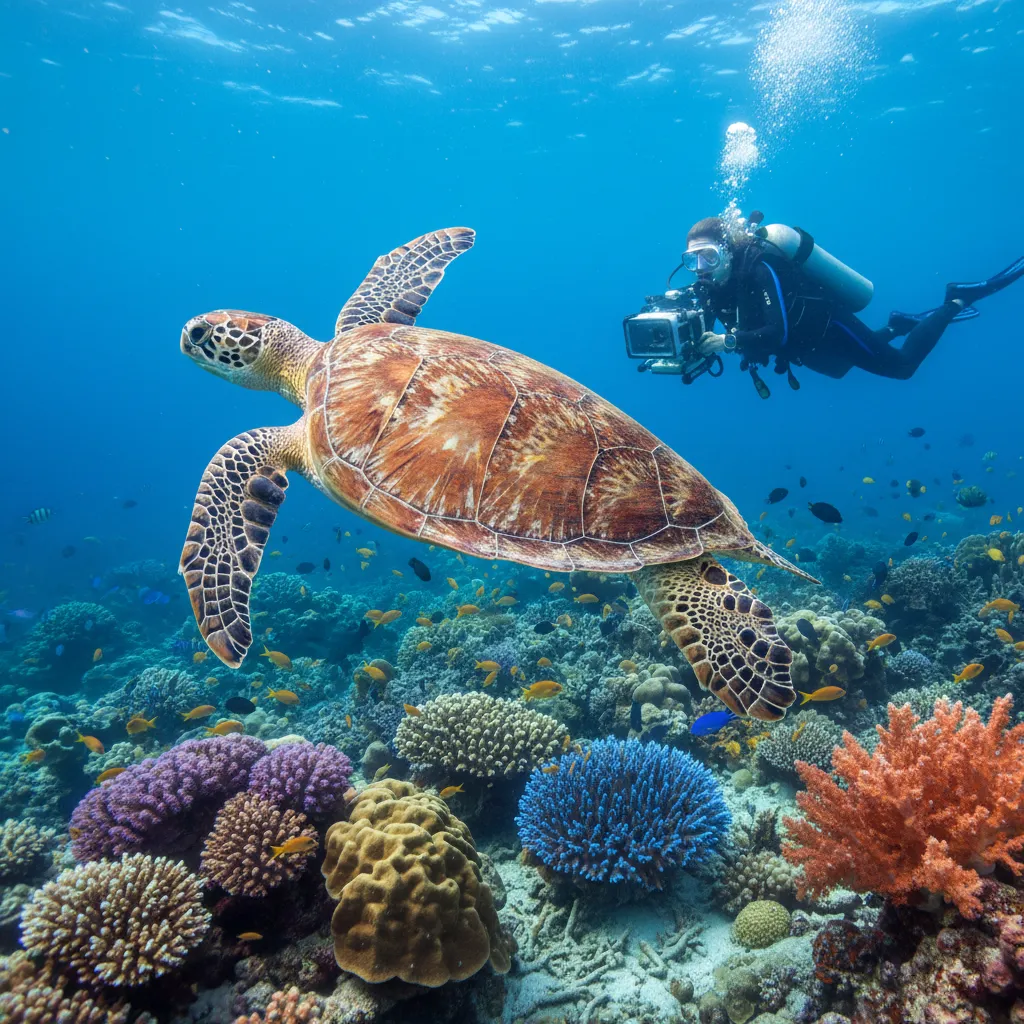
Sea turtles are among the most beloved creatures in the ocean, and for good reason. Watching a green turtle gracefully cruise over a coral reef, or a hawksbill methodically picking at sponges with its beak-like mouth, brings an immediate sense of calm and wonder. These ancient reptiles have been navigating the oceans for over 100 million years, and they remain one of the most reliable and rewarding encounters for divers of all levels. Unlike many big animal encounters that require remote locations and perfect timing, sea turtles can be found on reefs throughout the tropics.
Where to Dive with Sea Turtles
Found across 85 countries, based on 32,543 verified observation records.

Australia
7 areas

Spain
5 areas

Portugal
2 areas

Ecuador
2 areas

Mexico
4 areas

Tunisia
1 area

Malta
3 areas

United Arab Emirates
2 areas
+ 77 more countries
Best Time to See Sea Turtles
Sea turtles can be found year-round in tropical waters, making them one of the most accessible big-animal encounters. Some locations have seasonal peaks: Great Barrier Reef green turtles are most active October to March. Oman's Ras al Jinz has nesting loggerheads from May to September. Caribbean hawksbill nesting peaks from July to October. Sipadan (Malaysia) has year-round resident populations. For nesting behaviour on beaches, research the specific species and location - it's a separate and equally remarkable experience.
How to Dive with Sea Turtles
Sea turtle encounters are among the most accessible in diving - an Open Water certification is all you need at most sites. Turtles are found on shallow reefs where they feed on seagrass, algae, and sponges, and at cleaning stations where fish remove parasites. The best approach is relaxed and patient - swim slowly, avoid direct approaches, and let the turtle become comfortable with your presence. Many turtles are so habituated to divers that they barely acknowledge you. Sipadan in Malaysia, the Galapagos, and the Great Barrier Reef are legendary for close, prolonged turtle encounters. Night diving on Hawaiian reefs often reveals sleeping turtles tucked into reef crevices.
Is it Safe to Swim with Sea Turtles?
Sea turtles are completely harmless to divers. They have no aggressive behaviour and their primary defence is to swim away. The only minor risk is from hawksbill turtles, which have a sharp beak that could theoretically nip a finger (though this is extremely rare and only happens if you put your hand near their mouth). The most important safety consideration is for the turtles: never touch, ride, or chase a sea turtle. In many countries (including the US, Australia, and all EU nations), harassing sea turtles is a criminal offence.
Conservation Status
All seven species of sea turtle are threatened. Green turtles are Endangered, hawksbills are Critically Endangered, and loggerheads are Vulnerable. Threats include poaching, egg harvesting, bycatch in fishing gear, plastic pollution, coastal development destroying nesting beaches, and climate change (which affects sand temperature and therefore hatchling sex ratios). Responsible diving tourism generates crucial conservation funding and provides economic alternatives to poaching. Many dive destinations run turtle conservation programmes that divers can participate in.
Species Profile


Recommended Equipment
Standard tropical diving gear is all you need: a 3mm wetsuit, BCD, and regulators. A camera is highly recommended - turtles are photogenic, generally slow-moving, and tolerant of photographers. A moderate wide-angle to macro setup works well depending on whether you're shooting full portraits or details of their shell patterns. A red filter helps maintain natural colours at depth. No special equipment is needed beyond what you'd normally bring for a reef dive.
Browse dive equipmentFrequently Asked Questions
Where is the best place to swim with sea turtles?
Top sea turtle diving destinations include Sipadan (Malaysia), the Galapagos Islands, Great Barrier Reef (Australia), Akumal (Mexico), Hawaiian Islands, Gili Islands (Indonesia), and Barbados. Each offers different species and encounter types.
Are sea turtles dangerous?
No, sea turtles are completely harmless to humans. They are gentle, slow-moving creatures that generally ignore divers. Never touch or chase them - it's illegal in most countries and harmful to the turtles.
What types of sea turtles can you see while diving?
The most commonly encountered species while diving are green turtles (the most widespread), hawksbill turtles (found on coral reefs), and loggerhead turtles. Leatherback, olive ridley, Kemp's ridley, and flatback turtles are rarer sightings.
Can you dive with sea turtles as a beginner?
Yes! Sea turtles are found on shallow reefs throughout the tropics, making them ideal for beginner divers with an Open Water certification. Many snorkelling trips also offer excellent turtle encounters.
More Encounter Guides
Whale Sharks
Swimming alongside the world's largest fish is an experience that redefines your understanding of th...
Manta Rays
Manta rays are the ocean's most graceful giants. With wingspans reaching over 7 metres, these intell...
Great White Sharks
Coming face to face with a great white shark is the ultimate adrenaline rush for adventure divers. T...
Hammerhead Sharks
Seeing a school of hammerhead sharks is one of scuba diving's most iconic experiences. These prehist...
Bull Sharks
Bull sharks are diving's most exhilarating close encounter. Known for their stocky build and bold te...
Tiger Sharks
Tiger sharks are the ocean's ultimate generalists - large, powerful, and supremely confident. Reachi...