Diving with Tiger Sharks
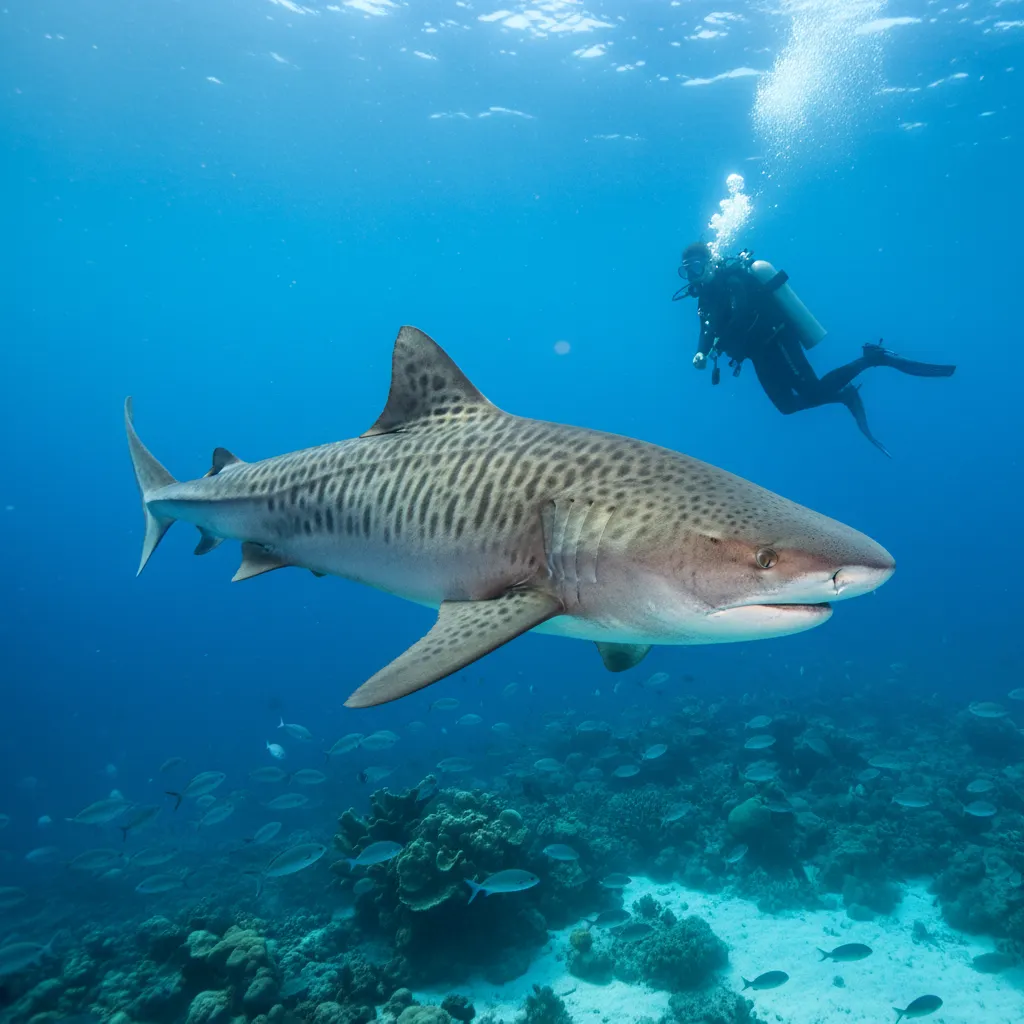
Tiger sharks are the ocean's ultimate generalists - large, powerful, and supremely confident. Reaching over 5 metres in length, these distinctive striped sharks are among the most impressive creatures a diver can encounter. Their calm, deliberate approach style (very different from the darting behaviour of reef sharks) and willingness to closely investigate divers makes for extraordinary encounters. Named for the dark stripes that fade with age, tiger sharks are apex predators found in warm waters worldwide. They are one of the 'big three' shark species (alongside bull and great white sharks), and diving with them is a bucket-list experience.
Where to Dive with Tiger Sharks
Found across 27 countries, based on 4,210 verified observation records.

Australia
7 areas

South Africa
2 areas

Puerto Rico
3 areas

Bahamas
6 areas

Mexico
1 area

US Virgin Islands
2 areas

British Virgin Islands
2 areas

Mauritius
2 areas
+ 19 more countries
Best Time to See Tiger Sharks
Tiger Beach, Bahamas: October to January is peak season, with tigers present year-round but in lower numbers during summer. Fuvahmulah, Maldives: year-round tiger shark encounters at Tiger Zoo dive site. Aliwal Shoal, South Africa: December to May. Hawaii: October to December, when tiger sharks come closer to shore. Cocos Island, Costa Rica: tiger sharks are occasional but not reliable - visit primarily for hammerheads.
How to Dive with Tiger Sharks
Tiger shark encounters are typically arranged through baited dives in locations where they are reliably found. Tiger Beach in the Bahamas is the world's premier destination - a shallow sandy bottom at 10-15 metres where multiple tiger sharks can be seen on a single dive. Fuvahmulah in the Maldives offers non-baited encounters in open water. Aliwal Shoal in South Africa has seasonal aggregations. Most operators require Advanced Open Water and a minimum number of logged dives. The technique is to kneel on the sand and let the sharks approach - never chase or block their path. Tiger sharks move slowly and deliberately, giving you time to observe and photograph them.
Is it Safe to Swim with Tiger Sharks?
Tiger sharks are large, powerful predators that should be treated with serious respect. They are known for their curiosity and investigative approach to unfamiliar objects, which includes divers. On organised dives with experienced operators, the safety record is very good. Key rules: never turn your back on a tiger shark, maintain eye contact when one approaches, don't make sudden movements, keep your hands close to your body, and follow all operator instructions. Some operators use push sticks to redirect sharks that get too close. These dives are not for inexperienced divers.
Conservation Status
Tiger sharks are currently listed as Near Threatened by the IUCN, though many regional populations are more severely depleted. They are frequently killed in shark control programmes (such as drum lines in Australia and South Africa), caught as bycatch in commercial fishing, and targeted for their fins. As slow-reproducing apex predators, population recovery is slow. Tiger shark tourism at Tiger Beach alone generates millions of dollars annually for the Bahamas, demonstrating the economic value of live sharks versus dead ones.
Species Profile

Recommended Equipment
Standard scuba gear for warm water: 3mm wetsuit (Tiger Beach is 24-27°C), BCD, and regulators. Dark, non-reflective gear is preferred. No gloves (to discourage touching). A wide-angle camera setup is essential - tiger sharks are large and often very close. Strobes should be used carefully (check with your operator). A 15mm fisheye lens is popular for dramatic close-up portraits with the entire shark in frame. Ensure all equipment is streamlined with no dangling accessories.
Browse dive equipmentFrequently Asked Questions
Where is the best place to dive with tiger sharks?
Tiger Beach in the Bahamas is the world's premier tiger shark diving destination, offering reliable encounters at shallow depths (10-15m) on a sandy bottom. Fuvahmulah in the Maldives offers non-baited encounters. Aliwal Shoal in South Africa has seasonal aggregations.
Are tiger sharks dangerous to divers?
Tiger sharks are large, powerful predators that require respect. However, on organised dives with experienced operators, the safety record is excellent. Unprovoked attacks on divers during organised shark dives are extremely rare.
How big do tiger sharks get?
Tiger sharks typically reach 3-4 metres (10-14 feet), with large females exceeding 5 metres (16+ feet). They can weigh over 600kg. The distinctive dark stripes that give them their name tend to fade as the shark ages.
Do you need experience to dive with tiger sharks?
Yes, most operators require Advanced Open Water certification and a minimum of 30-50 logged dives. These are serious encounters with large predators that demand solid diving skills, buoyancy control, and calm underwater behaviour.
More Encounter Guides
Whale Sharks
Swimming alongside the world's largest fish is an experience that redefines your understanding of th...
Manta Rays
Manta rays are the ocean's most graceful giants. With wingspans reaching over 7 metres, these intell...
Great White Sharks
Coming face to face with a great white shark is the ultimate adrenaline rush for adventure divers. T...
Hammerhead Sharks
Seeing a school of hammerhead sharks is one of scuba diving's most iconic experiences. These prehist...
Sea Turtles
Sea turtles are among the most beloved creatures in the ocean, and for good reason. Watching a green...
Bull Sharks
Bull sharks are diving's most exhilarating close encounter. Known for their stocky build and bold te...