Diving with Manta Rays
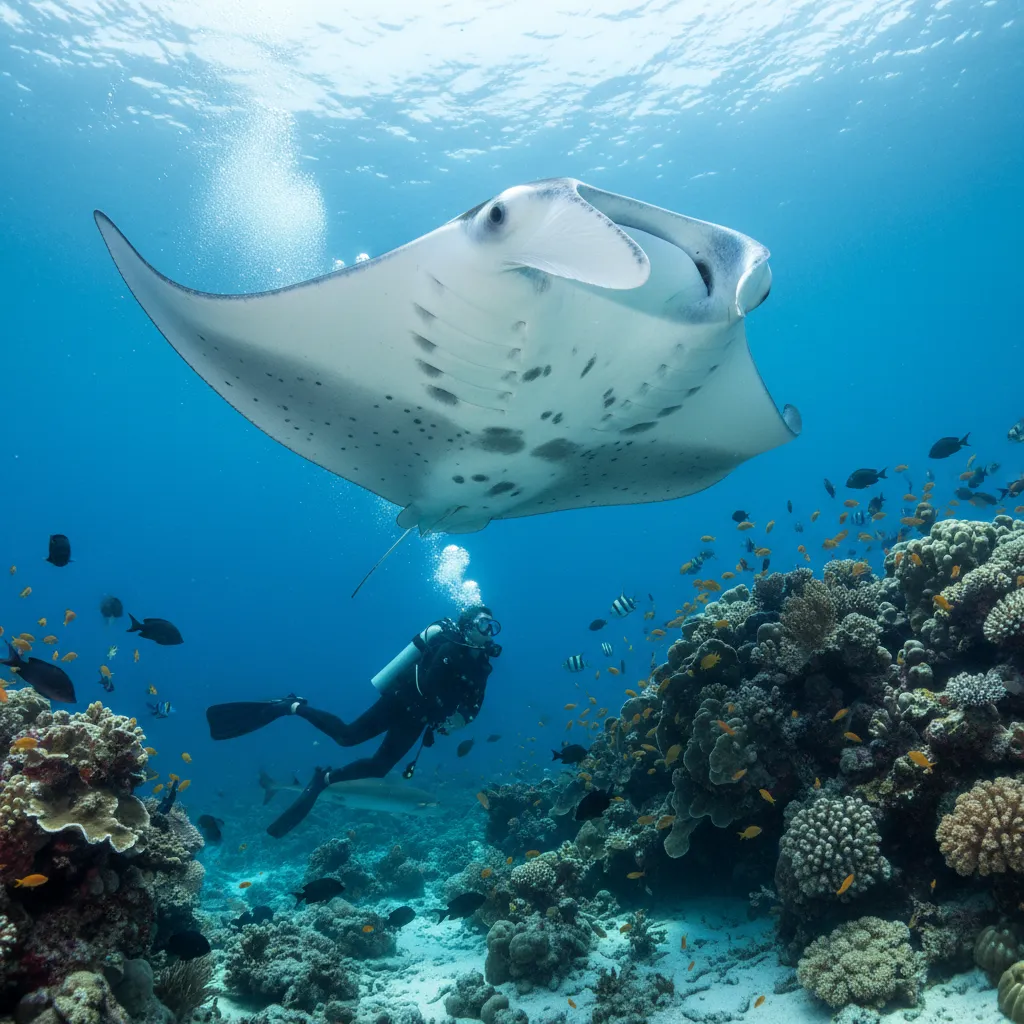
Manta rays are the ocean's most graceful giants. With wingspans reaching over 7 metres, these intelligent creatures perform mesmerising barrel rolls and somersaults as they feed on plankton. Unlike many marine encounters that are fleeting, mantas are naturally curious and often approach divers, circling overhead for extended periods. Each manta has a unique pattern of spots on its belly - like a fingerprint - making them individually identifiable. Spending time at a cleaning station watching mantas queue up to be groomed by small cleaner wrasses is one of diving's most magical experiences.
Where to Dive with Manta Rays
Found across 26 countries, based on 1,137 verified observation records.
Ecuador
1 area

Peru
1 area

Mexico
1 area

Philippines
3 areas

Australia
3 areas

South Africa
2 areas
New Caledonia
3 areas

Panama
2 areas
+ 18 more countries
Best Time to See Manta Rays
Manta rays can be found year-round in many tropical locations, but aggregation patterns vary. Hawaii's Kona Coast has consistent year-round night manta encounters. Indonesia's Komodo and Raja Ampat are best from December to February. The Maldives' Hanifaru Bay peaks from June to November during the southwest monsoon. Ecuador's Isla de la Plata is best from June to September. The Great Barrier Reef's Lady Elliot Island has mantas from May to August.
How to Dive with Manta Rays
Manta encounters typically happen at cleaning stations on shallow reefs or at feeding aggregation sites. The key technique is to find a comfortable spot on the reef, kneel or lie flat, and wait. Mantas are drawn to bubbles and will often approach stationary divers. Never chase a manta - they can easily outswim you, and the pursuit will drive them away. Advanced Open Water is recommended for most manta sites due to currents, though some cleaning stations are shallow enough for Open Water divers. Night diving with mantas in Kona, Hawaii is a unique experience where lights attract plankton, which in turn attracts mantas that somersault through the beams.
Is it Safe to Swim with Manta Rays?
Manta rays are completely harmless to humans. They have no stinger (unlike stingrays), no teeth capable of biting, and no aggressive behaviour. The only risk is being accidentally bumped by a large manta in close quarters, which is rare. Never touch a manta ray - their skin is covered in a protective mucus layer, and human contact can damage it and lead to infection. Maintain a respectful distance and resist the urge to reach out, even when a manta swims directly overhead.
Conservation Status
Giant oceanic manta rays (Mobula birostris) are classified as Endangered, and reef mantas (Mobula alfredi) as Vulnerable by the IUCN. They face threats from targeted fishing for their gill plates (used in traditional medicine), bycatch in commercial fishing nets, and microplastic pollution. Mantas have extremely slow reproductive rates - females produce only one pup every 2-5 years - making population recovery very slow. Manta tourism generates far more revenue than fishing, providing strong economic incentives for protection. Many countries have established manta sanctuaries.
Species Profile
Recommended Equipment
Standard scuba gear is appropriate for manta dives. A 3-5mm wetsuit depending on location, BCD, and standard regulators. Avoid wearing gloves at manta sites - they encourage touching. A camera with a wide-angle lens is essential, as mantas are large and often very close. Red filters help with colour correction in deeper encounters. For night manta dives in Kona, you'll need a dive torch to hold but will be instructed to shine it upward to attract plankton.
Browse dive equipmentFrequently Asked Questions
Where can you swim with manta rays?
Top manta ray destinations include Kona, Hawaii (night dives), Hanifaru Bay in the Maldives, Komodo in Indonesia, Lady Elliot Island on the Great Barrier Reef, Isla de la Plata in Ecuador, and the Revillagigedo Islands off Mexico.
Are manta rays dangerous?
No, manta rays are completely harmless. They have no stinger, no teeth, and no aggressive behaviour. They are gentle, curious filter feeders that often approach divers voluntarily.
What is the difference between a manta ray and a stingray?
Manta rays are much larger (up to 7m wingspan), feed on plankton by filter feeding, have no stinger, and swim in open water. Stingrays are smaller, bottom-dwelling, have a venomous barb on their tail, and feed on shellfish and small fish.
What is the best time of year to see manta rays?
It varies by location. Hawaii has year-round encounters. The Maldives peaks June–November. Indonesia (Komodo) is best December–February. Australia's Lady Elliot Island peaks May–August.
Can you touch manta rays?
No, you should never touch manta rays. Their skin is covered in a protective mucus layer that can be damaged by human contact, potentially leading to infections. Always maintain a respectful distance.
More Encounter Guides
Whale Sharks
Swimming alongside the world's largest fish is an experience that redefines your understanding of th...
Great White Sharks
Coming face to face with a great white shark is the ultimate adrenaline rush for adventure divers. T...
Hammerhead Sharks
Seeing a school of hammerhead sharks is one of scuba diving's most iconic experiences. These prehist...
Sea Turtles
Sea turtles are among the most beloved creatures in the ocean, and for good reason. Watching a green...
Bull Sharks
Bull sharks are diving's most exhilarating close encounter. Known for their stocky build and bold te...
Tiger Sharks
Tiger sharks are the ocean's ultimate generalists - large, powerful, and supremely confident. Reachi...