Diving in California
Why dive here
California offers 195 dive sites in United States. Water ranges 14-21°C, warmest July, August, September.
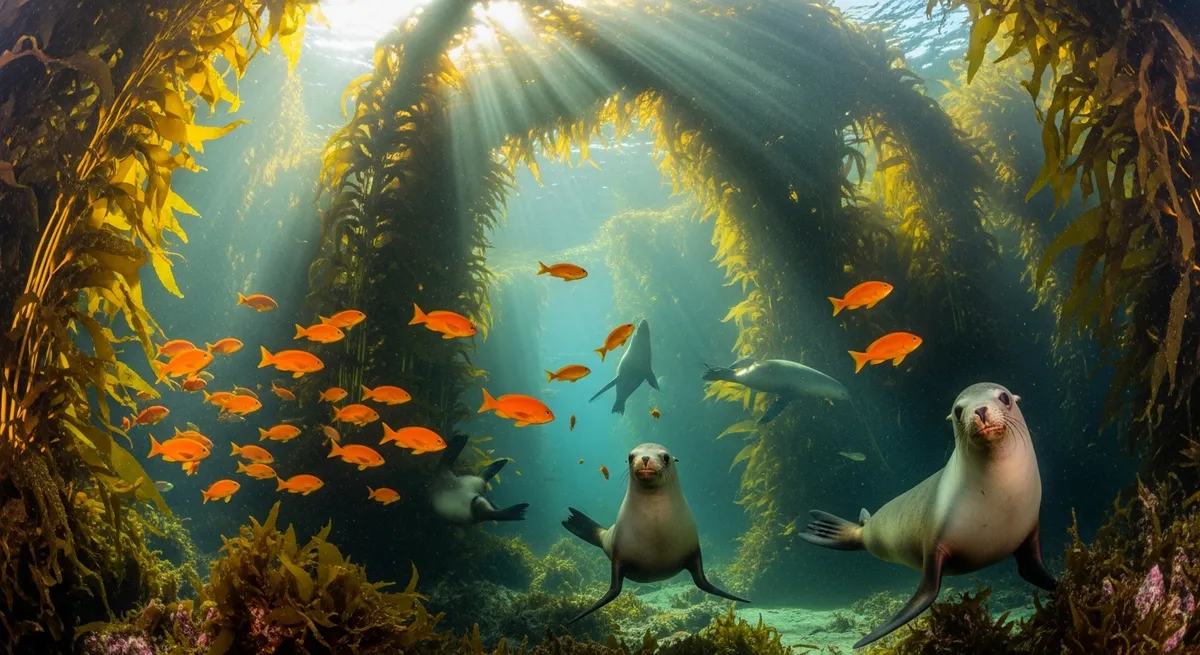
California diving, for us, is all about the kelp. Forget your tropical corals for a moment; the sensation of drifting through a towering kelp forest, light dappling through the canopy, is something else entirely. We're talking the Channel Islands, where the giant kelp sways like a hypnotic underwater cathedral. You'll often find sea lions zipping playfully through the fronds, their inquisitive eyes checking you out. Monterey Bay offers a different vibe, often a bit chillier but equally rewarding. The sheer volume of life you find in that marine sanctuary is astounding. Think nudibranchs in every colour imaginable, grumpy-looking lingcod peering from crevices, and the occasional curious harbor seal. La Jolla, further south, has its seasonal draw: leopard sharks gathering in the shallows during late summer and early autumn. It's a surreal experience to fin gently among dozens of these docile creatures. Currents can be a factor, especially at the Channel Islands, so it’s wise to pick your days and chat with the local dive operators. We always pack an extra layer for surface intervals here, even on sunny days.
California Dive Site Map
Dive sites and dive centres in California
California Dive Sites
195 dive sites in California
Arbolitos
Arbolitos offers a glimpse into California’s colder water diving, and it’s a good spot to remember why we love the kelp forests. Dropping into the swaying kelp, you’ll likely find bluebanded gobies darting around, or maybe a spotted ratfish gliding along the bottom. It’s a solid shore dive, though we’d always suggest checking local conditions for surge before you head out. This site is ideal for photographers looking to spend some time with smaller subjects, or divers who just want a relaxed exploration of the reef.
Avalon Dive Park
Okay, so Avalon Dive Park. When people think California diving, they often picture the kelp forests, right? And Avalon delivers that in spades, but with a surprising twist – it’s a town pier, right in the heart of Avalon Bay. We love it because you’ve got easy access straight off the beach, which is a godsend when you’re lugging gear. Drop in, and you’re immediately enveloped by the towering kelp. Sunbeams slice through the canopy, dappling the sand below. It feels ancient down there. Keep an eye out for bat rays gliding past, or the grumpy-looking giant sea bass hanging out under the pier pylons – they’re huge, like underwater grandfathers. We’ve spotted nudibranchs galore, little colourful jewels against the kelp fronds. And the fish life, it’s not always the big stuff, but the sheer numbers of senoritas and blacksmiths swirling around you is impressive. Our favourite time to dive here is actually at night. The pier lights filtering down create this ethereal glow, and you’ll see creatures come out that hide during the day. Think octopuses on the prowl or even the occasional swell shark tucked into a crevice. It’s a gentle dive, perfect for warming up to California’s colder waters, or just enjoying a relaxed afternoon exploring the bay. Just watch out for boat traffic coming in and out of the harbour.
Beacons
Beacons is a shallow shore dive, topping out around 7m, perfect for an easy second dive or a long bottom time. You'll find a mix of rocky reef and sandy patches, with plenty of garibaldi, kelp bass, and occasional leopard sharks cruising through the surf zone. It's a solid intermediate spot for those comfortable with beach entries and looking for a relaxed dive without major depths. We think it's particularly good for macro photography when conditions are calm.
Begg Rock
Begg Rock sits well offshore from San Nicolas Island, a solitary pinnacle rising from the deep. The boat ride out can be a long one, but for hardy divers, it offers a shot at pelagic encounters. We've seen blue sharks here, and the rock itself is usually covered in thick anemones and gorgonians. It's a challenging dive, best suited for experienced cold-water divers comfortable with strong currents and open ocean conditions.
Ben Weston Point
Ben Weston Point gives you a classic California kelp forest dive. You’ll weave through the swaying fronds, keeping an eye out for garibaldi, rockfish, and maybe a sheephead. It’s a good shore dive for those who enjoy temperate water diving and don't mind a bit of a trek. Look for sea lions playing in the shallows if you’re lucky.
Binnacle Rock
Binnacle Rock offers a classic California pinnacle dive, breaking the surface just offshore. We’ve found the rock face drops to a sandy bottom, creating good opportunities to spot rockfish, anemones, and occasional nudibranchs tucked into crevices. It’s a solid site for intermediate divers looking for a reliable, easy-access boat dive. Visibility can vary, but on a good day, it’s a pleasant exploration of a familiar Pacific ecosystem.
Bishop Rock
Bishop Rock, off the California coast, is a rocky outcrop that delivers a proper kelp forest experience. We’ve found leopard sharks cruising through the swaying fronds and bright orange garibaldi darting between crevices. It’s a good spot for divers comfortable with colder water and the potential for a bit of surge, offering a classic temperate Pacific dive.
Bourgeoisie Cove
Bourgeoisie Cove offers a straightforward shore dive, well-suited for beginners and those looking for an easy entry. The sandy bottom slopes gently, eventually leading to kelp beds where we often spot garibaldi, occasional leopard sharks, and nudibranchs grazing on the fronds. Visibility can be a bit variable here, often around 5-10 meters, so it’s more about the smaller macro life and relaxed exploration than wide vistas. It’s a reliable spot for a calm dive when conditions elsewhere might be rough.
Bowen Point
Bowen Point offers a typical temperate dive along California's coast. You'll find rocky reefs sheltering gorgonians and various nudibranchs. Keep an eye out for rockfish hiding in crevices. This site is best suited for divers comfortable with colder water and potentially surge, making it a good option for local enthusiasts.
Buchon Reef
Buchon Reef sits off the California coast, offering cool water diving with plenty of kelp forests. You’ll find rockfish, nudibranchs, and occasional harbor seals weaving through the fronds. It's a solid choice for temperate water divers looking for classic California conditions and a relaxed pace.
Bull City
Bull City in California is primarily a beach dive, offering easy access for divers looking to explore close to shore. You'll likely encounter kelp forests here, with garibaldi and various rockfish darting among the stalks. It’s a solid pick for divers who enjoy shore entries and want a straightforward dive without the need for a boat.
Butterfly House
Butterfly House, off the California coast, offers a straightforward shore dive. We usually find kelp forests here, with garibaldi, rockfish, and occasional harbor seals weaving through the fronds. It's a solid choice for local divers looking for an easy entry and a reliable macro hunt among the holdfasts. Visibility can be hit or miss, typical for the region, so check conditions before you head out.
Show all 195 dive sites in California
- Cabrillo Beach
- Cape Cortes
- Carlsbad Artificial Reef 1
- Casino Point
- Castle Rock
- Castle Rock
- Catalina Island
- Cat Canyon
- Cathedral
- Centissima Reef
- Channel Islands Break Wall
- Cherry Cove
- Children s Pool
- China Point
- Christmas Tree Cove
- Church Rock
- Coal oil point
- Coral Gardens
- Coral Street
- Corona Del Mar State Beach
- Corral Canyon State Beach
- Cortez Bank
- Cove Point
- Crane Point
- Crescent Cove
- Cress Street
- Cuyler Harbor
- Dead Man s Reef
- Deer Creek
- Dockweiler Beach State Park
- Doctors Cove
- Eagle Reef
- Eagle Rock
- East End
- East Point
- Eel Cove
- Eel Point
- Eel Point Reef
- Emerald Bay
- Emma Hood Swim Center
- Enterprise Cannery
- Farnsworth Bank
- Fisherman s Cove
- Fishermans Cove
- Fish Hook
- Flat Rock
- Ford Point
- Forney Cove
- Fourth of July Cove
- Frog Rock
- Gallagher Beach
- Garibaldi Reef
- Goat Harbor
- Goleta Beach Park
- Gull Island
- Haggerty s Crane
- Harbor Reefs
- Hawthorne Reef
- Hen Rock
- HMCS Yukon (Wreck)
- Honeymoon cove
- Iron Bound Cove
- Isthmus Reef
- Italian Gardens
- Jade Cove
- Jenny Lynne
- Jewfish Point
- Johnsons Lee
- Johnsons Rock
- Kelp Point
- Kennedy
- Kinton Point
- La Jolla Canyon
- La Jolla Cove
- La jolla Kelp Beds
- La Jolla Shores
- Landing cove
- Landing Craft LCM3
- Ledbetter Beach
- Leo Carrillo State Beach
- Lions Head
- Little Corona Beach
- Little Farnsworth
- Little Gibraltar
- Lobster Bay
- Long Beach Breakwater
- Long Point
- Lulu Reef
- Marineland Reef
- Mesa
- Mill Creek
- Mission Bay
- Mission Bay Jetty North
- Monument Point
- Moonstone Cove
- Morse Point
- Naples Reef
- Net Reef
- New Hope Rock
- Nine Fathom Bank
- North T-Pier
- NOSC Tower Wreck
- Oil Rigs Elly-Ellen
- Osborn Bank
- Pacific Scuba Divers
- Painted cave
- Palawan
- Paradise Cove
- Parson’s Landing
- Pebbly Beach
- Pelican Bay
- Picnic Beach
- Pinnacles
- Pirate s Cove
- Point Bennett
- Point Dume
- Point Loma
- Prince Island
- Pt Vicente Pinnacles
- Punta Arena
- Pyramid Cove
- Rat Rock
- Redondo Beach Artificial Reef
- Refugio
- Ribbon Rock
- Rippers Cove
- Rock Pile
- Rock Quarry
- Ruby E Wreck
- San Clemente Island
- San Clemente North
- Sandy Point
- San Juan Rocks
- San Miguel Island
- San Nicholas Island
- Santa Cruz Island
- Scorpion Anchorage
- Scuba One World Dive & Travel
- Sea Fan Grottos
- Seal Cove
- Seal Point
- Seal Rocks
- Sears Rock
- Sentinel Point
- Shag Rock
- Shaws Cove
- Ship Rock
- Skunk Bay
- South Point
- Spooners Cove
- S S Avalon Wreck
- Star of scotland
- Stearns Wharf
- Stony Point
- Suejac Wreck
- Sutil Island
- Tajiguas
- Talcott Shoal
- Tanner Bank
- The Cave
- The Marine Room
- The Needle
- The Palisades
- the Rookery
- Torqua Springs
- Twin Rocks
- Tyler Bight
- Underwater Arch
- USS John C Butler DD-339
- USS Peacock Wreck
- Valiant Wreck
- Veteran s Park
- WaterWorld Universal Studios
- White Cove
- White Point
- Willow Cove
- Wilson Cove
- Wilson Rock
- Wood Cove
- Wyckoff Ledge
- Yellow Banks
- Yellowtail Point
- Yukon Wreck
California Dive Centres
120 dive shops and operators in California
Adventure Sports Unlimited
Adventure West Scuba
Aloha Scuba
Anderson's SCUBA diving
Any Water Dive Center
Aquanautics Dive, Inc
Aquarius Dive Shop
Aqua Safaris
Show all 120 dive centres in California
- Aqua Sports
- ASD Scuba School
- Bakersfield Scuba Center
- Bamboo Reef Scuba Diving Centers
- Beach Cities Scuba
- Beach Cities Scuba Center
- Beyond Land Adventures, Inc.
- Blue Holic Scuba
- Blue Water Hunter Dive Shop
- Boss Frog's
- Boss Frog's
- Boss Frog's
- Boss Frog's
- Boss Frog's
- Boss Frog's
- Boss Frog's
- Boss Frog's Dive & Surf
- BTB Dive Services
- Cal State Fullerton
- Cannery Row Aquatics
- Carlsbad Dive Team
- Carmel Bay Divers
- Catalina Divers Supply & Snorkeling
- Catalina Scuba
- Deep Blue Scuba
- Deep Ocean Explore Store
- Depth Perceptions
- Desert Divers
- Dive Addicts
- Dive and Photo
- Dive Arizona
- Dive N' Surf
- Dive N Trips
- Diventures
- Diventures
- Diver Dan's
- Divers West
- Dive Santa Barbara
- Dive Utah
- Eco Dive Center
- El Mar Diving Center
- Fathom Five Divers
- Fins Up Scuba
- Hanauma Bay Dive Tours
- Harbor Dive Center
- Hawaiian Diving Adventures
- Hollywoodivers
- House of Scuba
- In2Deep
- Jack’s Diving Locker
- Kaizen Scuba
- Kelp Forest
- Kohala Divers
- Kona Honu Divers
- Kona Shore Divers
- Lost Winds Dive Shop
- Malibu Divers
- Marin Diving Center
- Maui Diving Scuba Center
- Maverick UnderSea Divers
- M & B Wetsuits
- Molokai Fish and Dive
- Monterey Bay Scuba
- Neptune Divers
- New Mexico Scuba Center
- No Limits Scuba
- No Limits Scuba
- North County Scuba Center
- Ocean Enterprises
- Ocean One Scuba Center
- Oceanside Scuba and Swim, LLC
- Ocean Sports
- Ocean to Skies
- Openwater Habitat Marine Schools
- Pacific Ocean Sports
- Pacific Ocean Water Sports
- Pacific Scuba Divers
- Pacific Wilderness, Inc.
- Reef Pirates Diving
- Ron Moore's Dive Catalina
- Saguaro Scuba
- Santa Barbara Aquatics
- SC Diving
- Scuba Center Temecula
- SCUBA/FUSION
- Scuba Locker
- Scuba Schools Of America
- ScubaTechs.com
- Scuba Utah
- Scuba Ventures & Freedive
- Scuba World
- Sea Sport Divers
- Sea Stallion Scuba Outfitters
- Sharky's Scuba & Swim
- Signature Scuba
- Simply Scuba
- SLO Ocean Currents
- Snorkel Bob's
- Snorkel Bob's Lahaina
- Southwest Aqua Sports
- Spear Shack
- Splash Down Diving
- Steele's Discount Scuba
- Texas Dive Center
- The Dive Shop
- The Scuba Shop
- The Scuba Shop
- Trident Adventures
- Ventura Dive & Sport
- Veteran Six
- Waterhorse Charters
- WAVES Project
Ocean Wildlife in California
10 species recorded in California
California Daylight & Sunrise/Sunset
Sunrise and sunset times for California, calculated from coordinates
Today - Sunday 11 October
Sunrise
05:57
Sunset
17:29
Daylight
11h 32m
Golden Hour
16:55
First light (dawn) at 05:32 · Last light (dusk) at 17:54
Monthly Averages
| Month | Sunrise | Sunset | Daylight |
|---|---|---|---|
| Jan | 07:01 | 17:09 | 10h 8m |
| Feb | 06:41 | 17:39 | 10h 58m |
| Mar | 06:08 | 18:03 | 11h 55m |
| Apr | 05:26 | 18:26 | 12h 59m |
| May | 04:56 | 18:49 | 13h 53m |
| JunLongest | 04:45 | 19:08 | 14h 23m |
| Jul | 04:56 | 19:08 | 14h 12m |
| Aug | 05:17 | 18:44 | 13h 27m |
| Sep | 05:39 | 18:05 | 12h 26m |
| OctNow | 06:00 | 17:24 | 11h 24m |
| Nov | 06:27 | 16:54 | 10h 27m |
| DecShortest | 06:53 | 16:49 | 9h 56m |
Times are approximate local times based on longitude. Actual times may vary slightly depending on the exact timezone observed in California.
Where to Stay near California
Prices from Booking.com. We may earn a commission at no extra cost to you.
Marine Protected Areas near California
74 protected areas near California - please respect local regulations when diving
Channel Islands National Marine Sanctuary
Channel Islands National Park
Santa Barbara Island Federal Marine Reserve
Richardson Rock (San Miguel Island) State Marine Reserve
Begg Rock (San Nicolas Island Quad) State Marine Reserve
Richardson Rock (San Miguel Island) Federal Marine Reserve
Vandenberg State Marine Reserve
Harris Point (San Miguel Island) State Marine Reserve
Harris Point (San Miguel Island) Federal Marine Reserve
Point Conception State Marine Reserve
Footprint (Anacapa Channel) Federal Marine Reserve
Gull Island (Santa Cruz Island) State Marine Reserve
Showing 12 largest of 74
Getting to California
Los Angeles
Van Nuys
Burbank
Plan & book
Ways to dive California, from day trips to liveaboards.
Day trips & courses
via GetYourGuideGuided dives, courses and snorkel trips with instant booking.
Find dive trips in CaliforniaPlaces to stay
via Booking.comHotels and dive resorts near California.
Search stays in CaliforniaDive insurance
Most travel insurance excludes or limits scuba. Check what you need before you go.
Dive insurance explainedPartner links: we may earn a commission if you book, at no extra cost to you. How we make money