Diving with Mobula Rays (Devil Rays)
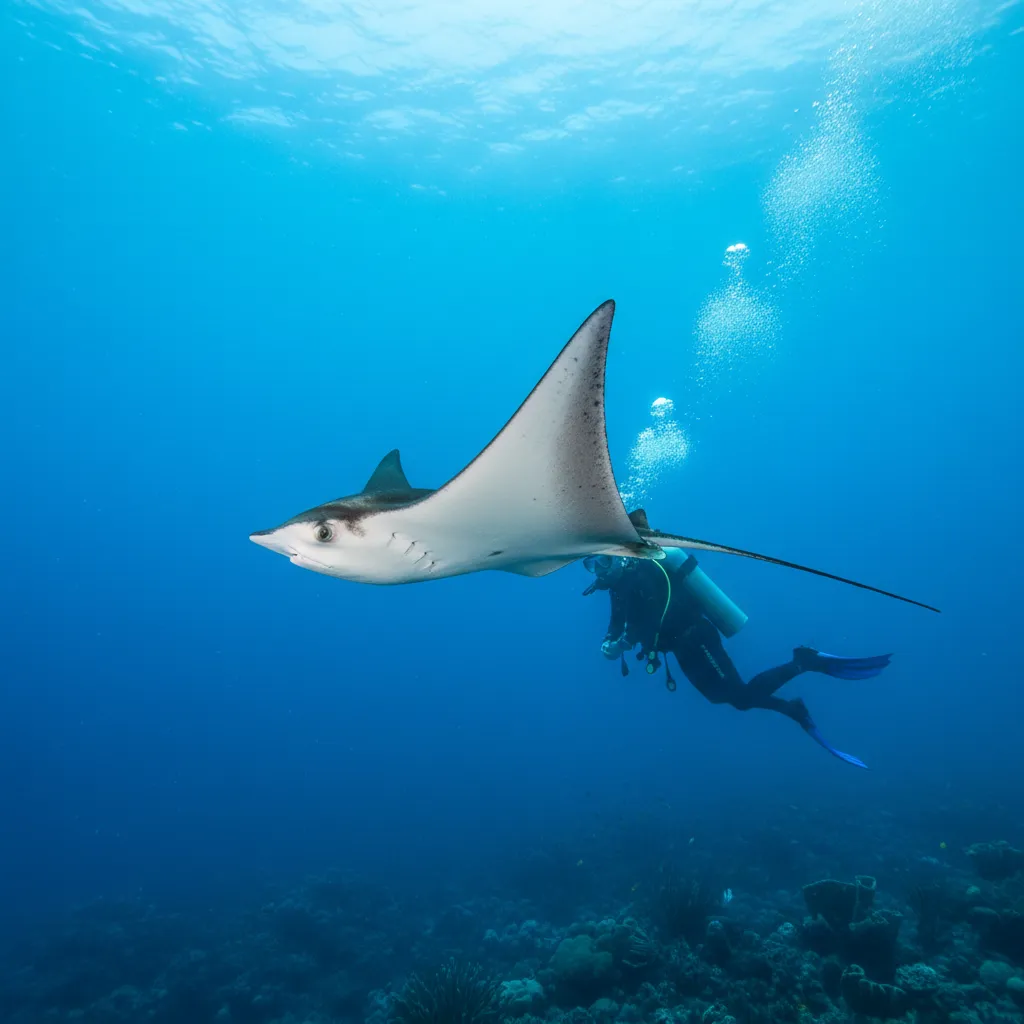
Mobula rays - commonly called devil rays for the distinctive cephalic fins that curl forward like horns - are among the ocean's most mesmerising spectacles. Closely related to manta rays and now classified within the same genus Mobula, these elegant filter feeders range from the petite Munk's devil ray (Mobula munkiana) at around one metre wingspan to the giant oceanic manta (Mobula birostris) exceeding seven metres. What makes mobula encounters truly unforgettable is their tendency to aggregate in enormous schools, sometimes numbering in the thousands, creating living tornados of wings that wheel and spiral through blue water in perfect synchronisation. Unlike their larger manta cousins that are typically encountered at cleaning stations or feeding aggregations in small numbers, mobula rays form some of the largest gatherings of any ray species on Earth. They are spectacular jumpers, launching themselves metres above the surface in acrobatic belly-flops whose purpose - whether communication, parasite removal, or courtship - remains debated by scientists. Found in tropical and warm temperate waters worldwide, mobula rays occupy the open ocean and visit coastal waters seasonally, making encounters both thrilling and unpredictable. For divers fortunate enough to witness a mobula aggregation, the experience of hovering in blue water as hundreds of rays stream past in formation is a genuinely life-changing underwater moment.
Where to Dive with Mobula Rays
Found across 32 countries, based on 1,698 verified observation records.
Ecuador
1 area

Philippines
3 areas

Italy
3 areas

France
2 areas
Panama
2 areas

Peru
1 area

Mexico
1 area

South Africa
3 areas
+ 24 more countries
Best Time to See Mobula Rays
Baja California, Mexico (Sea of Cortez): Munk's devil rays aggregate from May to November, with peak numbers typically from June to October around Cabo Pulmo and La Paz. Water temperatures are warmest (26-30 degrees Celsius) from July to September. Azores, Portugal: Chilean devil rays and giant devil rays visit seamounts from July to October, with peak encounters at Princess Alice Bank in August and September. Water temperatures range from 19-24 degrees Celsius. Maldives (Hanifaru Bay): mobula rays join reef mantas during the southwest monsoon plankton blooms from June to November, with peak activity in August and September. The bay is strictly regulated with limited numbers of snorkellers and no scuba allowed inside. Mozambique (Tofo Beach): several mobula species are seen year-round, with larger aggregations from October to March. Indonesia: mobula rays are seen at various sites including Nusa Penida and Komodo, primarily during the cooler upwelling months of July to October.
How to Dive with Mobula Rays
The Sea of Cortez in Baja California, Mexico, is the world's premier mobula ray destination. From late spring through autumn, enormous aggregations of Munk's devil rays gather around Cabo Pulmo, Espiritu Santo Island, and the seamounts off La Paz. Schools of hundreds to thousands swirl in tight formations in open water, and snorkelling or freediving often provides even better encounters than scuba, as the rays tend to stay in the upper water column. The Azores, particularly around the islands of Santa Maria and Faial, host seasonal aggregations of the Chilean devil ray (Mobula tarapacana) and the giant devil ray (Mobula mobular) from July to October - Princess Alice Bank is a legendary seamount site where massive schools congregate. In the Maldives, mobula rays are encountered at Hanifaru Bay alongside reef manta rays during the southwest monsoon plankton blooms (June to November). The key to successful mobula diving is understanding that these are open-water, pelagic animals. They rarely linger at fixed sites the way reef mantas do at cleaning stations. Encounters typically happen on blue-water drifts, at seamounts, or along current-swept channels. Enter the water quietly, descend to a comfortable depth, and wait - mobula rays are curious and will often circle back to investigate divers who remain calm and still. Avoid chasing them; they can easily outswim any diver and will simply disappear into the blue if pursued. Local dive operators with years of experience reading currents and seasonal patterns are essential for maximising your chances.
Is it Safe to Swim with Mobula Rays?
Mobula rays are completely harmless to divers - they have no stinging barb (unlike stingrays), no teeth capable of biting, and are naturally timid around humans. The primary safety considerations relate to the open-water diving conditions in which mobula encounters typically occur. Blue-water dives at seamounts and offshore sites involve deep water, strong currents, and limited visibility of the seabed. Carry a surface marker buoy (SMB) and deploy it well before your safety stop. A dive computer with a clear display is essential for monitoring depth in featureless blue water where it is easy to sink without realising. Maintain awareness of your buddy and dive group - it is remarkably easy to become separated when distracted by a spectacular mobula aggregation. Some seamount sites involve negative entries and rapid descents in current, which require experience and confidence. Never grab or attempt to ride a mobula ray; besides being harmful to the animal, their powerful wings can knock your mask off or dislodge your regulator if they make contact during a panicked escape. Respect the animals' space and let them set the terms of the encounter.
Conservation Status
Mobula rays face severe conservation threats worldwide. All species in the genus Mobula are now listed under CITES Appendix II, and many are classified as Endangered or Vulnerable by the IUCN. Their slow reproductive rate - most species produce a single pup after a gestation of one to three years - makes populations extremely vulnerable to overfishing. Mobula rays are targeted in directed fisheries in several countries, particularly for their gill plates, which are sold in Asian traditional medicine markets as a purported health tonic (with no scientific evidence of efficacy). Indonesia, Sri Lanka, India, and parts of West Africa have historically had significant mobula fisheries. Bycatch in purse seine and gillnet fisheries kills unknown thousands more annually. The Sea of Cortez aggregations that delight divers were historically targeted by fishermen, and conservation efforts including marine protected areas like Cabo Pulmo National Park have been instrumental in protecting these gatherings. Divers play an important role as ambassadors - the economic value of mobula ray tourism far exceeds their value as fisheries catch, providing powerful incentives for local communities to protect rather than exploit them.
Species Profile


Recommended Equipment
A wide-angle lens is essential for mobula ray photography - these encounters happen in open blue water with schools that can fill the entire frame and beyond. A fisheye or rectilinear wide-angle (14-24mm equivalent) captures the scale of large aggregations. A dome port is necessary for split shots if encounters happen near the surface. Strobes are useful for illuminating the distinctive markings and counter-shading of individual rays at close range, but for large school shots, available light often produces more natural results, especially in the clear waters of the Azores and Sea of Cortez. For video, a wide-angle setup with good stabilisation captures the flowing, balletic movement of mobula schools beautifully. Exposure suits vary by location - the Sea of Cortez can be warm (24-28 degrees Celsius in summer) requiring only a 3mm suit, while the Azores are cooler (18-22 degrees Celsius) and a 5-7mm suit is appropriate. An SMB and reel are mandatory safety equipment for blue-water diving. A reef hook is useful at seamount sites with strong currents where you need to anchor yourself and wait for the rays to pass.
Browse dive equipmentFrequently Asked Questions
Where is the best place to dive with mobula rays?
The Sea of Cortez in Baja California, Mexico, is the world's premier destination for mobula ray encounters. Schools of hundreds to thousands of Munk's devil rays aggregate around Cabo Pulmo and La Paz from May to November. The Azores in Portugal offer encounters with larger species at offshore seamounts from July to October, and Hanifaru Bay in the Maldives provides spectacular mobula aggregations during monsoon plankton blooms.
What is the difference between mobula rays and manta rays?
Manta rays were previously classified in their own genus (Manta) but are now included within Mobula based on genetic evidence. The two former manta species - the giant oceanic manta (Mobula birostris) and the reef manta (Mobula alfredi) - are the largest members of the group. Other mobula species (devil rays) are generally smaller, tend to school in much larger numbers, and lack the prominent cephalic fins used for feeding that characterise mantas.
Why do mobula rays jump out of the water?
Mobula rays are famous for their spectacular aerial leaps, launching themselves several metres above the surface and landing with loud belly-flops. The exact purpose remains debated - proposed explanations include parasite removal (the impact dislodges remoras and parasites), communication with other rays, courtship displays, and simply play. Large aggregations often feature frequent jumping, suggesting a social component.
Are mobula rays endangered?
Yes, most mobula species are classified as Endangered or Vulnerable by the IUCN. They are threatened by directed fisheries for their gill plates (used in traditional medicine), bycatch in commercial fishing nets, and their extremely slow reproductive rate - most species produce only a single pup every one to three years. All mobula species are listed under CITES Appendix II, which regulates international trade.
Can you snorkel with mobula rays?
Yes, and snorkelling or freediving often provides better encounters than scuba diving. Mobula rays frequently school in the upper 10-15 metres of the water column, and the absence of noisy bubbles from scuba equipment can make them more relaxed around snorkellers. In Hanifaru Bay, Maldives, scuba is not permitted and snorkelling is the only option. In the Sea of Cortez, many operators offer both snorkelling and freediving trips to mobula aggregations.
More Encounter Guides
Whale Sharks
Swimming alongside the world's largest fish is an experience that redefines your understanding of th...
Manta Rays
Manta rays are the ocean's most graceful giants. With wingspans reaching over 7 metres, these intell...
Great White Sharks
Coming face to face with a great white shark is the ultimate adrenaline rush for adventure divers. T...
Hammerhead Sharks
Seeing a school of hammerhead sharks is one of scuba diving's most iconic experiences. These prehist...
Sea Turtles
Sea turtles are among the most beloved creatures in the ocean, and for good reason. Watching a green...
Bull Sharks
Bull sharks are diving's most exhilarating close encounter. Known for their stocky build and bold te...