Diving with Whitetip Reef Sharks
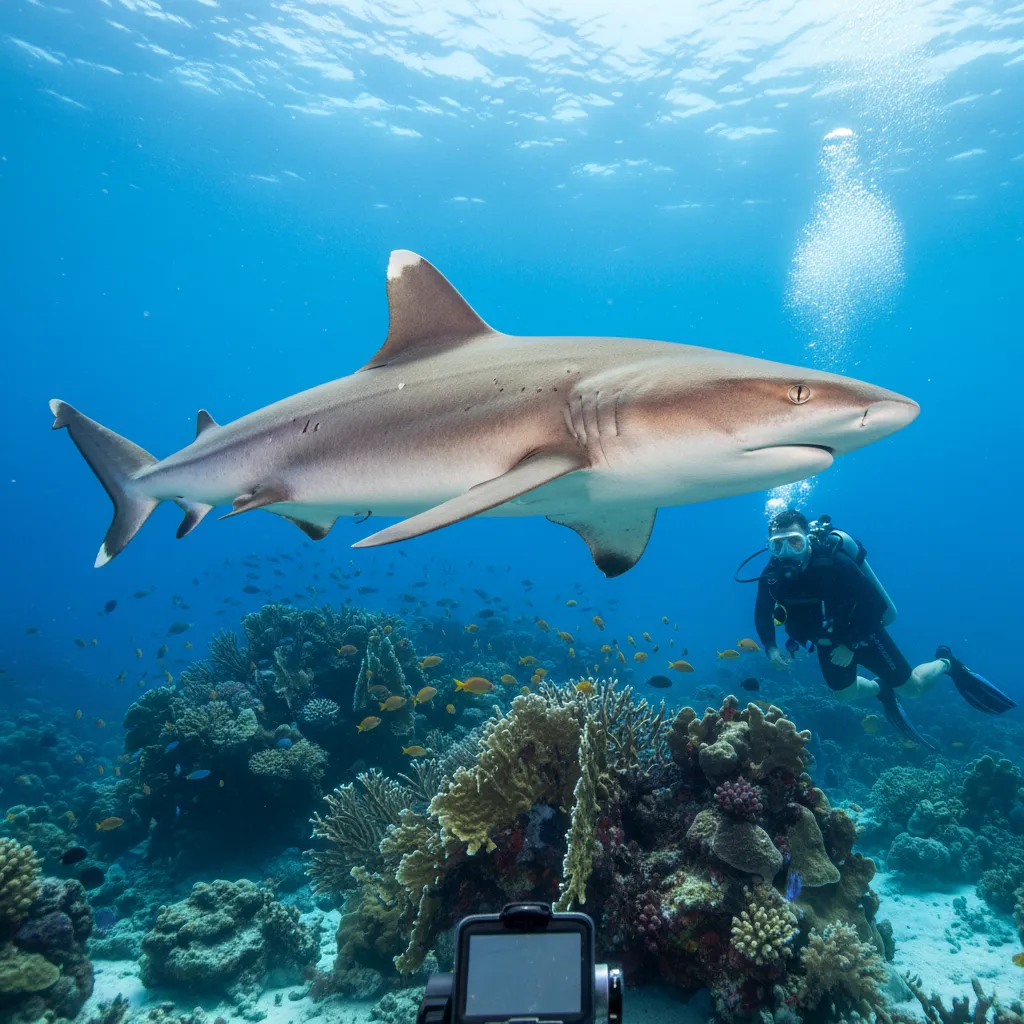
Descend onto a coral reef at almost any dive site in the tropical Pacific and there is a good chance you will find a whitetip reef shark resting motionless beneath a ledge, its gills rhythmically pumping as it conserves energy for the night's hunt. These slender, docile sharks are the quintessential reef residents - so calm during the day that divers can approach within a metre without disturbing them. At night, however, they transform into relentless pack hunters, flushing prey from coral crevices with a frenzy of twisting bodies. Witnessing this nocturnal switch from sleepy loafer to coordinated predator is one of diving's great spectacles. Their white-tipped dorsal and tail fins make them easy to identify even in low light, and their sheer abundance on healthy reefs makes every dive a potential encounter.
Where to Dive with Whitetip Reef Sharks
Found across 28 countries, based on 11,892 verified observation records.

Australia
3 areas

Panama
2 areas

Ecuador
1 area

Mexico
1 area

Costa Rica
1 area

Samoa
2 areas

South Africa
1 area

Micronesia
3 areas
+ 20 more countries
Best Time to See Whitetip Reef Sharks
Whitetip reef sharks are resident reef species and present year-round at most locations. Galapagos (Gordon Rocks, Wolf, Darwin): year-round, with larger aggregations from June to November when waters are cooler and nutrient-rich. Cocos Island (Costa Rica): best from June to December during the rainy season when shark numbers peak. Hawaii (Molokini, Big Island): year-round, with night dives available throughout. Red Sea (Ras Mohammed, Brothers Islands): year-round, with best visibility from May to October. Night dives can be arranged at most destinations regardless of season - ask your operator specifically about whitetip night dive sites.
How to Dive with Whitetip Reef Sharks
Whitetip reef sharks are found on coral reefs from 5 to 40 metres, though they favour areas with caves, overhangs, and swim-throughs where they can rest during the day. Open Water certification is sufficient for most encounters. During daytime dives, look beneath table corals, inside small caves, and under ledges - it is common to find groups of five or more stacked on top of one another. Night dives are the real highlight: whitetips actively hunt along the reef, and a good dive torch will reveal them squeezing into coral crevices to flush out sleeping fish. At sites like Cocos Island and the Galapagos, drift diving along rocky walls at dawn or dusk produces the most dramatic encounters, with dozens of whitetips patrolling the same stretch of reef.
Is it Safe to Swim with Whitetip Reef Sharks?
Whitetip reef sharks are one of the most docile shark species and pose virtually no risk to divers. They are not interested in humans as food and will typically ignore divers entirely. During night dives, they may swim directly toward your torch beam while chasing prey - hold still and they will veer away at the last moment. Do not attempt to touch resting sharks, as this causes unnecessary stress and may provoke a defensive snap. If you encounter a whitetip in a confined swim-through, give it room to exit. Avoid blocking cave entrances where multiple sharks are resting. During feeding frenzies at night, keep your hands and fins close to your body to avoid accidental contact.
Conservation Status
The whitetip reef shark is listed as Vulnerable on the IUCN Red List. Their habit of resting in the same caves day after day makes them easy targets for spearfishers and poachers. They are slow-growing and produce small litters (one to five pups), so populations recover slowly from overfishing. Coral reef degradation also threatens them by destroying both their resting habitat and their prey base. Protected areas in the Galapagos, Cocos Island, and Palau have demonstrated that whitetip populations thrive when left alone. Divers should choose operators that follow responsible wildlife codes and avoid touching or harassing resting sharks.
Species Profile

Recommended Equipment
Standard tropical dive gear is suitable: 3mm wetsuit or shorty, mask, fins, and BCD. For night dives - which are the highlight for this species - bring a reliable primary torch and a backup. A red filter can be useful for observing natural hunting behaviour without disturbing the sharks. Underwater cameras with good low-light performance and a video light will capture dramatic night hunting footage. A wide-angle lens is best for daytime resting shots in caves. Reef hooks can be useful at current-swept sites like Cocos Island to hold position while watching passing sharks.
Browse dive equipmentFrequently Asked Questions
Are whitetip reef sharks aggressive?
Whitetip reef sharks are not aggressive toward humans. They are widely considered one of the most docile shark species and routinely ignore divers even at close range. During night dives they may approach your torch beam while hunting, but they are pursuing fish, not divers.
Where is the best place to see whitetip reef sharks?
Cocos Island (Costa Rica) and the Galapagos Islands are world-famous for huge numbers of whitetips. Hawaii offers excellent night dives where you can watch them hunt. The Red Sea (Brothers Islands, Ras Mohammed) and Palau also have healthy resident populations.
What is the difference between whitetip reef sharks and oceanic whitetip sharks?
They are completely different species. The whitetip reef shark (Triaenodon obesus) is a slender, docile, reef-dwelling shark up to 1.6m long. The oceanic whitetip (Carcharhinus longimanus) is a large, bold, open-ocean predator reaching 3m or more with distinctively rounded white-tipped fins.
Can you see whitetip reef sharks on a night dive?
Yes, night dives are the absolute best way to see whitetip reef sharks in action. During the day they rest in caves, but at night they become active pack hunters, chasing fish through coral crevices. Destinations like Hawaii and Cocos Island offer dedicated whitetip night dives.
Why do whitetip reef sharks rest in caves?
Unlike most sharks, whitetips do not need to swim to breathe - they can pump water over their gills while stationary. They rest in caves and under ledges during the day to conserve energy and avoid predators. Groups often pile on top of each other in favoured resting spots, returning to the same cave day after day.
More Encounter Guides
Whale Sharks
Swimming alongside the world's largest fish is an experience that redefines your understanding of th...
Manta Rays
Manta rays are the ocean's most graceful giants. With wingspans reaching over 7 metres, these intell...
Great White Sharks
Coming face to face with a great white shark is the ultimate adrenaline rush for adventure divers. T...
Hammerhead Sharks
Seeing a school of hammerhead sharks is one of scuba diving's most iconic experiences. These prehist...
Sea Turtles
Sea turtles are among the most beloved creatures in the ocean, and for good reason. Watching a green...
Bull Sharks
Bull sharks are diving's most exhilarating close encounter. Known for their stocky build and bold te...