Diving with Grey Reef Sharks
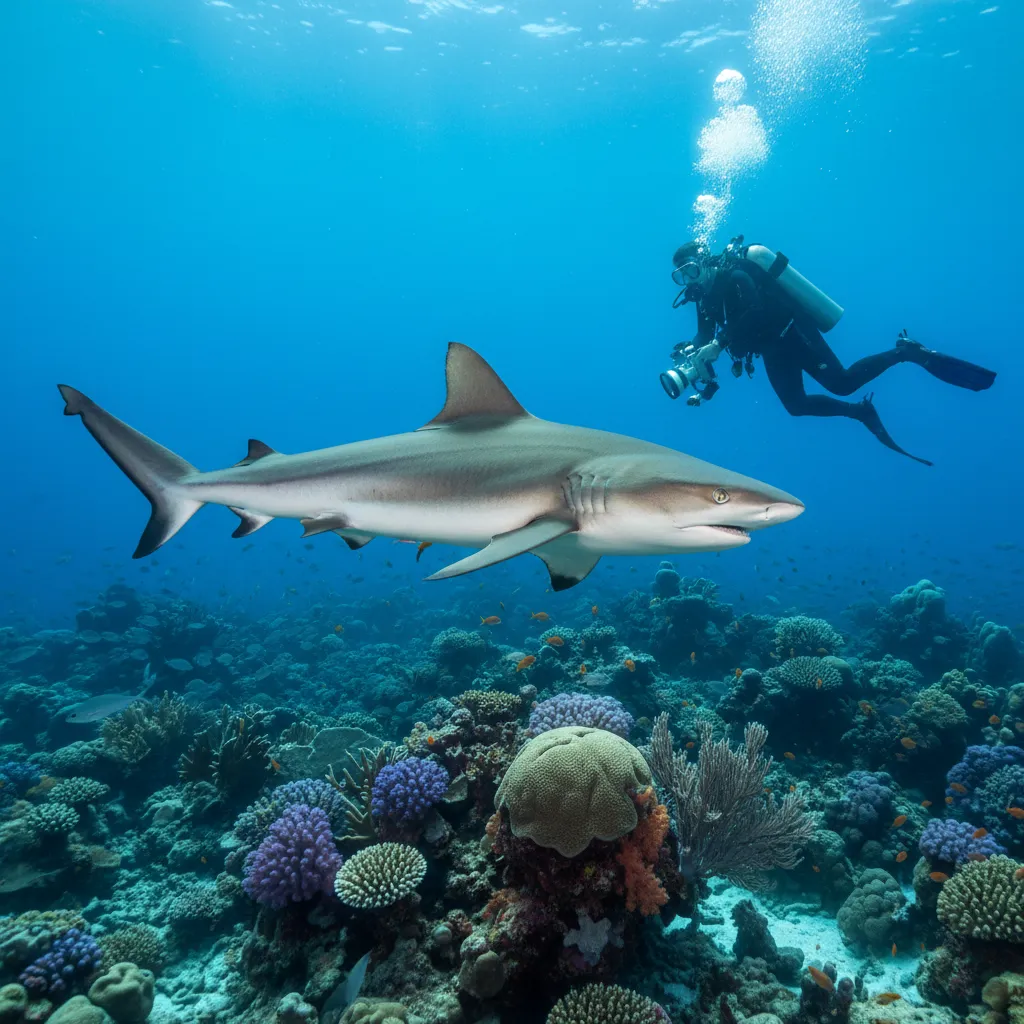
There is no sight in diving quite like a wall of grey reef sharks materialising from the blue, their sleek silver bodies moving in perfect formation along a coral drop-off. These are the classic reef sharks of the Indo-Pacific - fast, numerous, and endlessly watchable. Grey reef sharks patrol the outer edges of coral reefs where the shallows give way to deep water, and at certain sites they gather in aggregations of hundreds that rival any wildlife spectacle on land. They are assertive and curious, often making close passes to inspect divers before melting back into the current. Diving in a channel with grey reefs streaming past on both sides, their dark-edged tails pumping against the flow, is pure underwater adrenaline.
Where to Dive with Grey Reef Sharks
Found across 19 countries, based on 51,990 verified observation records.

Australia
4 areas

Seychelles
1 area

Micronesia
2 areas

South Africa
1 area

French Polynesia
1 area

Samoa
1 area

Marshall Islands
2 areas
Solomon Islands
2 areas
+ 11 more countries
Best Time to See Grey Reef Sharks
Grey reef sharks are resident at their home reefs year-round. Palau (Blue Corner): year-round, with calmer seas and better visibility from October to May. French Polynesia (Fakarava south pass): year-round, with the spectacular grouper spawning aggregation from June to July drawing hundreds of grey reefs. Maldives (channels and thilas): year-round, with the northeast monsoon (January to April) offering the best visibility. Great Barrier Reef (Osprey Reef): September to January offers calmer conditions and excellent visibility on the Coral Sea reefs. Tidal movements and moon phases influence shark activity - outgoing tides through narrow channels often concentrate sharks.
How to Dive with Grey Reef Sharks
Grey reef sharks are found along reef drop-offs, channel mouths, and outer reef slopes at depths of 10 to 60 metres. Advanced Open Water or equivalent is recommended for the best sites, which often involve strong currents and deep walls. Drift dives through reef passes are the most productive technique - at Fakarava's south pass, Blue Corner in Palau, and channels in the Maldives, divers hook into the reef and watch walls of grey reefs cruise past in the current. Reef hooks are essential at sites like Blue Corner where you need to hold your position in flowing water. Stay close to the reef wall rather than hovering in open blue - the sharks are more comfortable approaching divers who are part of the reef scenery. Early morning dives tend to produce the largest aggregations.
Is it Safe to Swim with Grey Reef Sharks?
Grey reef sharks are generally safe around divers, but they are more assertive than other reef sharks and will display clear warning behaviour if they feel threatened. The famous grey reef threat display involves an exaggerated swimming pattern: hunched back, lowered pectoral fins, and a side-to-side head wag. If you see this, back away slowly while facing the shark - do not turn and swim. Avoid cornering grey reefs against the reef wall or blocking channel exits. Keep your distance in areas where they are feeding on baitfish, as they can become excited and competitive. Reflective gear and dangling equipment can attract unwanted attention, so keep your kit streamlined.
Conservation Status
The grey reef shark is listed as Endangered on the IUCN Red List, with populations having declined by over 70% across much of their range. They are heavily targeted by the shark fin trade due to their abundance on reefs and ease of capture with longlines and gillnets. Their slow reproductive rate - females produce just one to six pups every two years - means populations cannot withstand sustained fishing pressure. Palau was the first country to declare its entire exclusive economic zone a shark sanctuary in 2009, and grey reef populations there have since stabilised. Every dive you take in a marine protected area contributes revenue that justifies keeping sharks alive rather than fished.
Species Profile

Recommended Equipment
Reef hooks are essential gear for grey reef shark diving at current-swept sites - a 1.5-metre line with a stainless steel hook lets you clip into dead coral and hold position while sharks cruise past. Bring a surface marker buoy (SMB) for drift dives in channels. A wide-angle lens (10-17mm fisheye or similar) is ideal for photography, as the sharks pass close in clear water. A 3mm to 5mm wetsuit suits most locations; thermoclines at depth on outer reef walls can drop temperatures significantly. Streamline all dangling hoses and gauges to present a clean profile to curious sharks.
Browse dive equipmentFrequently Asked Questions
Are grey reef sharks dangerous to divers?
Grey reef sharks are not normally dangerous, but they are more assertive than other reef species. They have a well-documented threat display - hunched back, lowered fins, exaggerated swimming - which is a clear warning to back away. Incidents are extremely rare and almost always involve provocation or spearfishing.
Where can you see the most grey reef sharks?
Fakarava's south pass in French Polynesia holds one of the largest known aggregations, with several hundred grey reef sharks during grouper spawning season (June–July). Palau's Blue Corner is legendary for reliable, close encounters year-round. Maldives channels and Australia's Osprey Reef are also top sites.
What is a reef hook and do I need one for shark diving?
A reef hook is a short line with a metal hook that clips to your BCD. You hook into dead coral or rock to hold your position in strong current without damaging the reef. It is essential at sites like Blue Corner in Palau and some Maldives channels where grey reef sharks patrol in flowing water.
What do grey reef sharks eat?
Grey reef sharks feed primarily on reef fish, squid, octopus, and crustaceans. They are opportunistic hunters that patrol the reef edge at dawn and dusk. They are also known to aggregate around spawning events, such as the grouper spawning at Fakarava, where easy meals attract hundreds of sharks.
How big do grey reef sharks get?
Grey reef sharks typically reach 1.5 to 1.9 metres in length, with a maximum of about 2.5 metres. They are medium-sized, muscular sharks built for speed and agility in current-swept reef environments. Their dark trailing edge on the tail fin is a key identification feature.
More Encounter Guides
Whale Sharks
Swimming alongside the world's largest fish is an experience that redefines your understanding of th...
Manta Rays
Manta rays are the ocean's most graceful giants. With wingspans reaching over 7 metres, these intell...
Great White Sharks
Coming face to face with a great white shark is the ultimate adrenaline rush for adventure divers. T...
Hammerhead Sharks
Seeing a school of hammerhead sharks is one of scuba diving's most iconic experiences. These prehist...
Sea Turtles
Sea turtles are among the most beloved creatures in the ocean, and for good reason. Watching a green...
Bull Sharks
Bull sharks are diving's most exhilarating close encounter. Known for their stocky build and bold te...