Diving with Dwarf Minke Whales
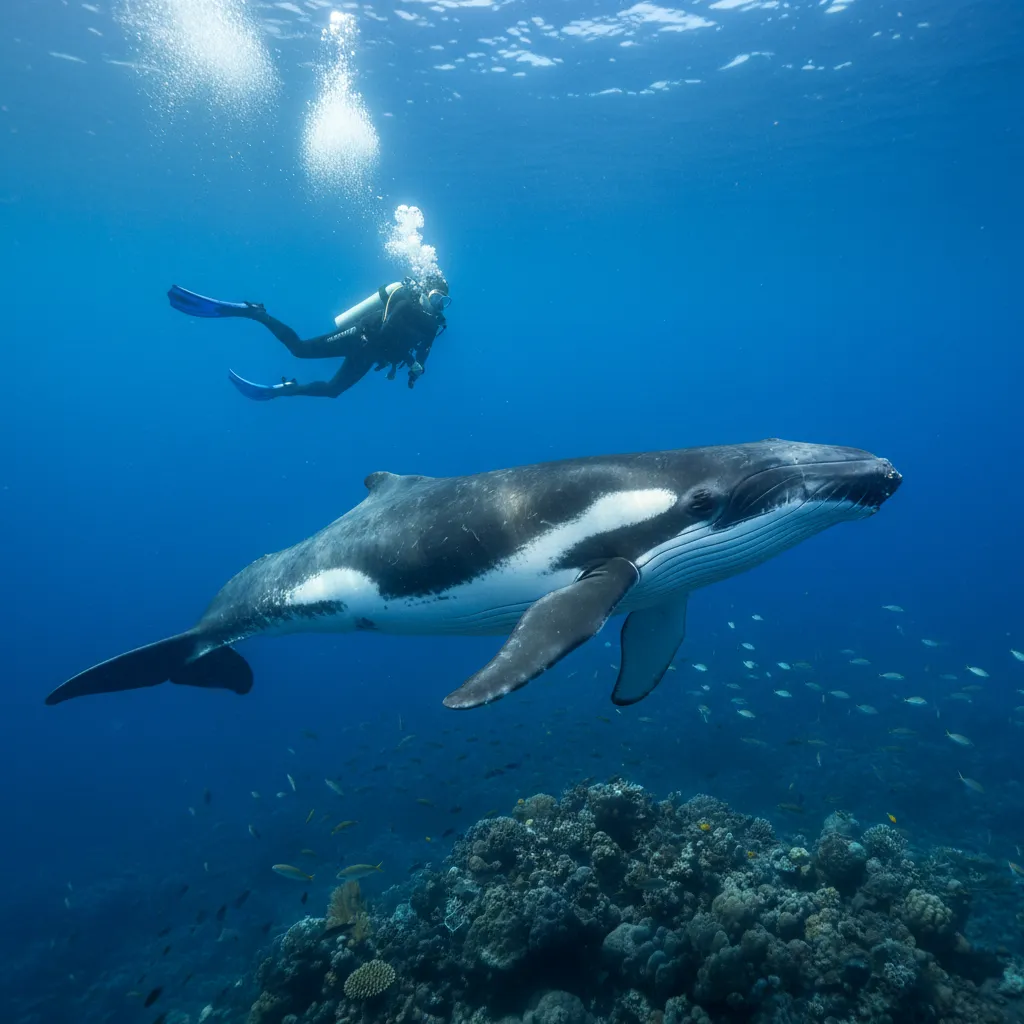
The dwarf minke whale is one of the ocean's most enchanting and approachable great whales - and the Great Barrier Reef is the only place in the world where reliable, managed in-water encounters with these curious cetaceans occur. A subspecies (or possible separate species, still debated taxonomically) of the common minke whale (Balaenoptera acutorostrata), the dwarf minke reaches approximately eight metres in length and is distinguished by a distinctive white shoulder patch and a bright white band on its dark pectoral flippers. What makes dwarf minke encounters truly extraordinary is the whales' remarkable curiosity toward humans. Unlike most baleen whale encounters where the animal is moving away and divers are desperately trying to keep up, dwarf minkes on the Great Barrier Reef actively seek out human interaction. They approach boats, circle snorkellers repeatedly, and may spend hours in close proximity - sometimes just arm's length away - making slow, deliberate passes while rotating to observe the humans in the water with a large, intelligent eye. Scientists believe this behaviour may be a form of play or social investigation, and the consistency of the whales' approach across decades of observation suggests a genuine inter-species curiosity rather than a learned feeding association. The encounter protocol involves no chasing whatsoever - divers and snorkellers hold onto a rope suspended from the vessel and remain still while the whales choose when, how close, and for how long to interact. This whale-initiated model represents arguably the most ethical cetacean encounter in the world, and the experience of a seven-metre whale voluntarily approaching to within touching distance and gazing into your eyes is nothing short of life-changing.
Where to Dive with Dwarf Minke Whales
Found across 19 countries, based on 11,576 verified observation records.

United Kingdom
5 areas

Canada
3 areas

Ireland
2 areas

Portugal
2 areas

Iceland
2 areas

Australia
2 areas

Sweden
2 areas
Bahamas
3 areas
+ 11 more countries
Best Time to See Dwarf Minke Whales
The dwarf minke whale season on the Great Barrier Reef is remarkably concentrated: mid-June to mid-July is the peak window, with some encounters occurring from late May into early August. The whales are believed to be migrating through the Ribbon Reef area during the Austral winter, pausing at the northern GBR before continuing to unknown breeding grounds further north. The season's brevity makes planning essential - dedicated minke whale liveaboard trips typically sell out months or even a year in advance. Water temperatures during the season are 24-26 degrees Celsius with generally calm trade wind conditions and excellent visibility of 20-30 metres on the outer reef. The liveaboard trips are typically 6-7 nights, providing multiple days of searching and maximising encounter opportunities. While dwarf minkes are occasionally sighted outside the northern GBR - in the Coral Sea, around New Caledonia, and in parts of the South Pacific - no other location offers the reliable, managed in-water encounters that the Ribbon Reefs provide. The combination of the whales' unique curiosity, the clear water, the established research program, and the ethical encounter protocol makes this a genuinely one-of-a-kind wildlife experience with no equivalent anywhere else on the planet.
How to Dive with Dwarf Minke Whales
The northern Great Barrier Reef between Cairns and Lizard Island is the only place in the world where reliable, managed dwarf minke whale encounters are offered. A small number of specially permitted liveaboard operators run dedicated minke whale season trips from June to July, sailing the Ribbon Reefs (Ribbon Reefs 3 through 10 and Agincourt Reef are the primary encounter areas). The encounter protocol, developed through two decades of research by the Minke Whale Project in collaboration with James Cook University, is strictly regulated by the Great Barrier Reef Marine Park Authority. When whales are spotted approaching the vessel, snorkellers enter the water holding a horizontal rope (the 'swim line') suspended from the vessel's bow or stern. Divers remain stationary on the rope while the whales approach of their own volition - there is absolutely no chasing, herding, or active pursuit. Scuba diving is not used for minke whale encounters; all interactions are conducted on snorkel. This is because the whales respond better to quiet, surface-based observers, and the absence of bubbles creates a calmer encounter. The whales often make multiple passes, sometimes circling individual snorkellers for extended periods. Encounters can last from a few minutes to several hours when the whales are particularly engaged. Water temperatures during minke season are 24-26 degrees Celsius - comfortable for extended snorkelling in a 3mm suit. The liveaboard format means you have multiple days of searching, maximising your chances of encounters. The permitted operators have decades of collective experience and genuine scientific commitment to understanding and protecting these animals.
Is it Safe to Swim with Dwarf Minke Whales?
Dwarf minke whale encounters on the Great Barrier Reef are among the safest cetacean encounters in the world, owing to the strictly regulated, whale-initiated protocol. The animals are approaching you - you never approach them. Hold the rope line, stay calm, and let the whales control the interaction. Never release the rope to swim toward a whale. Do not attempt to touch a whale even if it comes within arm's reach - this can startle the animal and end the encounter for everyone. Avoid making sudden movements, loud vocalisations through your snorkel, or splashing on the surface. While dwarf minkes are not aggressive, they are still seven-to-eight-metre animals that weigh several tonnes, and an accidental tail or flipper strike could injure a snorkeller. Maintaining your position on the rope ensures you are visible and predictable to the whale, which reduces the risk of accidental contact. If you feel uncomfortable with the proximity of a whale, calmly pull yourself along the rope back toward the vessel. All encounters are supervised by crew trained in the specific protocols. Snorkelling fitness is required - you may be in the water for extended periods in open ocean conditions with swell and current, and you need to be comfortable and relaxed on the surface to fully enjoy the experience.
Conservation Status
Dwarf minke whales are not separately assessed by the IUCN from the common minke whale (Balaenoptera acutorostrata), which is listed as Least Concern. However, their population size, range, and conservation status are poorly understood compared to other baleen whales. They were historically taken in small numbers by Japanese scientific whaling programs in the Southern Ocean, and any resumption of commercial or scientific whaling could impact populations. The Great Barrier Reef population that interacts with humans during the winter months represents a concentrated, predictable aggregation whose full size is unknown - estimates range from several hundred to several thousand individuals visiting the Ribbon Reefs annually. Climate change poses a significant long-term threat through warming ocean temperatures, shifts in prey distribution, and degradation of the Great Barrier Reef ecosystem itself. The collaborative research program between permitted operators and James Cook University has been running since 1996, generating one of the longest-running datasets on human-whale interactions anywhere in the world. Photo-identification of individual whales through their unique markings allows researchers to track individuals across years. The swim-with permit system limits the number of operators and enforces strict codes of practice, ensuring that the tourism interaction itself does not negatively impact whale behaviour - a model that other cetacean tourism operations worldwide seek to emulate.
Species Profile

Recommended Equipment
A compact wide-angle camera setup is ideal for dwarf minke whale encounters. A mirrorless or compact camera in a housing with a wide-angle or fisheye wet lens captures the full size of approaching whales in the clear GBR water. GoPro and similar action cameras are popular and effective - their wide field of view, small size, and ease of use while holding a rope make them practical choices. Full-frame wide-angle setups (14-24mm) in dive housings produce stunning results but are heavier to hold one-handed while gripping the rope line. Strobes are generally not needed or recommended - the encounters happen near the surface in well-lit conditions, and strobe flash could disturb the whales. Natural light photography is the norm. For video, smooth, slow panning that tracks the whale's movement produces the most watchable footage - resist the urge to constantly reframe as the whale circles. A 3mm full-length wetsuit is standard for the 24-26 degree Celsius water temperatures during minke season (June-July). A hood is appreciated for extended snorkelling sessions. High-quality mask and snorkel are essential - you will be in the water for extended periods and comfort matters. Freediving fins allow efficient movement along the rope line. No scuba equipment is used for minke encounters.
Browse dive equipmentFrequently Asked Questions
Where can you swim with dwarf minke whales?
The northern Great Barrier Reef in Australia is the only place in the world offering reliable, managed in-water encounters with dwarf minke whales. The encounters occur along the Ribbon Reefs between Cairns and Lizard Island during a brief winter season (mid-June to mid-July). A small number of specially permitted liveaboard operators run dedicated trips during this window.
When is dwarf minke whale season?
The peak season runs from mid-June to mid-July, with some encounters possible from late May to early August. The whales migrate through the northern Great Barrier Reef during the Austral winter. The season is short and trips sell out well in advance - booking 6-12 months ahead is recommended for the best operators and dates.
Do you scuba dive or snorkel with dwarf minke whales?
All dwarf minke whale encounters are conducted on snorkel, never scuba. Snorkellers hold onto a rope suspended from the vessel and remain still while the whales approach voluntarily. The absence of noisy scuba bubbles creates a calmer, more natural interaction, and the whales demonstrably respond better to quiet surface-based observers than to bubble-producing divers.
How close do dwarf minke whales come?
Remarkably close - dwarf minke whales routinely approach within 1-3 metres of snorkellers, and sometimes come within arm's reach. This is entirely whale-initiated; snorkellers never chase or approach the whales. The whales make slow, deliberate passes, often rotating to observe humans with their large, expressive eyes. Some individuals return repeatedly over hours, suggesting genuine curiosity about human observers.
Are dwarf minke whales dangerous?
Dwarf minke whales are not aggressive toward humans and the encounter protocol minimises risk. However, they are 7-8 metre animals weighing several tonnes, and accidental contact from a tail or flipper could cause injury. The rope-line protocol keeps snorkellers stationary and predictable, reducing the chance of accidental strikes. Following crew instructions, staying on the rope, and not attempting to touch the whales ensures the safest possible experience.
More Encounter Guides
Humpback Whales
Encountering a humpback whale underwater is one of the most profound experiences available to ocean ...
Orcas (Killer Whales)
Orcas are the ocean's apex predators - intelligent, social, and devastatingly effective hunters that...
Dolphins
Dolphins are the ocean's most joyful inhabitants, and swimming with them in the wild is an experienc...
Sperm Whales
The sperm whale is the largest toothed predator on Earth, a deep-ocean titan that routinely dives be...
Blue Whales
The blue whale is the largest animal ever to have lived on Earth - larger than any dinosaur, reachin...
Southern Right Whales
Southern right whales earned their grim name from whalers who considered them the 'right' whale to h...