Diving with Nurse Sharks
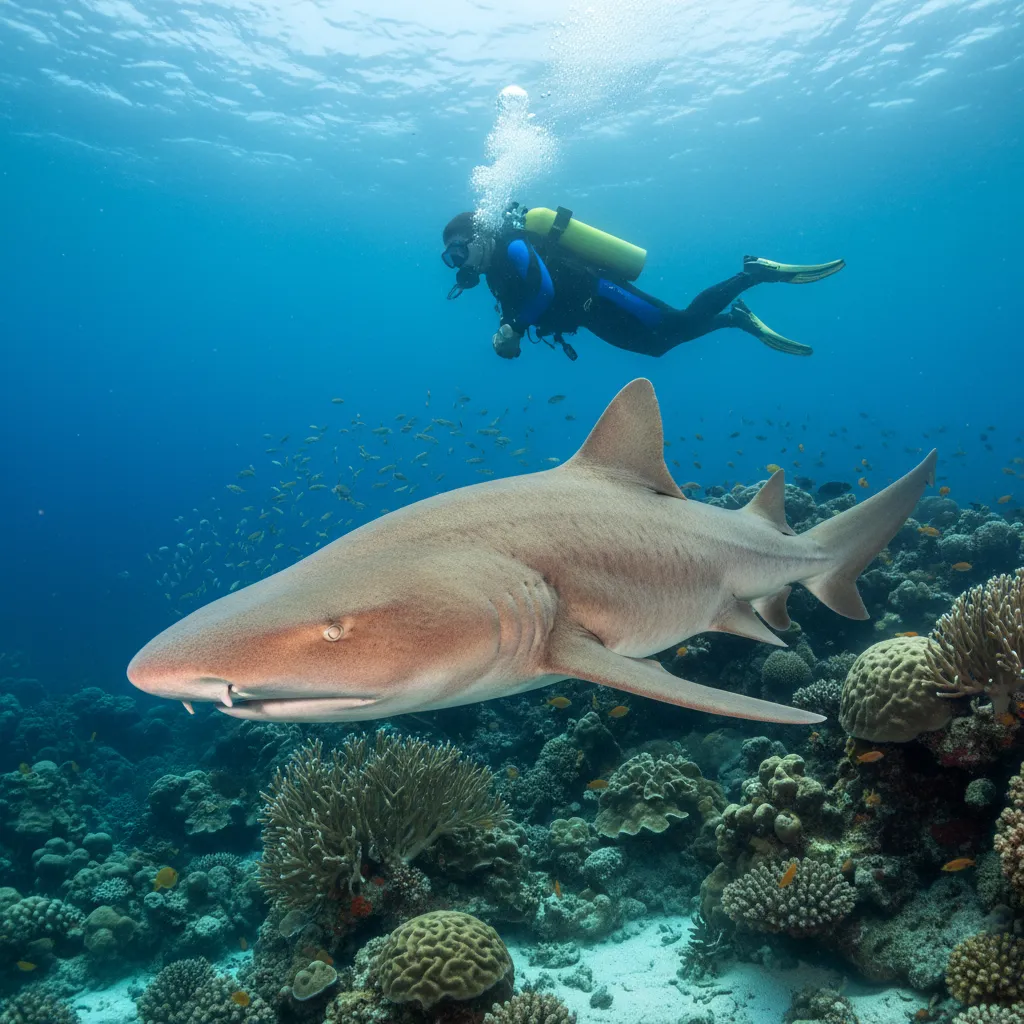
There is something wonderfully reassuring about nurse sharks. These broad, flat-headed bottom-dwellers are the gentle giants of the reef, content to spend their days dozing in sandy patches beneath coral overhangs while the reef bustles around them. Divers adore them for their placid temperament and approachability - a resting nurse shark will often allow you to settle on the sand a metre away and simply watch it breathe. At Shark Ray Alley in Belize, nurse sharks glide around snorkellers like oversized, whiskered cats waiting to be fed. Their barbels - fleshy sensory whiskers beside each nostril - give them a characterful, almost friendly expression that has made them one of the ocean's most photographed sharks. For new divers, a nurse shark encounter is often the moment that transforms shark fear into shark fascination.
Where to Dive with Nurse Sharks
Found across 24 countries, based on 802 verified observation records.
Bahamas
4 areas

Puerto Rico
3 areas
Belize
3 areas

US Virgin Islands
2 areas

Mexico
3 areas

British Virgin Islands
2 areas

Honduras
1 area

Guatemala
1 area
+ 16 more countries
Best Time to See Nurse Sharks
Nurse sharks are resident year-round in their home range. Belize (Shark Ray Alley, Hol Chan): year-round, with peak tourist season November to April. Bahamas (Compass Cay, Exumas): year-round, calmest seas from May to September. Maldives (tawny nurse sharks): year-round at cleaning stations and sandy reef patches, with best visibility January to April. Florida (Key Largo, Jupiter): year-round, with summer months (June to September) seeing increased activity and mating behaviour. Nurse shark mating season in the western Atlantic runs from late June through July, and determined divers in the Florida Keys may witness dramatic courtship behaviour in the shallows.
How to Dive with Nurse Sharks
Nurse sharks inhabit shallow coral reefs, sandy flats, and mangrove channels from the intertidal zone down to about 70 metres, though most encounters happen in less than 15 metres. Open Water certification is plenty. They are primarily nocturnal feeders, so daytime dives typically produce resting sharks tucked under ledges, in small caves, or lying on sandy bottoms. At popular sites like Shark Ray Alley in Belize, they are habituated to boats and will approach on the surface. In the Bahamas, dedicated nurse shark dives at Compass Cay allow snorkellers to swim among dozens of individuals in crystal-clear shallows. Night dives are excellent for watching active hunting behaviour - nurse sharks use powerful suction to hoover invertebrates and small fish from crevices. Move slowly and avoid kicking up sand that obscures visibility.
Is it Safe to Swim with Nurse Sharks?
Nurse sharks are extremely docile and bites are exceptionally rare, but they do have one quirk divers should respect: their powerful suction bite. If a nurse shark is hand-fed or grabbed, it can latch on with vice-like grip and may not release immediately. Never attempt to touch, ride, or hand-feed a nurse shark. Keep fingers away from their mouth area, especially in areas where feeding has conditioned them to associate humans with food. In high-traffic tourist sites, nurse sharks may approach very closely expecting food - keep your hands against your body. Despite their calm appearance, a startled nurse shark can whip around surprisingly fast in confined spaces, so give resting individuals in caves a clear escape route.
Conservation Status
The nurse shark is classified as Vulnerable on the IUCN Red List. While they are more resilient than many shark species due to their bottom-dwelling habits and relatively high reproductive output, they face threats from habitat loss, particularly the destruction of mangrove nursery areas, and from targeted fishing for their tough skin (used for leather) and meat. In the Caribbean, nurse shark populations have declined where coastal development has removed critical mangrove habitat. The creation of marine reserves in Belize, the Bahamas, and Florida has helped maintain healthy local populations. The tawny nurse shark (Nebrius ferrugineus), encountered in the Maldives and Indo-Pacific, faces similar pressures and is also listed as Vulnerable.
Species Profile

Recommended Equipment
Minimal gear is needed for nurse shark encounters. A 3mm wetsuit or rash guard suffices in the warm tropical waters where they are found. A mask with a low profile is ideal for getting eye-level shots on the sand. Underwater cameras with macro capability are surprisingly useful - close-up shots of their barbels and textured skin are compelling. A wide-angle lens captures the classic scene of multiple nurse sharks resting together. For night dives, a torch with a diffuser helps illuminate active hunting without startling them. Reef-safe sunscreen is essential for the many snorkel-based encounters. Water shoes can be useful at walk-in sites.
Browse dive equipmentFrequently Asked Questions
Are nurse sharks safe to swim with?
Yes, nurse sharks are one of the safest shark species to swim with. They are extremely docile and generally ignore divers. The only risk comes from attempting to touch or hand-feed them, as their suction bite is powerful. Keep your hands to yourself and enjoy watching these gentle bottom-dwellers from a respectful distance.
Where is the best place to see nurse sharks?
Shark Ray Alley in Belize is the most famous nurse shark destination, where dozens congregate around snorkel boats. Compass Cay in the Bahamas offers crystal-clear shallow encounters. The Maldives has tawny nurse sharks at many dive sites, and Florida's Key Largo and Jupiter reef systems have healthy populations.
What do nurse sharks eat?
Nurse sharks are nocturnal suction feeders that prey on small fish, crabs, lobsters, sea urchins, octopus, squid, and conch. They use powerful suction generated by their pharynx to hoover prey from crevices - divers on night dives can sometimes hear the distinctive popping sound of their feeding.
Can you touch a nurse shark?
You should never touch a nurse shark. While they are docile, touching causes stress and can condition them to associate humans with interaction. More importantly, a startled or provoked nurse shark can deliver a powerful suction bite that is extremely difficult to dislodge. Observe from a respectful distance of at least one metre.
How big do nurse sharks get?
Atlantic nurse sharks (Ginglymostoma cirratum) typically reach 2.2 to 2.7 metres and can grow up to 3 metres. Tawny nurse sharks (Nebrius ferrugineus) found in the Indo-Pacific are slightly larger, reaching up to 3.2 metres. Despite their size, both species are bottom-dwellers and remarkably docile.
More Encounter Guides
Whale Sharks
Swimming alongside the world's largest fish is an experience that redefines your understanding of th...
Manta Rays
Manta rays are the ocean's most graceful giants. With wingspans reaching over 7 metres, these intell...
Great White Sharks
Coming face to face with a great white shark is the ultimate adrenaline rush for adventure divers. T...
Hammerhead Sharks
Seeing a school of hammerhead sharks is one of scuba diving's most iconic experiences. These prehist...
Sea Turtles
Sea turtles are among the most beloved creatures in the ocean, and for good reason. Watching a green...
Bull Sharks
Bull sharks are diving's most exhilarating close encounter. Known for their stocky build and bold te...