Diving with Pufferfish
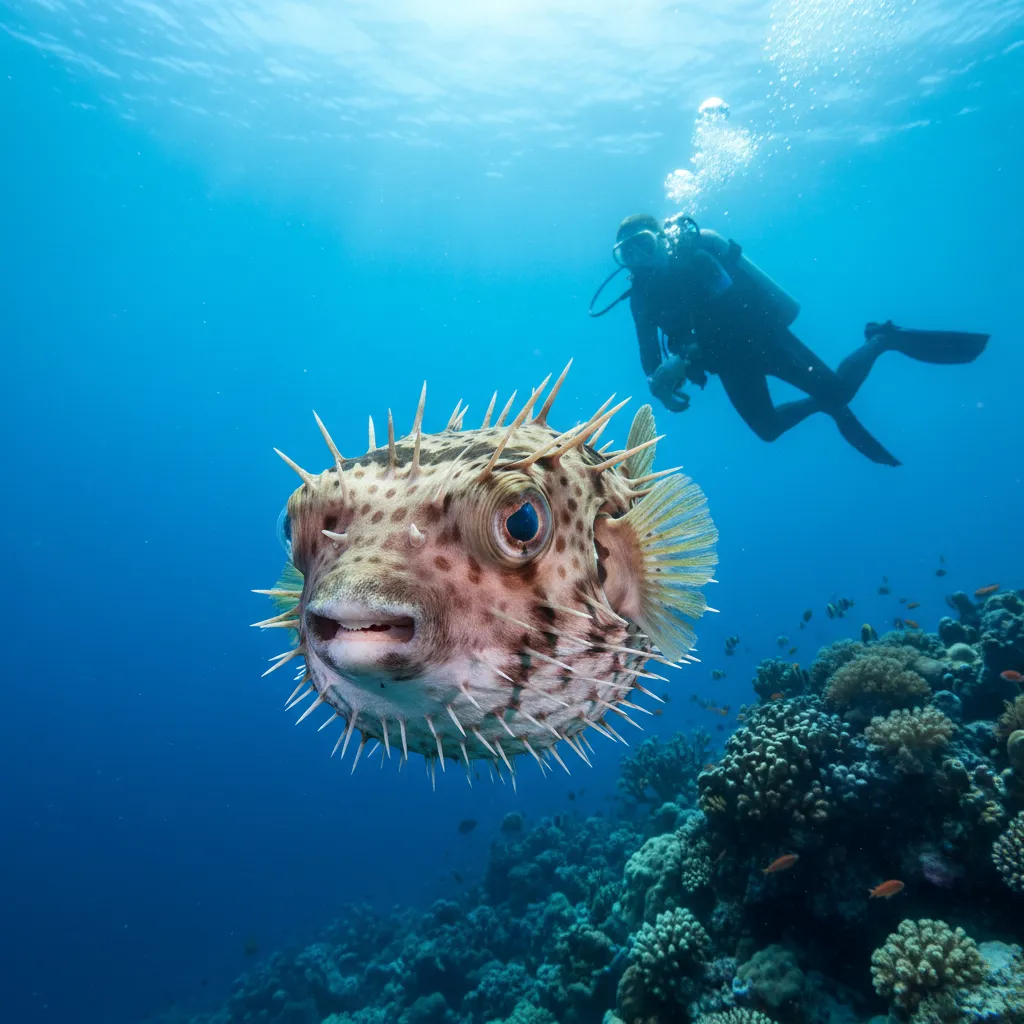
Few fish have as much personality as pufferfish. With their curious, almost puppy-like expressions and the remarkable ability to inflate themselves into spiky balloons when threatened, pufferfish are among the most charismatic residents of tropical and temperate reefs worldwide. The family Tetraodontidae includes over 190 species ranging from the diminutive sharpnose puffers (Canthigaster) barely longer than your thumb to the massive star puffer (Arothron stellatus) exceeding 60 centimetres. Their beak-like fused teeth can crack open crabs, sea urchins, and hard-shelled molluscs with ease, and their slow, almost helicopter-like swimming style - powered by rapidly oscillating pectoral and dorsal fins - makes them easy to observe up close. Many species are boldly patterned with spots, stripes, and vivid colours that advertise their potent tetrodotoxin defence. In Japan, the pufferfish (fugu) occupies a unique cultural niche as both a dangerous delicacy and a protected species. For divers, pufferfish encounters are common, endlessly entertaining, and occasionally breathtaking - particularly during the mating season when males of some species create elaborate circular sand art on the seabed to attract females.
Where to Dive with Pufferfish
Found across 79 countries, based on 20,946 verified observation records.

Bahamas
7 areas

US Virgin Islands
2 areas

British Virgin Islands
2 areas

Puerto Rico
3 areas

Panama
2 areas

Philippines
9 areas

Ecuador
2 areas

Mexico
4 areas
+ 71 more countries
Best Time to See Pufferfish
Indo-Pacific reefs (Indonesia, Philippines, Thailand): year-round encounters on any reef dive. Red Sea (Egypt, Jordan): year-round, with excellent visibility October to May. Caribbean: year-round on shallow reefs and seagrass beds. Japan (Amami-Oshima): sand circle building occurs primarily from March to July - this is a bucket-list encounter requiring advance planning. Maldives: year-round on reef flats. Mediterranean: occasional pufferfish sightings are increasing due to Lessepsian migration through the Suez Canal, particularly along the coasts of Turkey, Greece, and Cyprus during summer months.
How to Dive with Pufferfish
Pufferfish are found on coral reefs, rocky reefs, seagrass beds, and sandy bottoms throughout the tropics and subtropics. The large Arothron puffers are reef regulars in the Indo-Pacific, Red Sea, and Caribbean - you'll often find them resting under table corals or in small caves during the day. The black-spotted puffer (Arothron nigropunctatus) and white-spotted puffer (Arothron hispidus) are among the most commonly encountered species on Indo-Pacific reefs. In the Caribbean, look for the bandtail puffer and sharpnose puffers on shallow reefs and seagrass beds. For a truly special encounter, head to Amami-Oshima in southern Japan where white-spotted pufferfish (Torquigener albomaculosus) build extraordinary geometric sand circles up to two metres in diameter - discovered only in 2011 and one of the most remarkable animal behaviours ever documented. Muck diving destinations like Lembeh Strait and Anilao produce unusual pufferfish species including juvenile stages with wildly different patterns. The Red Sea is excellent for map puffers and masked puffers on shallow reef flats. Dive slowly, approach gently, and give pufferfish time to relax - a calm puffer will go about its business, crunching coral and investigating the reef, providing wonderful observation and photography opportunities.
Is it Safe to Swim with Pufferfish?
Pufferfish carry tetrodotoxin (TTX), one of the most potent neurotoxins found in nature - up to 1,200 times more poisonous than cyanide. The toxin is concentrated in the liver, ovaries, and skin, and there is no known antidote. However, the toxin is only dangerous if ingested, not through casual contact. Never touch, chase, or deliberately provoke a pufferfish into inflating - inflation is an extreme stress response that can injure the fish and is energetically costly. A pufferfish that inflates repeatedly may die from exhaustion. The porcupinefish (Diodon species) have sharp spines that can puncture skin if handled. Some larger puffers can deliver a painful bite with their powerful beaked teeth. Maintain a comfortable observation distance and let the fish approach you on its own terms.
Conservation Status
Most pufferfish species are not currently considered threatened, though some face localised pressures. The Japanese fugu industry consumes thousands of tonnes annually, though it is highly regulated with licensed chefs and farmed stock. The ornamental aquarium trade takes significant numbers of smaller species. Pufferfish play important ecological roles as predators of hard-shelled invertebrates - their ability to crack open sea urchins helps prevent overgrazing of coral reefs. Coral reef degradation, pollution, and warming waters affect pufferfish habitat across their range. Some pufferfish species, particularly the freshwater species, are listed as vulnerable due to habitat loss. As with all reef fish, the best conservation action for divers is supporting marine protected areas and practising responsible reef interaction.
Species Profile

Black Spotted Blow Fish
Arothron nigropunctatus

Pufferfish
Arothron hispidus

Spotted Puffer
Arothron meleagris

Reticulated Blow Fish
Arothron reticularis

Blackedged Blaasop
Arothron immaculatus

Porcupine
Diodon holocanthus

Sharpnose Pufferfish
Canthigaster rostrata

Spotted Toby
Canthigaster solandri
Recommended Equipment
A macro or mid-range zoom lens (24-70mm or 60mm macro) is ideal for pufferfish photography. The wide-angle portraits of large Arothron species with their big eyes and expressive faces make fantastic images. Macro setups capture the incredible detail of their skin patterns and textures. Strobes are essential for revealing the true colours of spotted and patterned species. For video, a wide-angle lens captures the charming slow swimming style beautifully. Standard recreational dive gear is all that's needed - pufferfish are found at all depths from tide pools to 40 metres. A torch or dive light helps locate puffers resting in crevices during the day and is essential for night dives when they're often more exposed.
Browse dive equipmentFrequently Asked Questions
Where is the best place to dive with pufferfish?
Pufferfish are found on reefs worldwide, but for sheer diversity the Indo-Pacific is unbeatable. Indonesia's Lembeh Strait and Bali offer numerous species on every dive. For the extraordinary sand-circle-building behaviour, Amami-Oshima in southern Japan (March-July) is a once-in-a-lifetime destination. The Red Sea and Caribbean also offer reliable pufferfish encounters.
Are pufferfish dangerous to divers?
Pufferfish are not dangerous to observe underwater. Their tetrodotoxin is only harmful if ingested - it cannot be absorbed through unbroken skin. Never touch or harass a pufferfish, and certainly never try to make one inflate. Larger species can deliver a painful bite with their beak-like teeth if provoked.
Why do pufferfish inflate?
Inflation is an extreme defence mechanism. The pufferfish gulps water rapidly to swell to several times its normal size, making it too large and spiky for most predators to swallow. This is highly stressful and energetically costly - a pufferfish that inflates repeatedly can die from exhaustion. Never deliberately provoke this response.
What are the geometric sand circles pufferfish make?
Male white-spotted pufferfish (Torquigener albomaculosus) in Japan create elaborate circular patterns up to 2 metres in diameter on the sandy seabed. These intricate designs take about a week to build and serve to attract females. Discovered in 2011, they are one of the most complex structures built by any fish species.
Can you eat pufferfish?
Some pufferfish species (fugu) are consumed in Japan as a delicacy, but preparation requires licensed chefs who know how to remove the toxic organs. Tetrodotoxin is roughly 1,200 times more potent than cyanide and there is no antidote. Several people die from fugu poisoning each year, usually from amateur preparation.
More Encounter Guides
Ocean Sunfish (Mola Mola)
The ocean sunfish is one of the most surreal creatures a diver can encounter. Holding the record as ...
Clownfish
Few marine creatures have captured the public imagination quite like the clownfish. Made famous by F...
Napoleon Wrasse
The Napoleon wrasse - also known as the humphead wrasse or Maori wrasse - is one of the most charism...
Lionfish
Few fish command attention quite like the lionfish. With its dramatic array of elongated, venomous s...
Barracuda
The great barracuda is one of the reef's most impressive predators - a silver torpedo with a mouth f...
Giant Moray Eels
The giant moray is the reef's most charismatic lurker. Reaching up to 3 metres in length and weighin...