Diving with Seals & Sea Lions
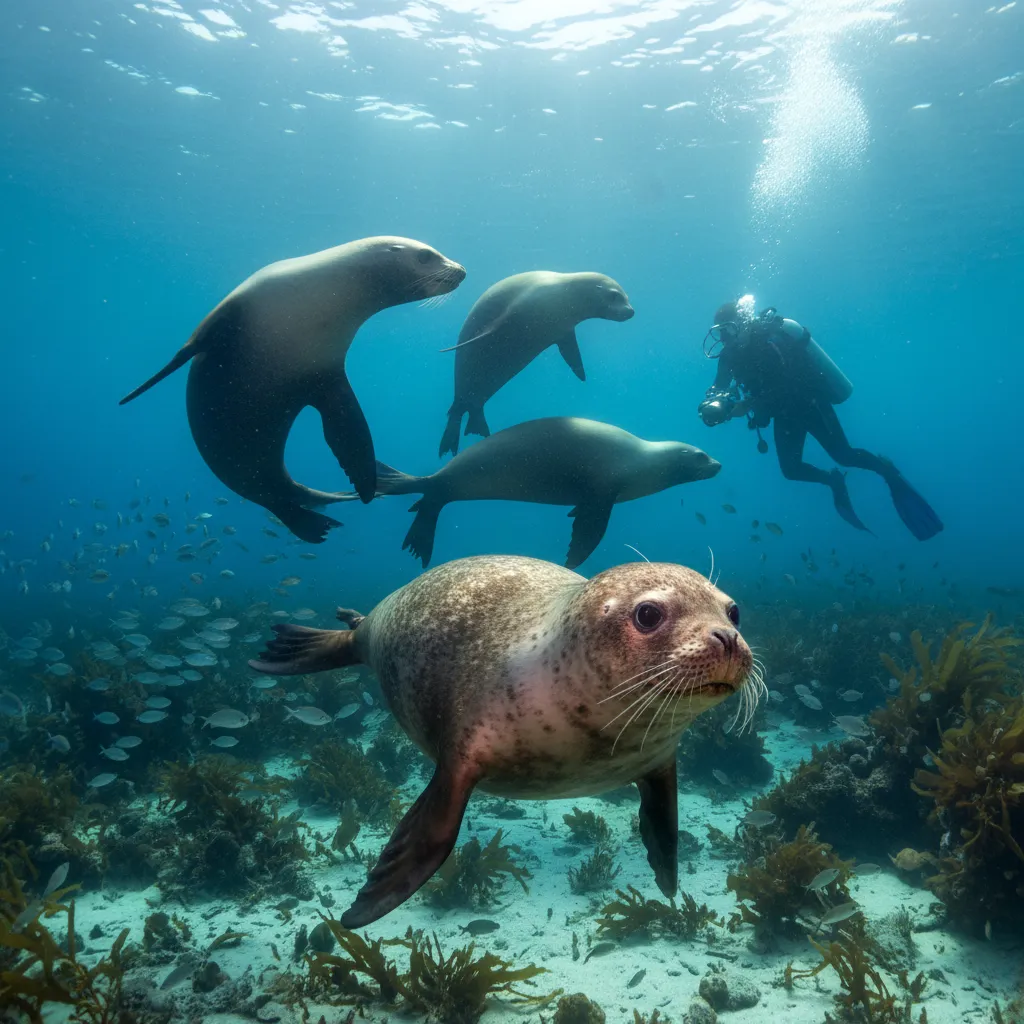
If dolphins are the ocean's social butterflies, seals and sea lions are its playful puppies - barrel-rolling, somersaulting, nibbling at fins, and blowing bubbles in your face with an exuberance that is impossible not to laugh at through your regulator. These pinnipeds are among the most interactive marine animals a diver can encounter, often initiating contact and maintaining it for extended periods. From the enormous, soulful eyes of a Cape fur seal pup in South Africa to the balletic underwater acrobatics of a Galapagos sea lion, these encounters consistently rank among divers' favourite wildlife experiences. Their curiosity, speed, and apparent sense of humour make every encounter unpredictable and utterly engaging.
Where to Dive with Seals & Sea Lions
Found across 10 countries, based on 39,538 verified observation records.

Sweden
1 area

United Kingdom
5 areas

Canada
2 areas

United States
2 areas

Australia
4 areas

Denmark
1 area
Ecuador
1 area

Ireland
2 areas
+ 2 more countries
Best Time to See Seals & Sea Lions
Galapagos: year-round sea lion encounters, though the best underwater visibility is from June to November. La Paz, Mexico (Los Islotes): year-round, with pup season from May to July providing the most playful encounters. Cape Town, South Africa: year-round, with seal pups joining the colony from November to January. Farne Islands, UK: the best encounters are from September to November when curious grey seal pups enter the water for the first time. Montague Island, Australia: September to May for Australian fur seal dives. Hornby Island, Canada: year-round Steller sea lion encounters. Each season brings different behaviour - pup season universally offers the most interactive, playful encounters.
How to Dive with Seals & Sea Lions
Seal and sea lion encounters are available by both snorkelling and scuba diving, depending on the location. In the Galapagos, sea lions are ubiquitous - they haul out on beaches, swim around snorkellers, and play with divers at almost every site. La Paz, Mexico offers dedicated sea lion snorkel trips to the colony at Los Islotes, where California sea lions tumble around you in crystal-clear water. Cape Town, South Africa's Duiker Island and Partridge Point have playful Cape fur seal colonies accessible on scuba. The Farne Islands in the UK offer grey seal encounters during autumn - the pups are extraordinarily curious. Montague Island, Australia, has Australian fur seal dives. The technique across all locations is the same: get in the water near a colony, settle on the bottom or float at the surface, and let the animals come to you. Making eye contact and blowing bubbles often attracts their attention.
Is it Safe to Swim with Seals & Sea Lions?
Seals and sea lions are generally safe to dive with, but they are wild animals with powerful jaws and should be treated with respect. Bull sea lions can be territorial, particularly during breeding season - give large males a wide berth and never position yourself between a bull and his harem. Seal bites, while rare, can cause serious infection due to bacteria in their mouths. Never attempt to touch or grab a seal, even if it approaches very closely. In the UK, grey seal encounters happen in cold, often murky water with surge - ensure you are comfortable in these conditions. In South Africa, the proximity of seal colonies to great white shark habitat is a consideration, though shark incidents during seal dives are virtually unheard of. Always follow your guide's briefing regarding specific colony dynamics.
Conservation Status
The conservation status of seals and sea lions varies widely by species. Harbor seals (Phoca vitulina) are classified as Least Concern with stable populations. Cape fur seals (Arctocephalus pusillus) are abundant in southern Africa. However, the Galapagos sea lion (Zalophus wollebaeki) is Endangered, with populations threatened by El Nino events, disease, entanglement in fishing gear, and habitat disturbance. The Mediterranean monk seal is Critically Endangered with fewer than 700 individuals remaining. Australian sea lions are also Endangered. Responsible diving tourism provides strong economic arguments for protecting seal colonies and their habitats. The main conservation threats across species include fisheries bycatch, marine pollution, prey depletion from overfishing, and climate change affecting food availability.
Species Profile


Recommended Equipment
Equipment varies significantly by location. In tropical or temperate locations like the Galapagos, La Paz, or Australia, a 3-5mm wetsuit is appropriate. For cold-water seal diving in the UK (Farne Islands) or South Africa, a 7mm semi-dry or drysuit is essential, along with a hood and gloves - water temperatures can be 8-14°C. A wide-angle camera setup is ideal as seals are fast-moving and often very close. A GoPro works well for capturing the playful, fast-paced interactions. Avoid dangling equipment that seals might grab or chew - they are notoriously curious about hoses, straps, and fin tips. Secure all loose gear.
Browse dive equipmentFrequently Asked Questions
Where can you dive with seals and sea lions?
Top destinations include the Galapagos (year-round sea lions), Los Islotes in La Paz, Mexico (California sea lions), Cape Town, South Africa (Cape fur seals), the Farne Islands, UK (grey seals, September–November), and Montague Island, Australia (fur seals).
Is it safe to dive with seals?
Yes, seal diving is generally safe. Seals are curious and playful, but they are wild animals with strong jaws. Never touch or grab them, give large bulls space during breeding season, and be aware that seal bites - while rare - can cause infection. Follow your guide's briefing on colony-specific behaviour.
What is the difference between seals and sea lions?
Sea lions have external ear flaps, can walk on their flippers, and are generally more vocal and social. True seals lack ear flaps, move on land by shuffling on their bellies, and tend to be more solitary. Underwater, both are incredibly agile and fast swimmers.
Do seals bite divers?
Seal bites are rare but can happen, usually when an animal feels threatened or a diver attempts to touch one. Young seals may playfully mouth fins or equipment. Never provoke, corner, or touch a seal. If a seal appears agitated (open-mouth display, vocalisation), calmly move away.
What is the best time to dive with seal pups?
Pup seasons vary by location: La Paz (May–July), South Africa (November–January), Farne Islands (September–November). Pup encounters are the most interactive and playful, as young seals are intensely curious and have not yet learned to be wary of humans.
More Encounter Guides
Humpback Whales
Encountering a humpback whale underwater is one of the most profound experiences available to ocean ...
Orcas (Killer Whales)
Orcas are the ocean's apex predators - intelligent, social, and devastatingly effective hunters that...
Dolphins
Dolphins are the ocean's most joyful inhabitants, and swimming with them in the wild is an experienc...
Sperm Whales
The sperm whale is the largest toothed predator on Earth, a deep-ocean titan that routinely dives be...
Blue Whales
The blue whale is the largest animal ever to have lived on Earth - larger than any dinosaur, reachin...
Southern Right Whales
Southern right whales earned their grim name from whalers who considered them the 'right' whale to h...