Diving in Québec
Why dive here
Québec is a species-rich diving destination in Canada, with 44+ marine species recorded in the area.
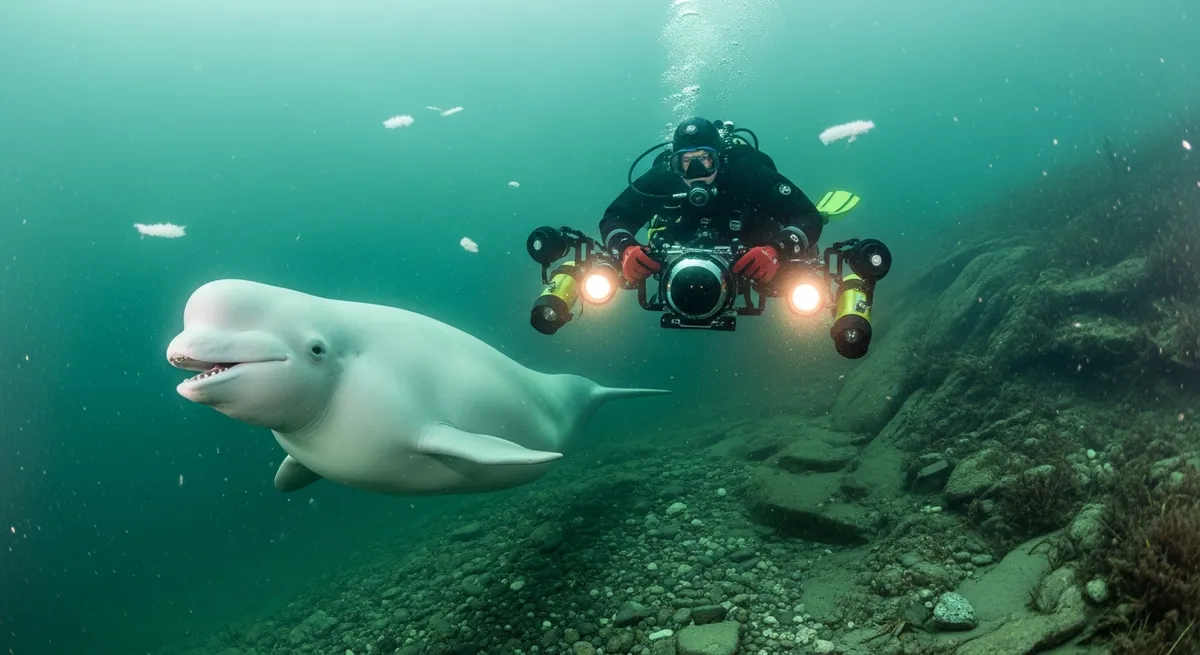
Québec diving isn't for the faint of heart, but it offers a unique reward. The St. Lawrence River and Saguenay Fjord are cold, often dark, and currents can be a real workout. But get yourself properly geared up-think drysuit and thick underlayers-and you’ll discover a surprisingly rich freshwater world. We love the sheer thrill of beluga encounters here; seeing those ghostly white forms glide past is something truly special. Our favourite spots are often deep in the fjord, where walls drop away into the gloom, revealing bizarre cold-water anemones and sculpins hugging the rock. Visibility can be hit or miss, usually better outside the main shipping channels and after a few dry days. For wrecks, you’ll find some fascinating old timbers and steel structures, many surprisingly intact given the freshwater preservation. Expect to spot burbot lurking in crevices, big schools of yellow perch, and if you’re lucky, a flash of a coho salmon. It’s a different kind of beauty than the tropics, raw and wild, demanding respect but giving back an experience you won’t find anywhere else.
Québec Dive Site Map
Dive sites and dive centres in Québec
Québec Dive Sites
178 dive sites in Québec
Alice G.Tobermory Tugs (Wreck)
The Alice G., and the pair of Tobermory Tugs alongside her, are probably our favourite introduction to Great Lakes wreck diving for a few reasons. Sitting upright and intact in just 12 metres of freshwater, the visibility here is often fantastic, sometimes pushing 20 metres on a good day, making it perfect for newer divers. We love poking around the Alice G.’s deck, spotting the anchor chain and the sturdy cleats, and then finning over to the tugs, which feel like miniature versions of the larger freighters. What you'll really notice is the sheer volume of invasive zebra mussels covering every surface; they give the wrecks an almost furry texture and filter the water, contributing to that excellent visibility. It’s a fascinating, if slightly eerie, experience to see these engines of industry so completely colonised. Our advice? Go on a weekday morning to avoid the weekend crowds. The lack of current means you can take your time, really soak in the details, and marvel at how these vessels have been reclaimed by the lake.
Aloha- Effie Mai
The Aloha-Effie Mai wreck in Québec is a fascinating dive, one we always enjoy for its dramatic character. You’re not getting warm water here, obviously, but the reward is a genuinely atmospheric dive on two vessels tangled together. The Aloha, a tugboat, and the Effie Mai, a barge, collided back in the 60s, and they’ve been resting on the seabed ever since, slowly being reclaimed by the lake. We love exploring the wheelhouse of the Aloha; it’s still surprisingly intact, and the cold water has preserved a lot of the details you just don't see on wrecks in warmer seas. It’s a great spot for spotting burbot lurking in the shadows, and often you’ll find schools of perch darting through the broken decking. The visibility here can be excellent, particularly in late spring before the summer algae blooms, giving you a clear view of the wreckage spread out below. We’d suggest a drysuit, naturally, and good buoyancy is key to navigating some of the tighter sections without stirring up the silt. It’s a dive that rewards careful exploration, perfect for wreck enthusiasts who appreciate a bit of history with their immersion.
Amburgs Reef
Amburgs Reef, off the coast of Québec, offers a unique freshwater reef dive. You'll likely spot White Sucker and burbot navigating the coral formations, along with smaller fish like pumpkinseed and Golden Shiner. It’s a good spot for divers looking for something a bit different from typical ocean dives, or those wanting to explore Québec's underwater ecosystems.
Arabia (Wreck)
The Arabia wreck in the St. Lawrence River isn't your typical coral-encrusted tropical dive, and that's precisely why we love it. This isn't a bright, colourful spectacle, but a deep dive into history, a genuinely atmospheric experience. Dropping down to 34 metres, the cold embrace of the freshwater wraps around you, and the sheer scale of the Arabia starts to emerge from the gloom. She’s a paddle wheeler that sank in 1884, and the low visibility often found here only adds to the sense of discovery. You fin along her massive hull, the timbers dark and imposing. We always get a thrill out of seeing the paddle wheels, still largely intact, a testament to a bygone era. Look closely and you'll spot freshwater inhabitants: golden shiners darting through gaps, yellow perch peering from behind broken bulkheads, and occasionally a pike, a silent hunter perfectly camouflaged against the aged wood. Our favourite moments are lingering around the stern, imagining the life she once carried. This is a dive for those who appreciate maritime history and the unique challenges of cold, deep freshwater wreck diving. It’s a compelling peek into Canada's past, softened and colonised by the present.
Ash Island Barge
The Ash Island Barge isn't your typical tropical wreck, and that's precisely why we love it. Diving in Québec means cooler water, of course, but it also means a different kind of beauty, a rugged, almost haunting charm. This isn't a massive freighter, but a substantial wooden barge, lying broken in spots, offering a genuinely intimate exploration. We always recommend taking your time to really appreciate the wood grain, the way the planks are joined, and how the metal fittings have corroded over decades. It's like diving into history. Schools of smallmouth bass hover over the timbers, their scales flashing in the dappled light, while freshwater drum occasionally eye you from darker corners. Look closely, and you'll find crayfish scuttling between the debris, along with various aquatic insects. Our favourite detail? The sheer density of freshwater mussels clinging to every available surface; they filter the water, contributing to the impressive visibility we often enjoy here, particularly on a calm morning. It's a site that rewards patience and a keen eye, perfect for those who appreciate historical wrecks and the unique ecosystems they create. Bring a good light, even on a sunny day, to really make the details pop.
Barrett Reef
Hangdog Reef, up in Québec, is a freshwater site that offers something a bit different. You're looking at a rocky reef structure, home to species like Yellow Perch and pumpkinseed, with the occasional sea lamprey slithering by. It's an interesting spot for divers curious about North American freshwater ecosystems, more about the unique environment than big pelagics. We'd say it's best for those who appreciate the subtle beauty of a temperate lake dive.
Beaufort Reef
Beaufort Reef offers a glimpse into Québec’s colder water diving. The reef here, while not tropical, has its own rugged appeal. Expect to find a range of species adapted to these northern latitudes, making for a unique dive experience. It’s a good spot for divers looking to explore something different and appreciate the resilience of marine life in cooler environments.
Beaufort Reef
Beaufort Reef offers a glimpse into Québec’s colder water diving. The reef here, while not tropical, has its own rugged appeal. Expect to find a range of species adapted to these northern latitudes, making for a unique dive experience. It’s a good spot for divers looking to explore something different and appreciate the resilience of marine life in cooler environments.
Big Bay Point
Big Bay Point offers a straightforward dive, popular with local divers looking to stretch their fins. You'll generally find freshwater species like pike and bass moving through the shallows, often around submerged logs and rock formations. It's a decent spot for newer divers or those who prefer a relaxed pace over deep exploration.
Boarding House Reef
Boarding House Reef in Québec offers a cool, freshwater dive. We’ve spotted burbot and pumpkinseed hanging around the deeper sections, while the shallower areas are good for seeing banded killifish. It's a straightforward site, decent for knocking out some skills practice or just a relaxed afternoon dive, especially if you're keen on seeing some of Canada's freshwater fish.
Boulton Reef
Boulton Reef, tucked away in Québec, offers a cold-water reef experience unlike many others. Here, you'll encounter freshwater species like pike and the glimmering Golden Shiner navigating the reef structure. It’s a site best suited for divers curious about Canada’s unique inland ecosystems, offering a quiet exploration for those who appreciate the subtle beauty of a non-tropical environment.
Bourinot Reef
Bourinot Reef, in Québec, offers a glimpse into a freshwater ecosystem. Expect to encounter fish like the White Sucker, Yellow Perch, and Golden Shiner navigating the reef structure. This site is best for divers interested in exploring local North American freshwater species rather than vibrant corals or large pelagics. It’s a quiet dive, suitable for those looking for something different.
Show all 178 dive sites in Québec
- Boyer Reef
- Bray Reef
- Brockville Underwater Sculpture Park
- Buller Reef
- Burgess Reef
- Cameron Reef
- Campbell Reef
- Caroline Rose (Schooner)
- Caron Reef
- Cascaden
- Cedar Hill
- Centeen Park
- Chapman Reef
- Charles P. Minch (Wreck)
- China
- City of Grand Rapids (steamer)
- City of Sheboygan (Wrack)
- Comet (Wrack)
- Conestoga Wreck
- Cornwall
- Corsdu Reef
- Corsdu Reef
- Cowie Reef
- Crowley Reef
- Dalton Reef
- Dalton Reef
- Darling Reef
- Dave s Bay
- Dead Island Reef
- Divers Wearhouse
- Dropping Reef
- Eagle Reef
- Eastcliffe Hall (Wrack)
- East Reef
- East Reef
- Elihu Reef
- Elton III
- Emery Reef
- Emily Maxwell Reef
- Europa Reef
- Everard Reef
- Everett Reefs
- Forest City (Wreck)
- Frolic Reef
- Frontenac (Wrack)
- George A. Marsh (Wrack)
- George T Davie
- Gibson Reef
- Gilphie Reef
- Glendora
- Great Barrier
- Green River
- Guilfoyle Reef
- Hangdog Reef
- Harbour Reef
- Henry C. Daryaw (Wrack)
- Hogs Back Reef
- Hood Reef
- Huntly Reef
- Huntress Reef
- Hurricane Reef
- Indian Harbour Reef
- Ivy Lea Campground Beach
- James C. King (Wreck)
- Katie Eccles (Wreck)
- Keystorm (Wreck)
- Kinghorn
- Kipling Reef
- Labelle Reef
- Labelle Reef
- Labrador Reef
- Labrador Reef
- Leech Reef
- Lillie Parsons (Wrack)
- Lock 21 Dive Site
- Lock 23
- Lock 27
- Logging Barge
- Loon Island Reef
- Lottie Wolf (Wrack)
- Lougheed Reef
- Lucas Reef
- Luckport
- Lyal Reef
- Malcolm Reef
- Manitoba Reef
- Mapledawn (Wrack)
- Marquette (Wrack)
- Martin Reef
- Michigan (Wrack)
- Morrell Reef
- Morrison Quarry
- Munson (Wrack)
- Murton Reef
- Muscallonge
- Niagara II (sandsucker)
- Niagara II (Wreck)
- Northwest Reef
- North Wind (Wrack)
- Oro Reef
- Pavillon des grandes marées
- Philo Scoville (Wreck)
- Pierre du Gros Cap
- Plongé
- Plongé
- Porcupine Reef
- Pratt Reef
- Pring Reef
- Quarry Island Bank
- Queen Reef
- Ramsey Lake
- Récif du Serpent
- Récifs au Marteau
- Récifs de l'Est
- Récifs de Niapiskau
- Récifs du Cormoran
- Récifs Saint-Charles
- Récifs Vigneault
- Ripple Reef
- Robert Gaskin (Wrack)
- Roche Plate
- Rothesay (Shipwreck)
- Salt Reef
- Saunders Reef
- Scotchie Reef
- Scout Reef
- Seaman Reef
- Skull Point Reef
- Skull Point Reef
- South Reef
- South Reef
- Spencer Reef
- Stacked Hulls
- Steamer Reef
- Straubenzee Reef
- Sweepstakes (schooner)
- Taché Island Reef
- The Anchor
- The Arabia
- The Caves
- The Conestoga
- The Forest City
- The Henry C Daryaw
- The JC Morrison
- The Lillie Parsons
- The Niagara II
- The Robert Gaskin
- The Rothesay
- The Tugs (Wreck)
- Thomas Place
- Tobermory HBC
- Waome
- Waome (Wrack)
- Watcher Reef
- Wawinet (Wrack)
- Western Reef
- West Reef
- West Reef
- West Reef
- West Spit
- White Shingle
- Whyte Reef
- W. L. Wetmore (Wreck)
- Wolfe Islander II (Wrack)
- Wreck of Wilcox
- Wreck Wee Hawk
Québec Dive Centres
32 dive shops and operators in Québec
Aquarius Scuba
Aqua Service
AquaSystems
Barrie Scuba House
Canadian Sport Subs, Ltd.
Carlos Lopez
Dan's Dive shop
Deep Stop Scuba
Show all 32 dive centres in Québec
- Dirty Adventures Scuba
- Dive Force Scuba
- Divers Den
- Divers Wearhouse
- Dive World
- EPSO
- Gilboa Quarry check in
- Innerspace Divers Supply
- Just Add Water
- Mississauga Diving Services
- MMI Scuba Centre
- National Aquatic Service
- Oakville Divers
- Phoenix Scuba & Water Sports
- Pisces School of Dive
- Plongée XL
- Sarge's Dive Shop
- Scuba
- Sharky's Scuba Supply Ottawa
- Sport-Action Plus
- Ted's Scuba Service
- The Scuba Shop
- Toronto Scuba Centre
- Uncle Joe's Scuba
Ocean Wildlife in Québec
44 species recorded in Québec
Québec Daylight & Sunrise/Sunset
Sunrise and sunset times for Québec, calculated from coordinates
Today - Sunday 11 October
Sunrise
06:26
Sunset
17:41
Daylight
11h 15m
Golden Hour
17:01
First light (dawn) at 05:56 · Last light (dusk) at 18:10
Monthly Averages
| Month | Sunrise | Sunset | Daylight |
|---|---|---|---|
| Jan | 07:53 | 16:58 | 9h 4m |
| Feb | 07:20 | 17:42 | 10h 22m |
| Mar | 06:31 | 18:20 | 11h 49m |
| Apr | 05:33 | 19:00 | 13h 28m |
| May | 04:47 | 19:38 | 14h 51m |
| JunLongest | 04:27 | 20:06 | 15h 39m |
| Jul | 04:41 | 20:03 | 15h 22m |
| Aug | 05:16 | 19:27 | 14h 11m |
| Sep | 05:54 | 18:31 | 12h 37m |
| OctNow | 06:31 | 17:34 | 11h 3m |
| Nov | 07:14 | 16:48 | 9h 34m |
| DecShortest | 07:49 | 16:34 | 8h 45m |
Times are approximate local times based on longitude. Actual times may vary slightly depending on the exact timezone observed in Québec.
Where to Stay near Québec
Prices from Booking.com. We may earn a commission at no extra cost to you.
Marine Protected Areas near Québec
907 protected areas near Québec - please respect local regulations when diving
Tuvaijuittuq Marine Protected Area
Tang.ɢ̲wan - ḥačxʷiqak - Tsig̱is Marine Protected Area
Northeast Newfoundland Slope Closure
Eastern Canyons Marine Refuge
Hatton Basin Marine Refuge
Davis Strait Marine Refuge
Hopedale Saddle Closure
Laurentian Channel Marine Protected Area
Scott Islands Marine National Wildlife Area
Division 3O Coral closure
Western and Emerald Banks Marine Refuge
Hawke Channel Closure
Showing 12 largest of 907
Getting to Québec
Gravenhurst
Toronto
Ottawa
Plan & book
Ways to dive Québec, from day trips to liveaboards.
Day trips & courses
via GetYourGuideGuided dives, courses and snorkel trips with instant booking.
Find dive trips in QuébecPlaces to stay
via Booking.comHotels and dive resorts near Québec.
Search stays in QuébecDive insurance
Most travel insurance excludes or limits scuba. Check what you need before you go.
Dive insurance explainedPartner links: we may earn a commission if you book, at no extra cost to you. How we make money