Diving in Mar del Plata
Why dive here
Mar del Plata offers some of Argentina's richest diving, with 33+ marine species recorded in the area - including sperm whales. Water ranges 10-21°C, warmest January, February, March.
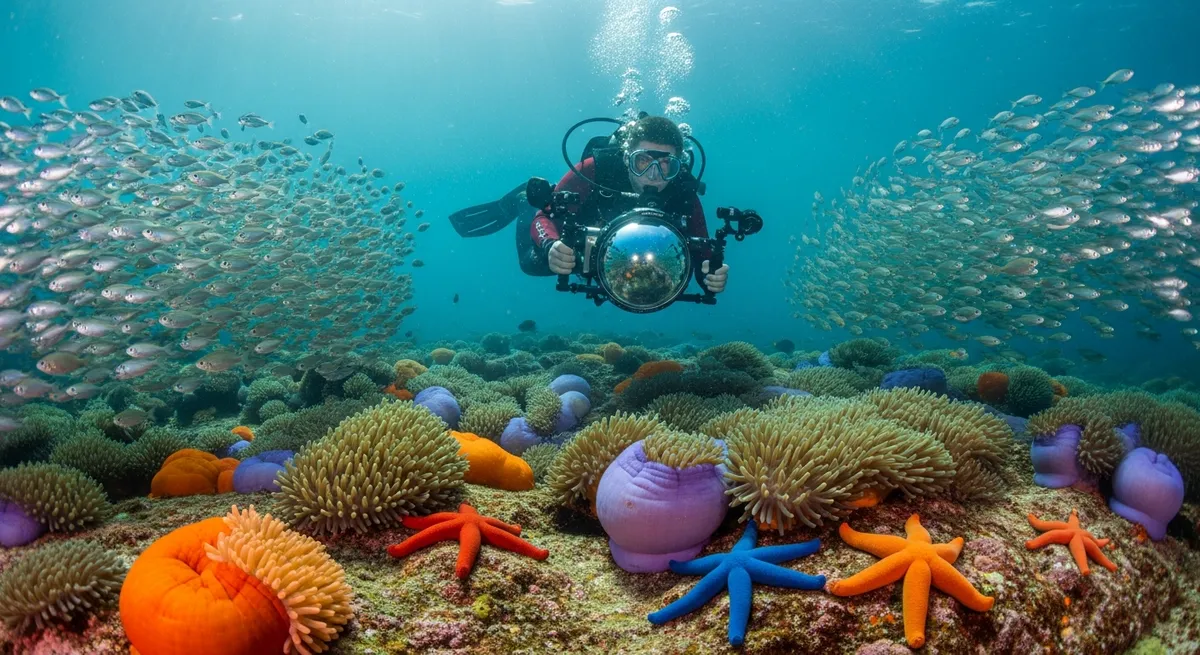
Mar del Plata might not be the first place that springs to mind for South American diving, but for those of us living in Buenos Aires, it’s our go-to for ocean diving. We love that it’s so accessible, just a few hours' drive, offering a genuine escape from the city buzz. What you'll find here is a cool mix: some fascinating wrecks, vibrant temperate reefs, and the sheer joy of diving alongside wild sea lions. During the austral summer, from December to March, the water warms up a bit, making it the best time to explore. The visibility averages around 10-15 meters, sometimes pushing 20 meters on a good day, but honestly, it’s the sheer density of life that grabs you. Our favourite dives are definitely around the sea lion colonies. Dropping down, you're immediately surrounded by these playful giants, their sleek bodies twisting and turning, sometimes nudging your fins. It’s an exhilarating, boisterous experience, their barks even muffled underwater. Beyond the sea lions, the wrecks are full of life. Schools of stripy and kingfish dart through the decaying structures, and if you’re lucky, you might spot an apron ray tucked into a crevice or a Chilean angel shark cruising along the seabed. The reef ecosystems are dotted with smallnose fanskates and elf, a real contrast to the tropical sites we often visit. It's a different kind of beauty, a bit rugged, a bit wild, and thoroughly rewarding.
Mar del Plata Dive Site Map
Dive sites and dive centres in Mar del Plata
Mar del Plata Dive Sites
444 dive sites in Mar del Plata
192 - B
The 192 - B wreck off Mar del Plata is a fantastic little surprise, especially for divers who enjoy shallow history. We love that it’s right there at just four metres, making it perfect for longer bottom times and even a bit of free diving if that’s your thing. It’s a dangerous wreck, yes, but in a way that creates intrigue, not terror, with its jumbled metal and twisted beams now forming a home for a surprising amount of local fish. You’ll spend your dive poking around the collapsed hull sections, imagining the ship's last moments as you navigate through the structure. Look closely, and you’ll spot crabs scuttling amongst the rust, and schools of silversides often shimmer around the larger fragments. The ambient light at this depth is lovely, painting the wreck in soft blues and greens, and on a calm day, the visibility can be surprisingly good, letting you take in the whole scene. It’s a great pick for newer divers getting comfortable with wreck penetration – or rather, wreck exploration – and a lovely afternoon dive for anyone in the area.
201 - A - M.O.P.
The 201 - A - M.O.P. wreck in Mar del Plata is a fantastic little dive. We love that it sits so shallow, just 8 metres down, making it perfect for a relaxed extended bottom time. You’re diving on a historical lighter vessel, which gives it a real sense of character – you can almost feel the history of the port around you. What makes it a standout for us isn't just the wreck itself, but how nature has reclaimed it. Barnacles cling to every surface, and the metalwork is draped in an olive-green tapestry of growth. Keep your eyes peeled for the resident crabs scuttling across the deck plates; they’re surprisingly bold. It's a proper hide-and-seek for octopuses too, tucked into crevices. Visibility can be a bit hit-or-miss, so we always suggest checking local conditions before you head out. When it’s good, the natural light filtering down really brings out the textures of the wreck. This site is great for anyone who appreciates the quiet beauty of an artificial reef taking hold, rather than just chasing big pelagics.
245 C
The 245 C wreck sits shallow at 7 meters, making it an accessible dive in Mar del Plata for those comfortable with overhead environments. What remains of the vessel has become a home for various fish, often sheltering in the broken hull plates. While it's a dangerous wreck, meaning parts might be unstable, its depth suits newer wreck divers looking to explore a real piece of history. Visibility can be hit or miss, but on a good day, the light filters beautifully through the structure.
252-C
The 252-C wreck sits in the shallow waters off Mar del Plata, a surprisingly accessible dive for anyone keen on exploring a piece of local history. At just 5 metres deep, it’s a perfect spot for new divers or those looking for an easy second dive, without needing to worry about complex profiles. We’ve found the remains here are well-colonised, with various local fish species darting in and out of the exposed hull sections. You can spend a good chunk of time just finning around, peering into nooks and crannies to see what’s made a home there. It’s not a deep blue odyssey, but for a wreck so close to shore, it offers a genuinely engaging peek into the underwater world.
256 B
The 256 B site in Mar del Plata is a shallow tugboat wreck, sitting at just three metres. It’s an easy dive, good for new wreck divers or those wanting a quick dip. You'll find various fish species sheltering in the hull. Visibility can be a bit hit or miss here, so pick a calm day if you can.
325 C
The 325 C wreck in Mar del Plata is a shallow dive on a sunken dredger. At just 6 meters, it’s a good spot for newer divers or those looking for a relaxed exploration. You’ll navigate around the vessel’s structure, which has become home to various fish and crustaceans, giving it a calm, almost ghostly character. It's a straightforward wreck dive, offering a glimpse into Mar del Plata's underwater history.
ABucear - Centro de Buceo
Diving with ABucear in Mar del Plata is a solid option when you’re looking to get wet in Argentina. We’ve found the diving here to be reliable, though not particularly dramatic. You’re often exploring rocky reefs and kelp forests, which are home to some interesting local characters like the American Elephantfish and the occasional Eyespot Skate. It's a different vibe from the tropical stuff, cooler water, and a chance to see some unique South Atlantic species. If you’re keen to log some dives and see what the local waters offer, it’s a good choice for divers of all levels.
ADMIRAL GRAF SPEE
When we talk about the Graf Spee, we’re not talking about a pristine, intact warship. This isn't one of those wrecks you swim into with ease. What’s left of the German pocket battleship, scuttled by its own crew after the Battle of the River Plate, lies in pieces just eight metres down off Mar del Plata. The sheer scale, even in its broken state, is what grabs you. Think enormous, twisted plates of steel, a massive gun turret – one of the 11-inch monsters – practically intact on the seabed, and sections of the superstructure scattered like giant’s building blocks. Our favourite time to dive it is when there's a good southerly swell running, which surprisingly clears the water a bit. Visibility here can be tricky, often settling around five to eight metres, sometimes less. But that low visibility just adds to the atmosphere, really. You’re navigating these vast, shadowy metal forms. We love how the local marine life has really taken over. Patches of anemones cling to the gun mounts, crabs scuttle between the buckling decks, and schools of silversides shimmer through the gloom. It’s a powerful experience, a tangible piece of history reclaimed by the sea. It's best suited for divers who appreciate the historical weight of a site and don't mind a bit of a low-vis adventure. You’ll be exploring a debris field more than an intact vessel, but the sheer size of the components makes it compelling.
A.H.V.R NO.4
The A.H.V.R NO.4 wreck in Mar del Plata isn't about deep blue adventures or big pelagics. This is a shallow, almost intimate dive, sitting at just three metres. We’re talking about an old hopper barge, split in two, offering a surprising amount of exploration for such a modest depth. We love dropping onto the stern section first. You can swim right through the cargo hold, tracing the skeletal ribs of the hull. It’s dark inside, a bit silty, but the way the light filters down through the gaps is genuinely beautiful. Keep an eye out for the small stuff; the wreck is covered in these vibrant orange anemones and white nudibranchs, clinging to every rivet. On a sunny day, the whole wreck shimmers with the current. It’s the kind of dive where you can take your time, really absorb the history, and still be back on the boat in under an hour. It’s perfect for new divers getting a feel for wrecks, or anyone who appreciates the quiet drama of a historical site.
ALBA
The Alba wreck in Mar del Plata is a shallow dive, topping out at 5m, making it ideal for newer divers or those looking for an easy second dive. This fishing trawler lies broken on the seabed, its hull sections offering plenty of nooks and crannies to explore. We’ve spotted crabs scuttling amongst the metal, and small schools of fish often shelter within the wreckage, providing some pleasant, relaxed viewing.
ALDOSIVI
The Aldosivi wreck is a quirky spot, a dredger that capsized right in the harbour entrance, making for an unexpectedly engaging shallow dive. It’s barely two metres deep at high tide, so you're practically snorkelling over history, but it's a solid choice for a second dive or if you're keen on something different. We love how accessible it is, literally a stone's throw from shore, and the visibility can actually be quite decent on a calm day. You'll see the upturned hull and superstructure just below the surface, a dark outline against the grey-green water. What makes it special for us is the way the local life has completely taken over: barnacles encrust every surface, mussels cluster in thick beds, and crabs scuttle in the shadows. Look closely and you’ll find small blennies peeking out from crevices. It’s not about huge pelagics here; it's about the intricate ecosystem thriving on this man-made structure. We'd suggest going at slack tide for the best conditions, as the currents near the harbour mouth can pick up. It's ideal for macro enthusiasts or anyone looking for a relaxed, unique dive that doesn't demand much depth.
Aldykir II
Aldykir II isn't your typical deep wreck; in fact, it’s not deep at all. This is a shipwreck for the snorkeler, the free diver, or even just the curious beachgoer. We love it because it’s right there, practically on the shore at Punta Mogotes, often breaking the surface. What you'll find here is the skeletal remains of an old fishing vessel, scattered over a sandy bottom in barely a meter of water. The hull plates are twisted, barnacle-encrusted metal, forming nooks and crannies that are absolutely buzzing. Our favourite part is watching the small silver fish darting through the rusted ribs, sometimes a tiny crab scuttling out from under a plate. It’s an ideal spot for practicing your breath-holds in calm conditions, or for kids to get a glimpse into the underwater world without needing any gear beyond a mask. Go at low tide for the best visibility; the water often clears up nicely then.
Show all 444 dive sites in Mar del Plata
- Alejandro Marcos B
- ALFA II
- Alfa I Tigra
- AL FIN
- ALPINARSUB Escuela de Buceo
- ALTAY
- Ambai
- ANCAP 11
- ANCAP TERCERO
- Angela Francisca
- ANGLO 22
- ANIBAL ALBERTO
- ANIPE
- ANNA BLANCA
- ANNUNZIATA PRIMERA
- APIPE
- Apolo
- Araí
- A R A LAPATAIA
- Araucano
- ARECERNO NO.22
- AREDELTA I
- AREFERRO 21
- ARENORTE NO 6
- ARENORTE NO.7
- Argenera I
- ARLAPLA II
- Arlapla V
- ARQUIMEDES
- Astarsa 23
- ATAITI
- AURIENTE
- Austral
- A.V.H.R. NO.5
- A.V.H.R NO6
- A.Y.P.H.R. NO.5
- BAITTI
- Balsa 602
- Báltico
- Barcaza 1013-A
- Barcaza 1121
- Barcaza 651
- BARCAZA 916-B
- Barcaza LM - 1 Carelli
- Barcaza TN 1173
- BASILEA
- BATITU
- BAYONNE
- Beer
- Bell
- BELLA NAPOLI
- BENITO GRONDONA
- Berlina Campanini
- BERN
- BIGUA
- BIGUA
- Blanca Rosita
- BORRASCA
- BOSCHETTO
- BRASIL
- BRASILEIRA M
- BRASIL (POSSIBLY)
- B/V (AR) SCOTT
- Bye Bye
- C-11
- CACHALOTE I
- CACHETAZO
- CALIPSO
- Cantera Villa Monica
- CAP 3173
- Capitán Blood
- CAPITAN GARFIO
- Capri I
- CARAYA
- CARLOTA F.
- CARMEN V. DE CULOTTA
- Carpe Diem
- Carumbé
- CASCO A
- Casco NN
- CATALINA B
- CATALINA PAINO
- CERES
- CERRO CORA
- Chaco
- CHANTON
- CHARATA
- CHATA A T F NO 1026A
- CHATA CONSTITUCION
- CHATA GALLERETTA
- CHATA NO 13
- CHATA NO 17
- CHATA POTRERO
- CHICHITA
- Cholo
- CIENTOFANTE Y SERRANO
- City of Gulfport
- Ciudad de Asunción
- Ciudad de Buenos Aires
- Ciudad de Corrientes
- Ciudad de Encarnación
- Ciudad de Gualeguaychú
- CIUDAD DEL PLATA
- CLASSIC III
- CLELIA C
- COLONIA
- COLORIA
- Concepcion
- CONCEPCION
- CONCEPCION
- CONCORDE
- CONCRETO 1
- CONDITA
- CORY NO.6
- COSTA MEDITERRANEA
- CRUZ DEL SUR
- CUAL
- D-2
- DALMACIA
- Delta
- DEPEMAS 51
- Deseado
- DG-6
- DG7
- DICHOSA AMELIA
- DIOGENES
- DONA ADA
- DONA AGUSTINA
- DONA CARMEN
- DONA CATALINA MARIA
- DONA CAYETANA PARISI
- Don Agustín
- DON ALEJANDRO
- DONA MARIA
- Don Américo
- DONATELLO
- DONA TOMASA
- DON CARLES
- DON ERNESTO
- DON FRANCISCO
- DON GAYETANO CAMERA
- Dong Bang Nº 57
- Dong Bang Nº 59
- DON IGNACIO
- DON IGNACIO T
- Don Isidoro
- Don Polo
- Don Sebastián
- DON TOMAS ROLDAN
- Dora
- Dorado
- Dos Viajes
- Draga "C" 251
- Draga DHD 18
- DR. ALBERTO MAGGI
- Dubrovnik
- EBENEZER
- El carpincho
- Elegante
- ELGAR
- Elizabeth
- El Potro
- EL PROGRESO
- Elvira y Pedro
- Elvira y Pedro
- Elvira y Pedro
- EL ZARATE
- Eolo
- EOLO
- EQUIS DOS
- ERGO
- E.Rosa
- ESSO NEUQUEN
- ESSO-NEUQUEN 4454
- ETA IV
- EUGENIO L
- EVARISTO L
- Ex Murature
- FAVORITO DON ANGEL
- FEGINA
- FERRO CARRIL DEL OESTE
- FLAMENCO
- Fragata Presidente Sarmiento
- FRANCIS
- Francisca A. F. de T.
- FRIAS
- FRIGORIFICO GUALEGUAYCHU NO 1
- FUERZA DEL DESTINO
- GABARRA
- Galufa
- GANADERA
- Garota
- Garúa I
- Gavilán
- Gemma
- General Baldissera Mástil
- GENERAL PUEYRREDON
- GHEISA
- GIOCONDA
- Gitano
- GLADYS
- Golondrina
- GOLONDRINA
- GRAL. ALVEAR
- GRUA D.H.2
- GUARANI
- GUAYACAN
- Havana 7
- HELIOS
- H.H.10
- Hillstone
- HILSA MIRTHA C
- II COMENDATORE
- IMBAR
- INDIA III
- Inirwana
- INTRAMAR IV
- INTRAMAR V
- Irene
- Itatí
- JAMBORE
- J. MOREIRA
- JOSEFINA
- JOSEPH MANESSE
- JUBILEE
- Keyuk
- Kormoran
- LA BONITA
- LA CALDERA
- La China
- LA CHINA
- Lago del Sol
- La Ilusion
- LA MADRUGADA
- Lambaré
- LANGUIN
- LA PRENSA
- Las Marías
- LAVALLE I
- LESBURY
- LOS ANDES
- LOS DOS SOBRINOS
- Louis
- Lujan de Cuyo
- M
- MACA
- Madness
- MADONNA DEL MONTE ALLEGRO
- MAGAYK
- MAL ABRIGO
- MALDONADO
- MALKE
- Malvinas II
- MARABU
- MARANGATU
- Maria Angelica
- María B.
- MARIA CELIA
- MARIA LUISA
- MARIA MARTA C.
- MARIA MONDELO
- Maria Parera
- MARIONGA J. CAIRIS
- Marolla
- MARTA MARIA C
- MARTIN FIERRO
- MARTIN FIERRO
- MATADOR
- MINERVA
- MINISTRO DE TOMASSO
- Mirasol
- Mirrow
- Mister Hyde
- Mister Sodio V
- Miura
- MONICA Y LIS
- MONONA
- MONTIEL
- M.O.P. NO.5
- MUNGODES
- N
- NATA GAUCHA
- NELSON
- NICOLAS G
- NILO
- NO 242B
- NORBERTO
- Norden
- NORMA MABEL
- NORVEGIA
- NUEVA VILLETA
- O
- OBERA
- OBERA
- ONA DELTA
- ONIX
- OREJANA
- OSCAR
- Ostrillon
- PARANA
- PARKER
- PASO DE LA PATRIA
- PEDRITO
- PEDRO I.
- PERUEL 111
- Petromar
- PICAFLOR
- PICO
- Pilgrin
- Pimera Maria Madre
- PINBALL CALIFORNIA
- Pingo
- PITUCA
- PLUTUS
- PODEROSO
- Ponton Indio
- PRESIDENTE HARDING
- Presidente Ramon Castillo
- PRIMERA CLARA DONATO
- Primero de Vigo
- PRIMITIVO ARTURO
- PRIMSEA
- Prin Sea
- PUNTA DELGADA
- PUNTA DELGADA
- PUNTA MEMORIA
- QUO VADIS
- Rambla
- RAMBO
- RANCHERA
- REALIDAD
- REGINA (POSSIBLY)
- Reina Mora
- REINA S.
- Rey (025450)
- RIO BATEL
- RIO QUEQUEN
- RIO SANTIAGO
- Río Santiago
- RIO VICTORIA
- RIVADAVIA
- ROBERTO Y NELIDA
- ROCA III
- Roca No. 11
- ROCCA II
- ROCCA NO. 10
- ROSALIA
- Rosalía Barcaza 1180
- ROSITA M
- ROYALTY
- SABANDIJA
- SAGITTARIUS
- SAHOP-Cata
- San Cristóbal
- San Julián
- SAN SEBASTIAN
- Santa Catalina
- SANTA ISABEL
- SANTA LUCIA
- SANTA MARIA MAGDALENA
- SANTIAGO E. PENCO
- SAO LOUIS
- S.B.7
- SCOTT
- Segui
- SEVIL NO.13
- SHINA
- SHUDOKAN
- SIEMPRE REPUBLICANA
- Siempre Republicano
- SIETE HERMANOS
- SILVIA
- SINCERIDAD
- SOFIA
- S P 12
- SPERANZA
- SUBLIME
- SUPREMO ENTERRIANO
- SUZI
- Swift
- T.1
- Tabaré II
- Taio II
- Tandil
- TATA YIBA
- TELEFONO
- Teresa Rosa
- TERO
- Teruela III
- THYL UILENSPIEGEL
- TIEN CHEE
- TIJERETA
- Tijuca III
- TIRADOR
- TN - 1156
- TOAY
- TOERIST
- Tosquera La Saladita
- Tosquera Tarola
- Traverso 18
- Traverso 19
- TRAVERSO NO.16
- TRIENA
- Tung
- TUPI
- UNA PIPA
- USHUAIA (Q.10)
- VALONA
- VANDA
- Velocidad
- VENCEDOR PLATENSE
- VENTARRON III
- VERAMAR
- VICTORIA
- Viejo Bueno
- VIENA
- VILLA RICA
- VILLA RICA
- Vizcaino Nº 14
- VIZCAINO NO.15
- VIZCAINO NO.17
- VIZCAINO NO.7
- WALKER NO 2
- WASHINGTON
- WICO
- Wilson 32
- WILSON NO.19
- Windy II
- Wreck of Admiral Graf Spee
- Yara
- Y.P.F.D.G. NO.1
- Z.36
Mar del Plata Dive Centres
32 dive shops and operators in Mar del Plata
Abucear
ABucear - Centro de Buceo
ACUATIKOS
Alfa Buceo
AM DIVE
Amphibio
Aquabaires Buceo
Argentina YMCA
Show all 32 dive centres in Mar del Plata
- Atlantida Diving School
- Baires Buceo
- Bucea Hoy - Dive Today
- BUCEO YAMANA
- CEB Escuela de Buceo
- CeCaB - Centro de Capacitación de Buceo
- CENTRO BUCEO SUR
- DEEP STOP
- Diving Center - Centro Integral de Buceo
- Ecoactivity
- Escuela de Buceo Alfonsina Storni
- Escuela de Buceo Cañuelas
- Escuela de Buceo Dolphin
- Fenix Buceo
- IN ACQUA BUCEO
- INTROAZUL
- La Casa del Buceador
- Mermaid Paradise and Freediving
- Mermaid World
- Montevideo Diving
- OKI-PIOKI DIVERS
- Pilar Buceo
- Sea Divers
- TOURNIER DIVERS
Ocean Wildlife in Mar del Plata
33 species recorded in Mar del Plata
Mar del Plata Daylight & Sunrise/Sunset
Sunrise and sunset times for Mar del Plata, calculated from coordinates
Today - Sunday 11 October
Sunrise
05:18
Sunset
18:03
Daylight
12h 45m
Golden Hour
17:29
First light (dawn) at 04:52 · Last light (dusk) at 18:28
Monthly Averages
| Month | Sunrise | Sunset | Daylight |
|---|---|---|---|
| Jan | 04:55 | 19:09 | 14h 13m |
| Feb | 05:27 | 18:48 | 13h 22m |
| Mar | 05:52 | 18:14 | 12h 22m |
| Apr | 06:15 | 17:31 | 11h 16m |
| May | 06:39 | 17:01 | 10h 22m |
| JunShortest | 06:58 | 16:49 | 9h 52m |
| Jul | 06:58 | 17:00 | 10h 2m |
| Aug | 06:34 | 17:22 | 10h 47m |
| Sep | 05:54 | 17:44 | 11h 49m |
| OctNow | 05:13 | 18:06 | 12h 53m |
| Nov | 04:41 | 18:35 | 13h 53m |
| DecLongest | 04:35 | 19:01 | 14h 26m |
Times are approximate local times based on longitude. Actual times may vary slightly depending on the exact timezone observed in Mar del Plata.
Where to Stay near Mar del Plata
Prices from Booking.com. We may earn a commission at no extra cost to you.
Marine Protected Areas near Mar del Plata
45 protected areas near Mar del Plata - please respect local regulations when diving
Yaganes
Yaganes
Namuncurá - Banco Burdwood I
Namuncurá - Banco Burdwood II
Patagonia Azul
Yaganes
Valdés
Namuncurá - Banco Burdwood II
Namuncurá - Banco Burdwood I
Península Valdés
Bahia San Blas
Bahía Blanca, Bahía Falsa y Bahía Verde
Showing 12 largest of 45
Getting to Mar del Plata
Buenos Aires
Buenos Aires (Ezeiza)
Ciudad de la Costa
Plan & book
Ways to dive Mar del Plata, from day trips to liveaboards.
Day trips & courses
via GetYourGuideGuided dives, courses and snorkel trips with instant booking.
Find dive trips in Mar del PlataPlaces to stay
via Booking.comHotels and dive resorts near Mar del Plata.
Search stays in Mar del PlataDive insurance
Most travel insurance excludes or limits scuba. Check what you need before you go.
Dive insurance explainedPartner links: we may earn a commission if you book, at no extra cost to you. How we make money